work / writing / about / contact / buy my books / home
work / writing / about / contact / buy my books / homeClick on the title of the work to learn more.
Handmade books

We Don't Make New Work (2025)
Hand-knitted yarn
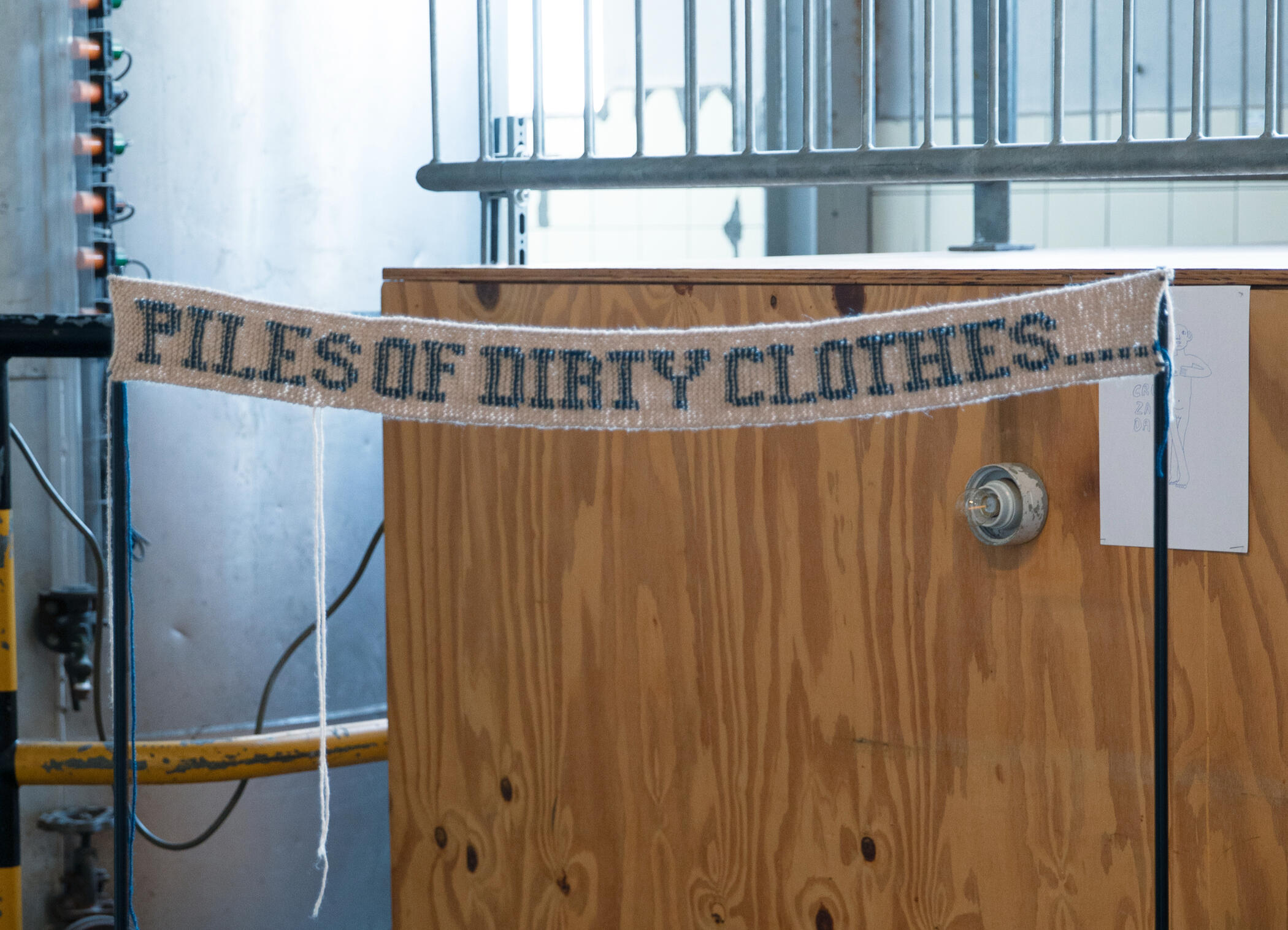
photo credits: nathan van ewijk
Piles of Dirty Clothes (2025)
Hand-knitted yarn
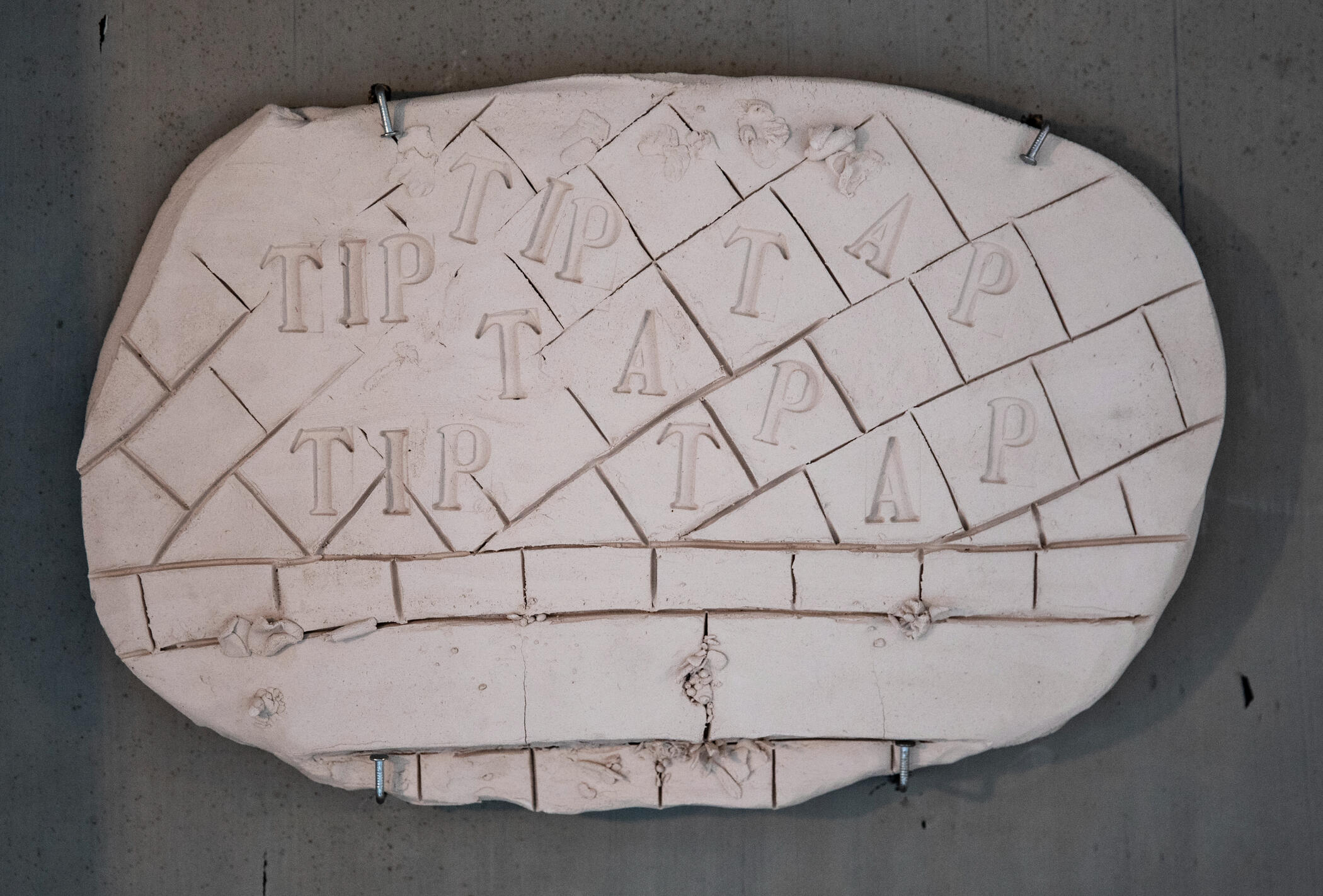
photo credits: nathan van ewijk
Tip Tap (2025)
Unglazed ceramics
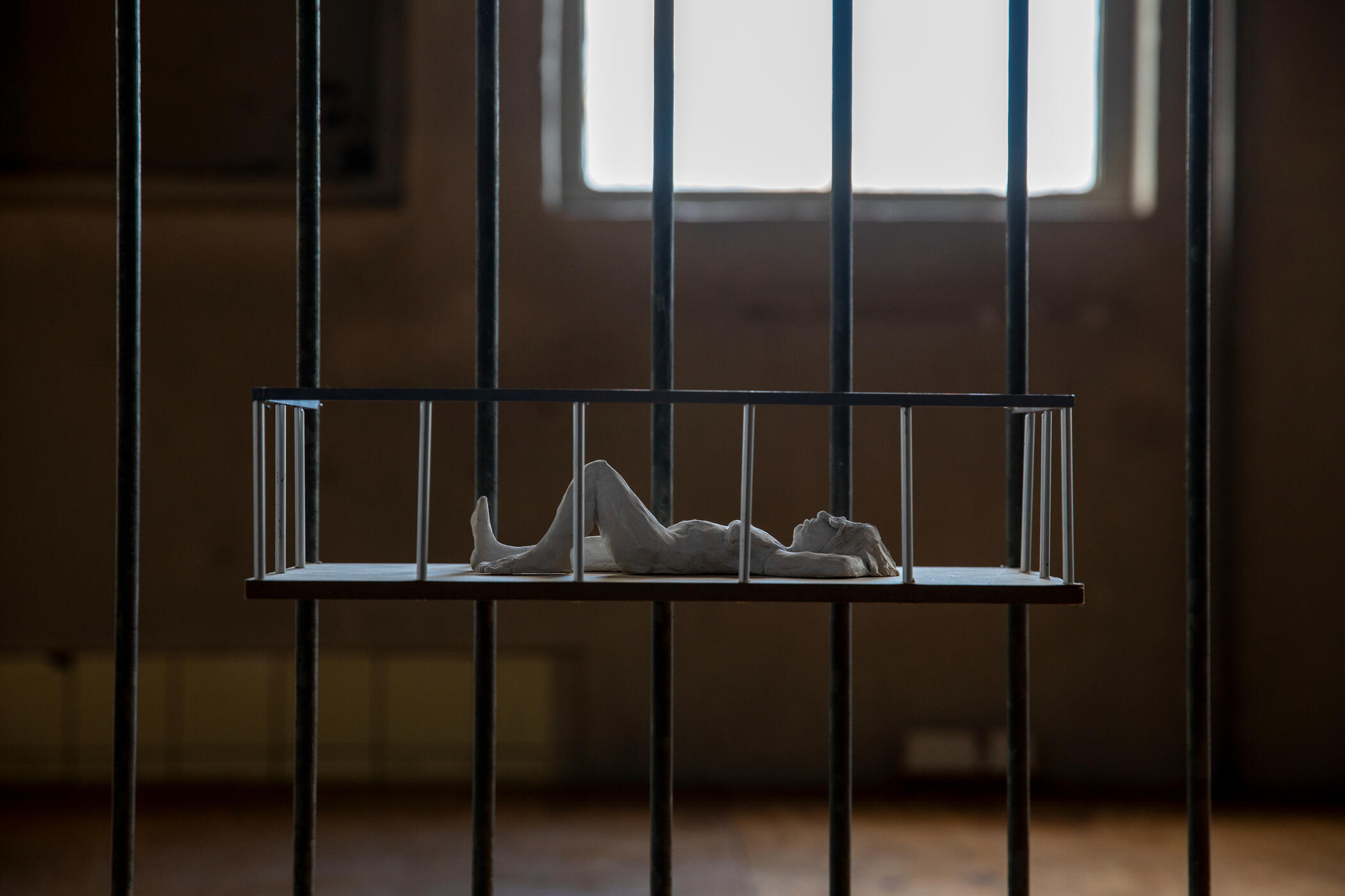
photo credits: nathan van ewijk
For Something To Happen series (2025)
Ceramics, MDF, and various found materials
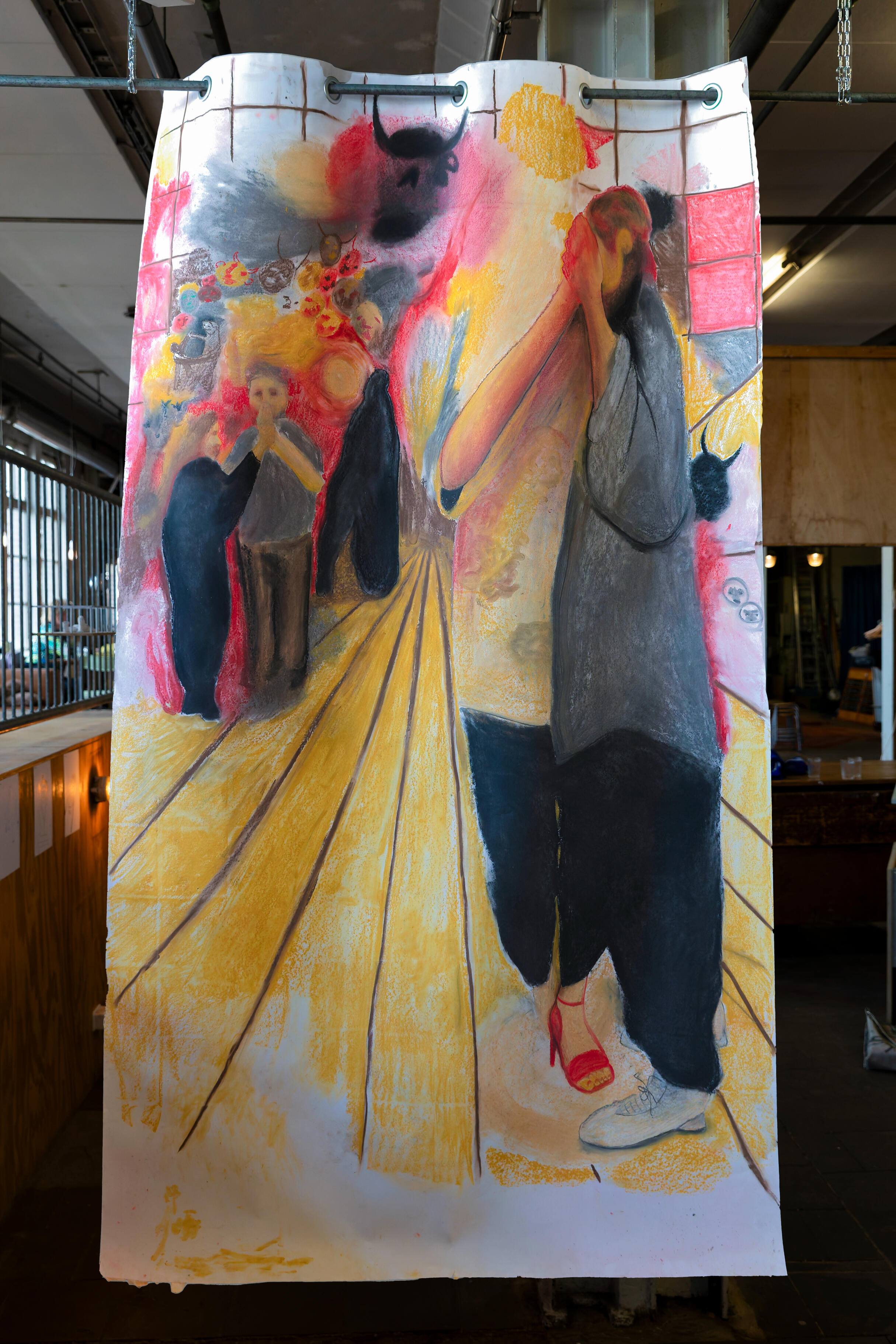
photo credits: nathan van ewijk
Curtain I: Tango (2025)
Chalks on paper
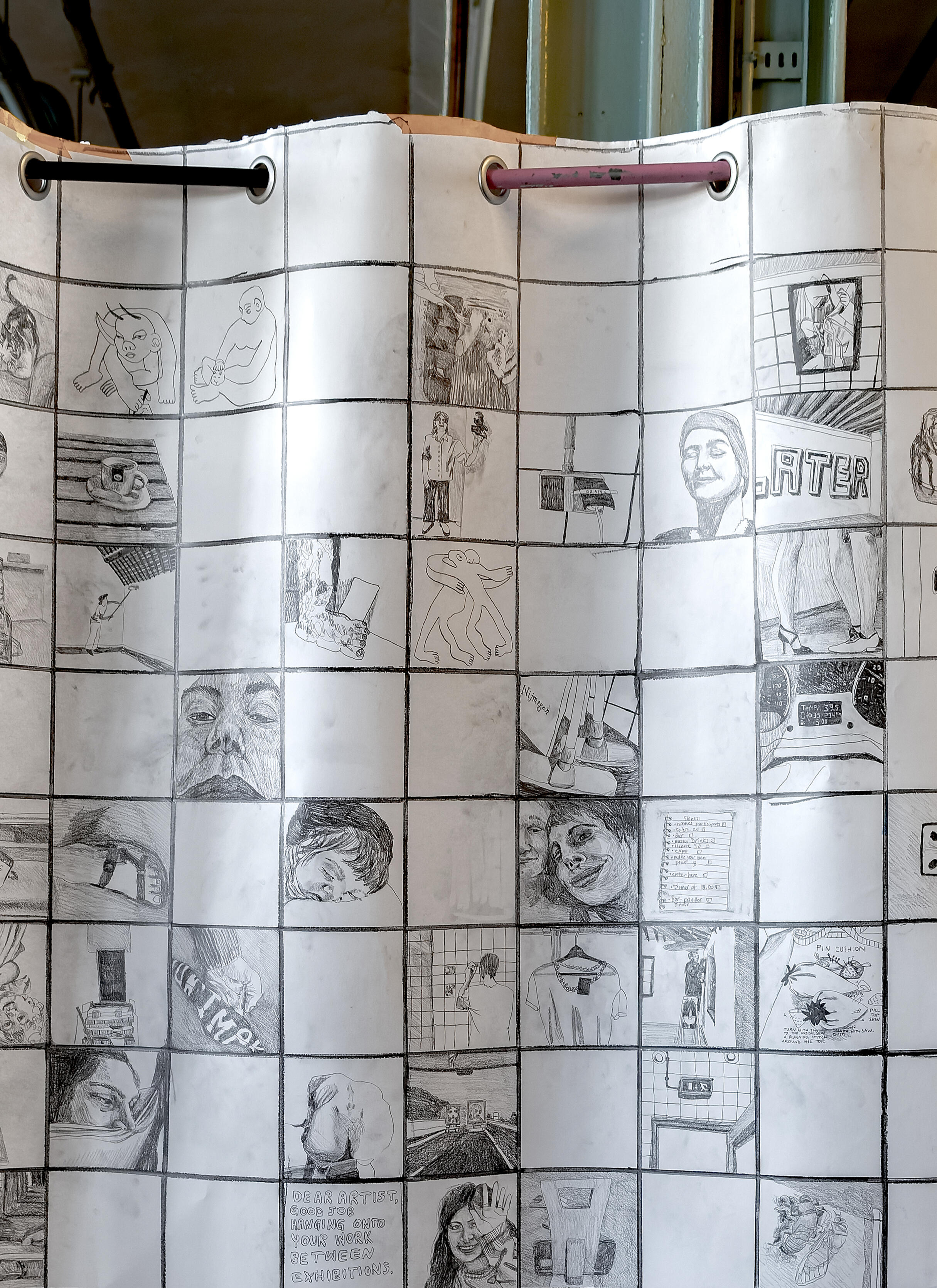
photo credits: nathan van ewijk
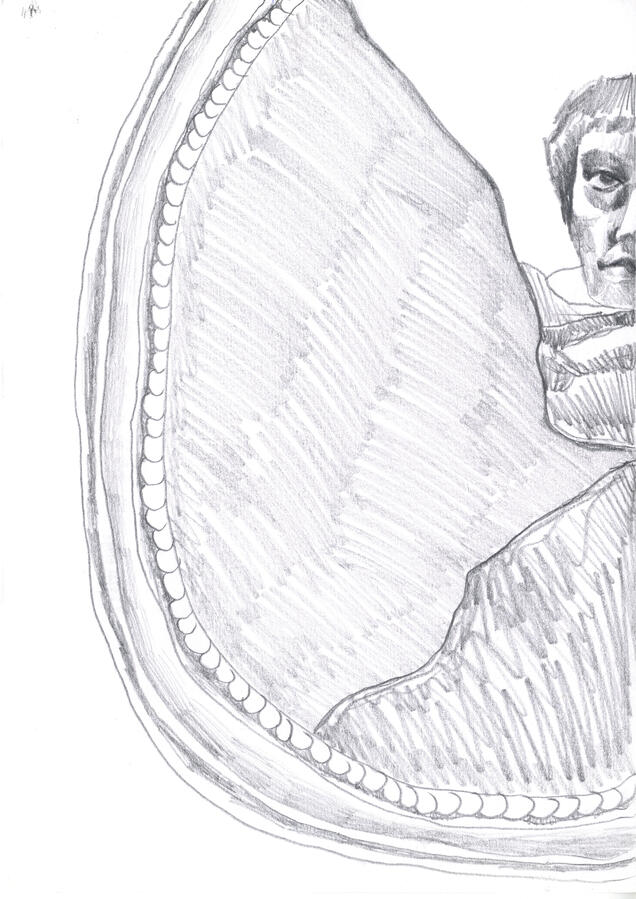
Curtain II: Tiles (2025)
Graphite on paper
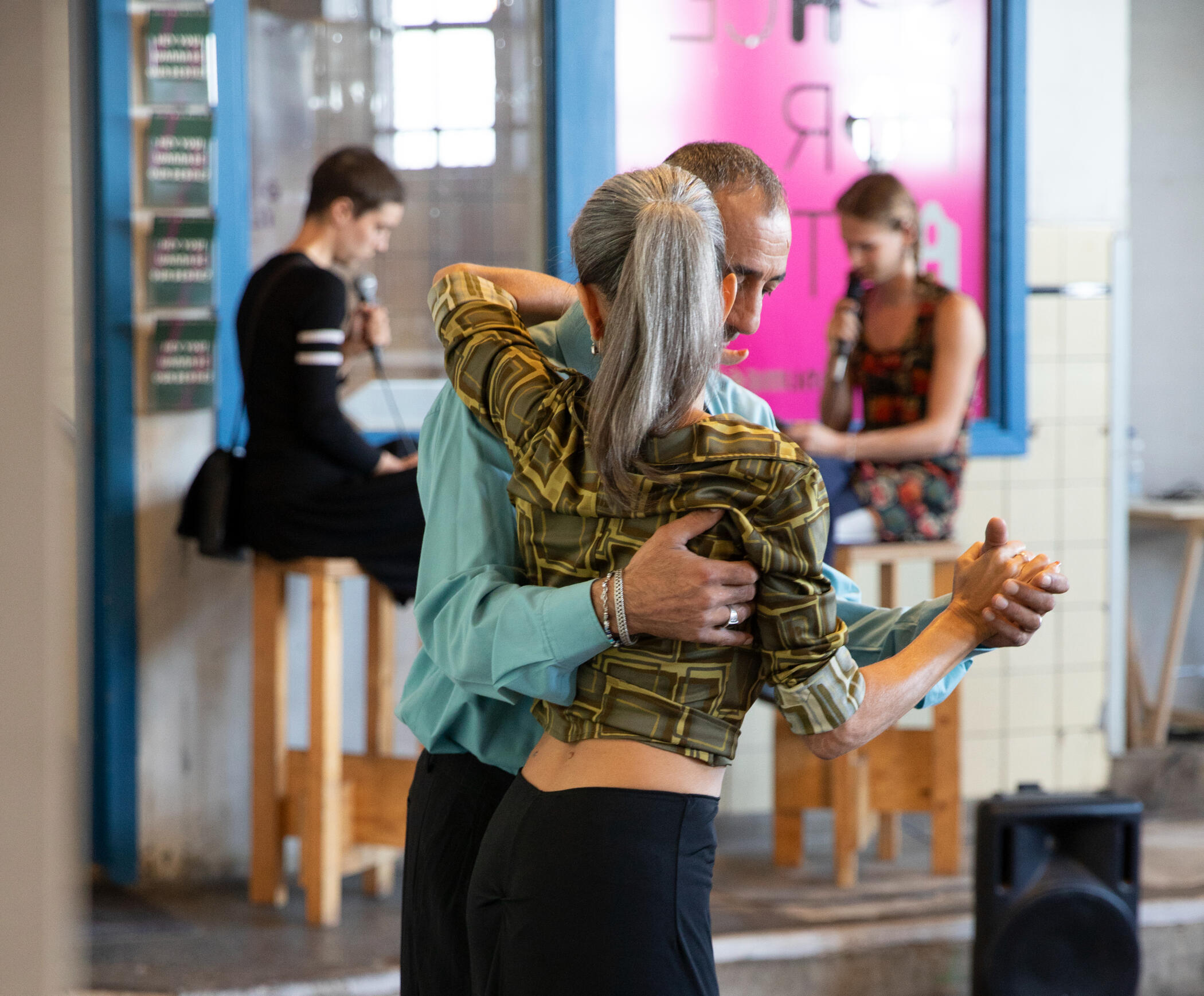
photo credits: nathan van ewijk
Dialogue on the Possibilities of Making (2025)
Performance
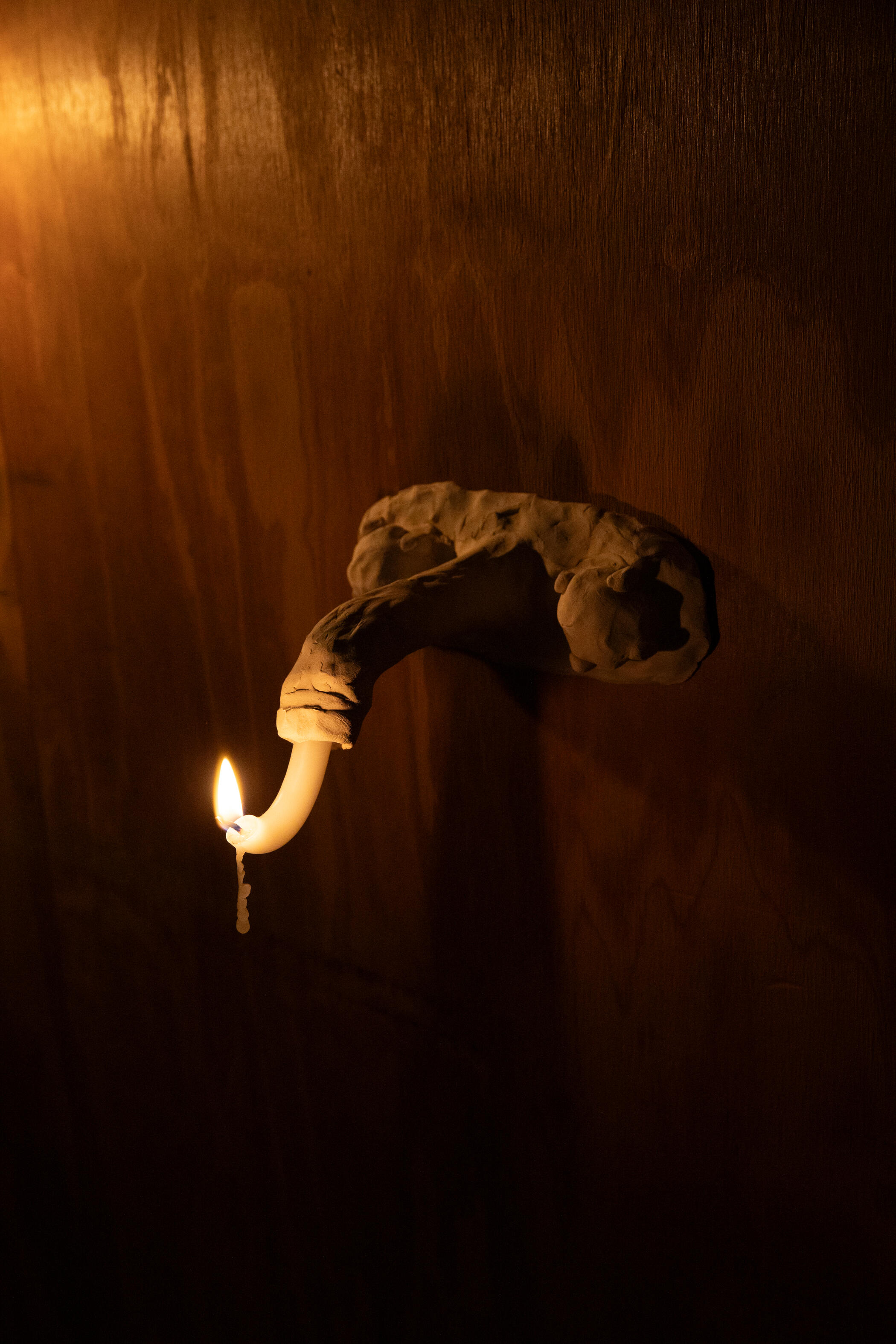
photo credits: nathan van ewijk
Tap (2025)
Unglazed ceramics, candles
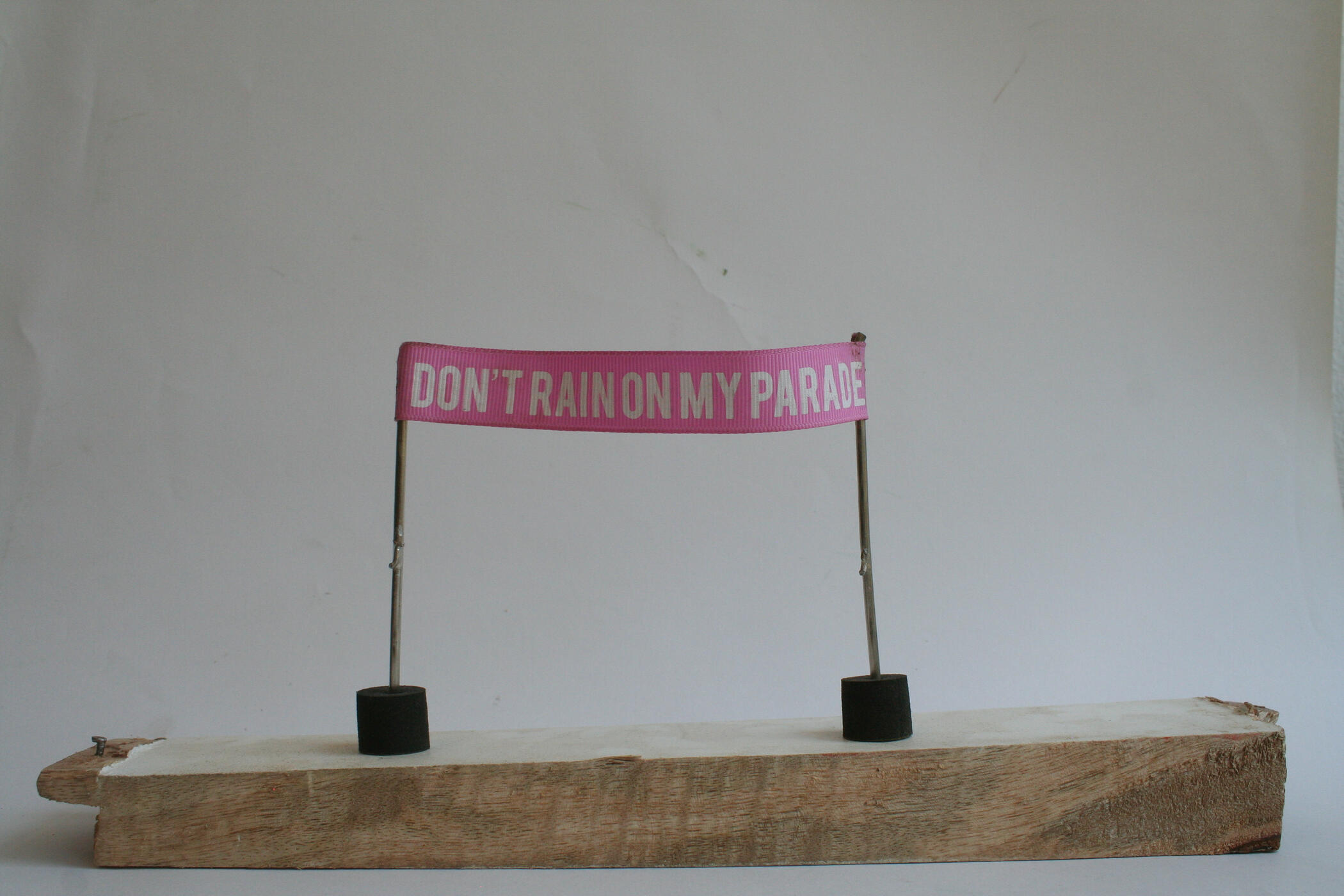
Don't Rain On My Parade (2025)
Found material
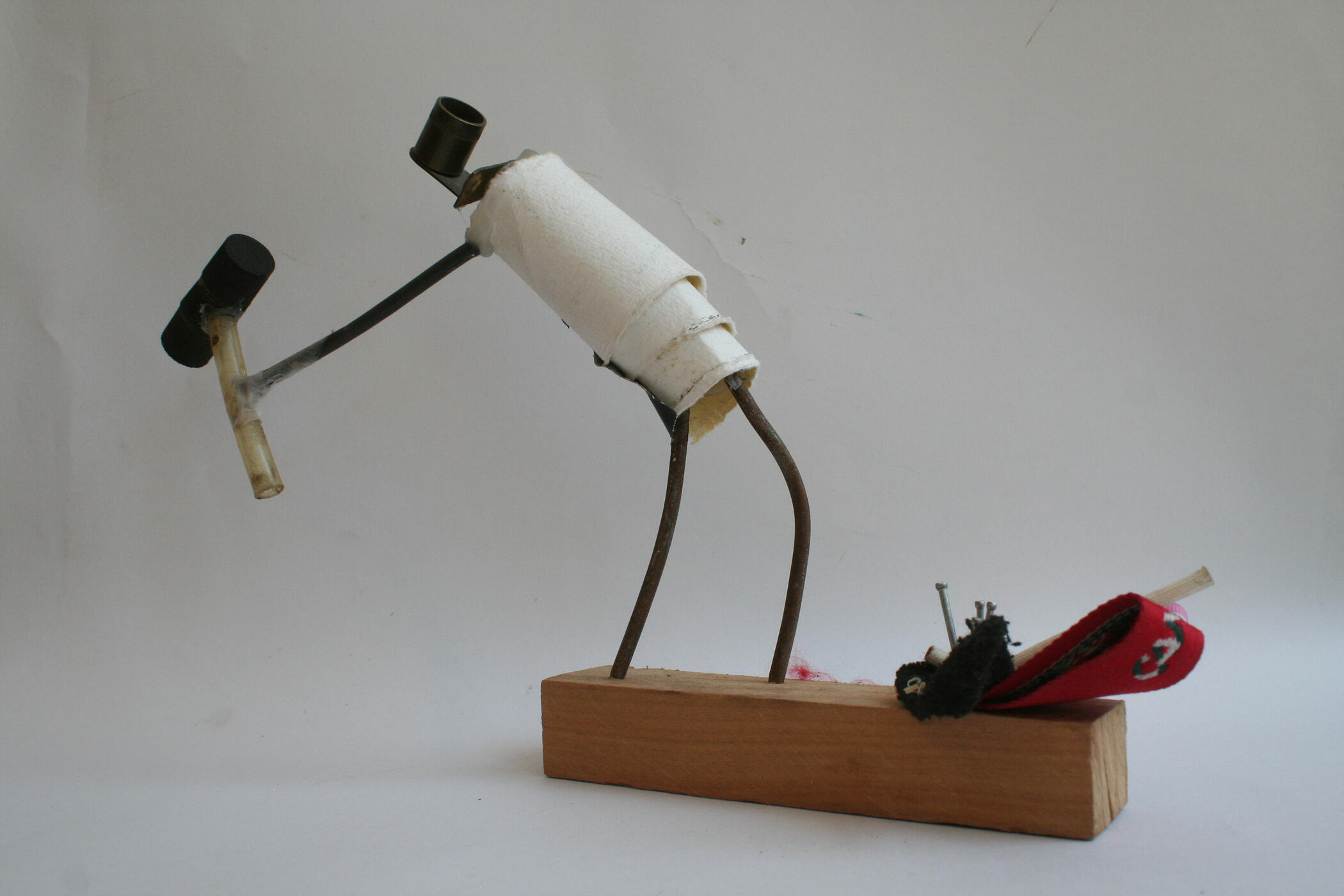
Studio Creature (2025)
Found material
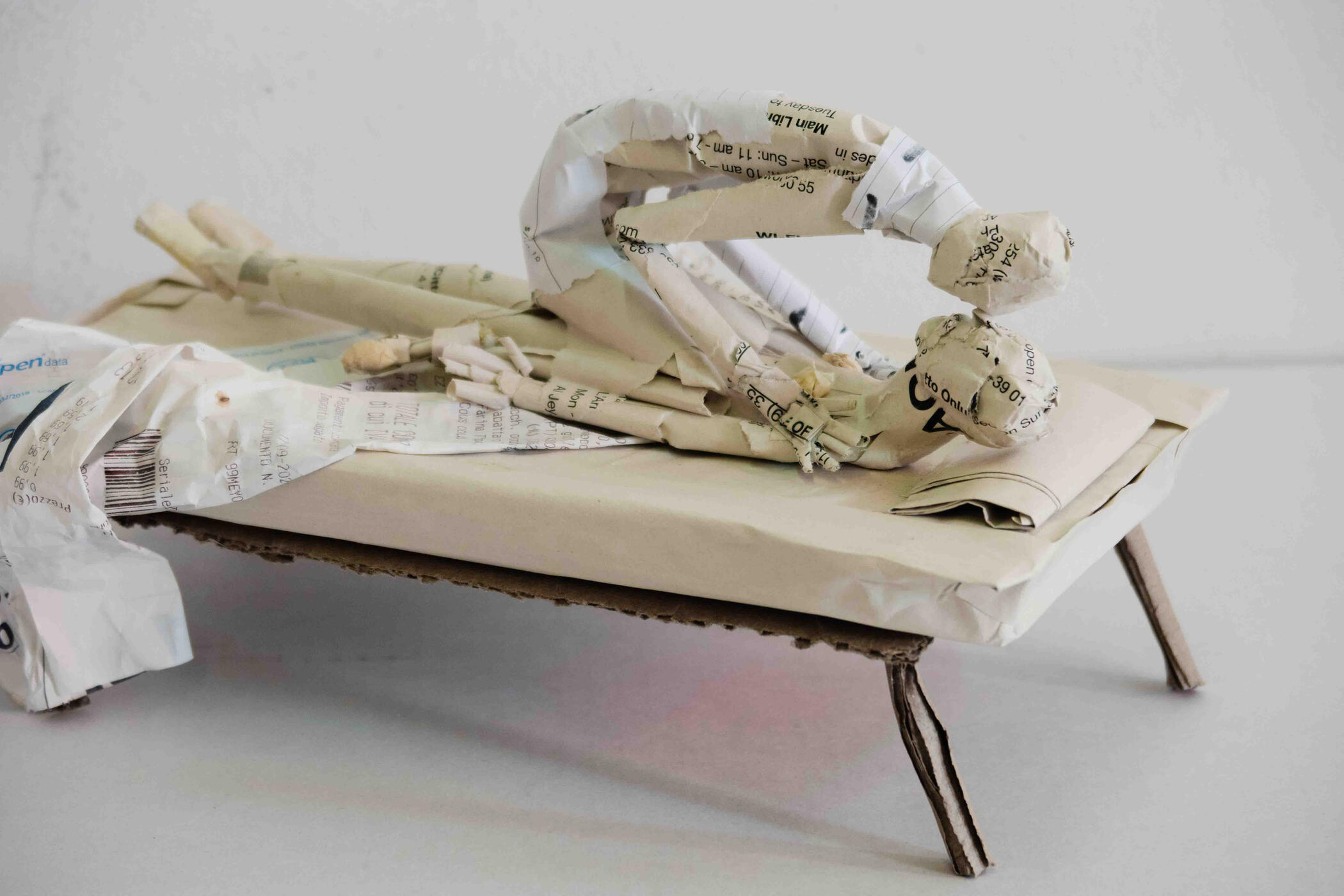
photo credits: hangyeol kim
Houd Me Vast series (2024)
Paper
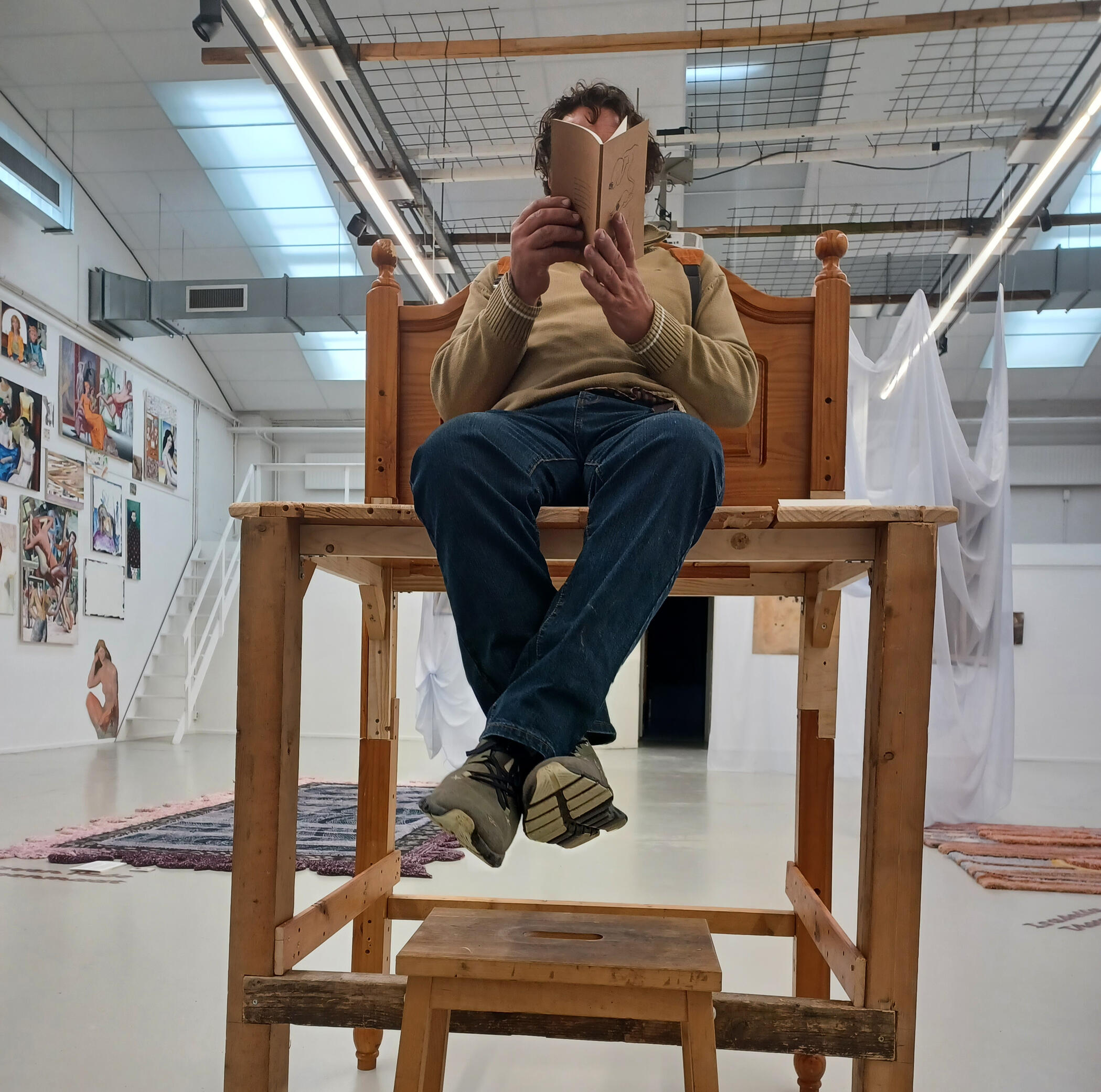
Big Chair (2024)
Found wood
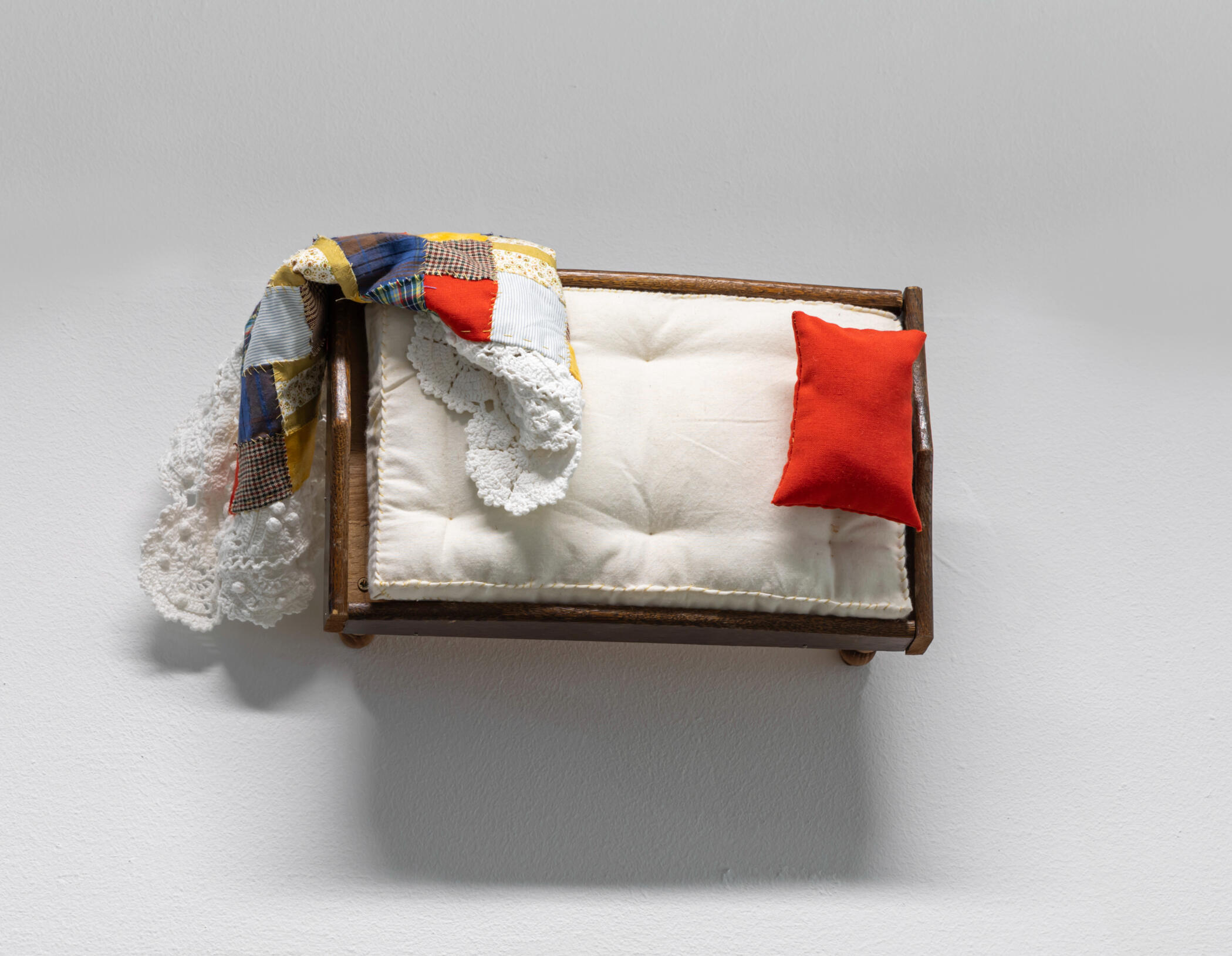
photo credits: django van ardenne
Things That Nobody Knows But Me (2024)
Wood and fabric
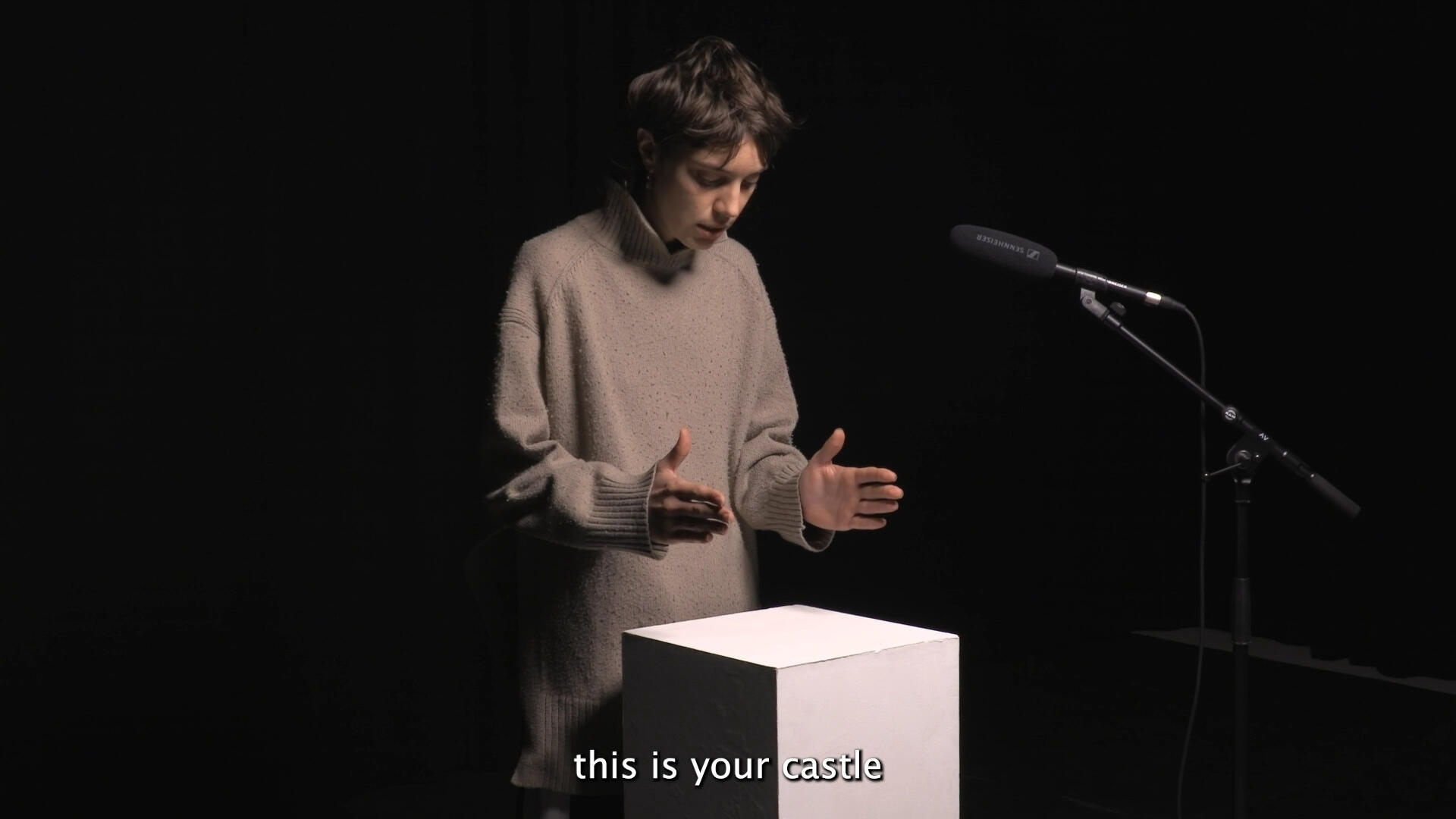
Lecture on Stillness (2024)
Performance
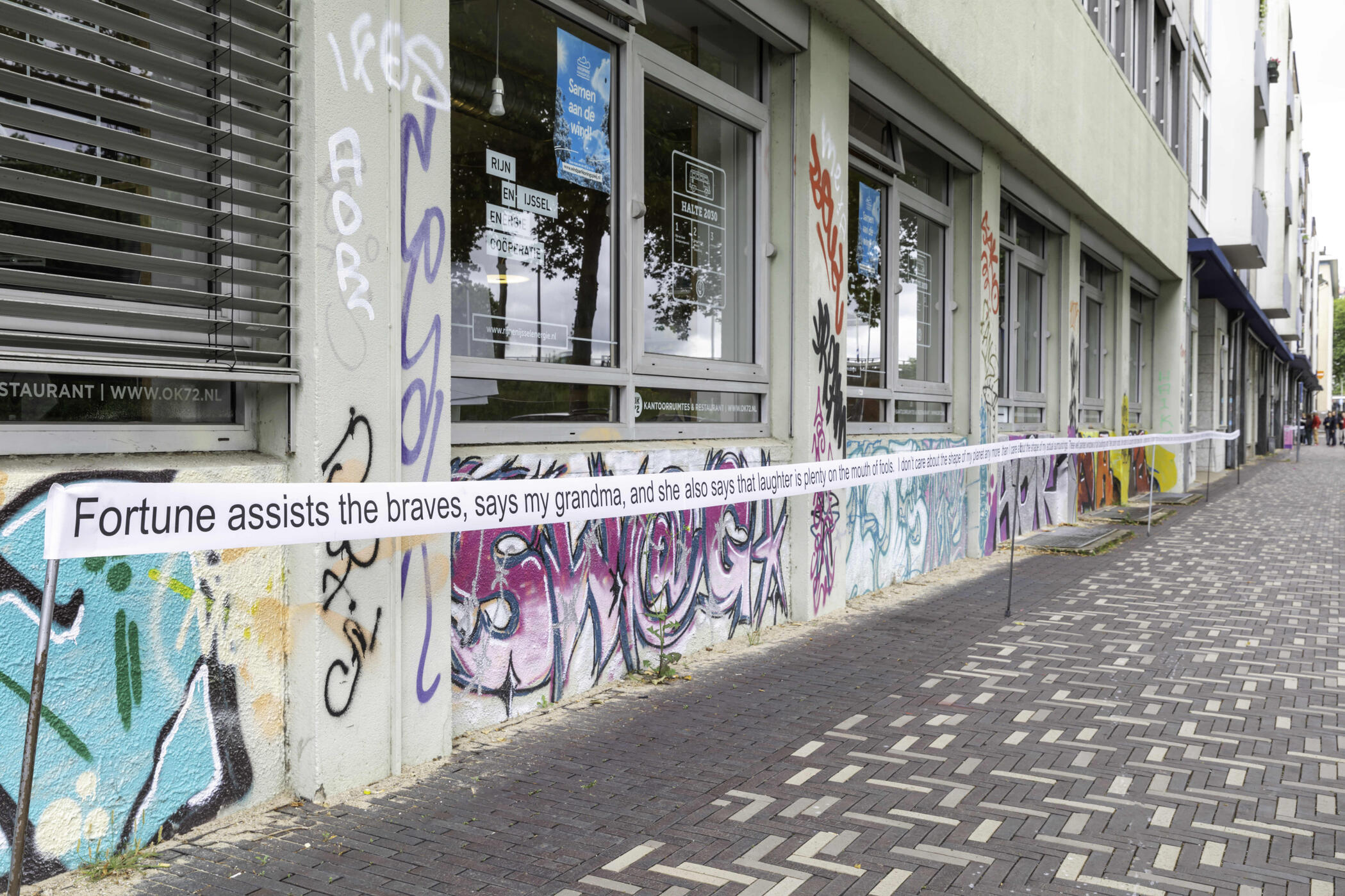
photo credits: django van ardenne
At Times Another Lonesome Stranger (2024)
50 mt. long outdoors installation, two banners on metal poles
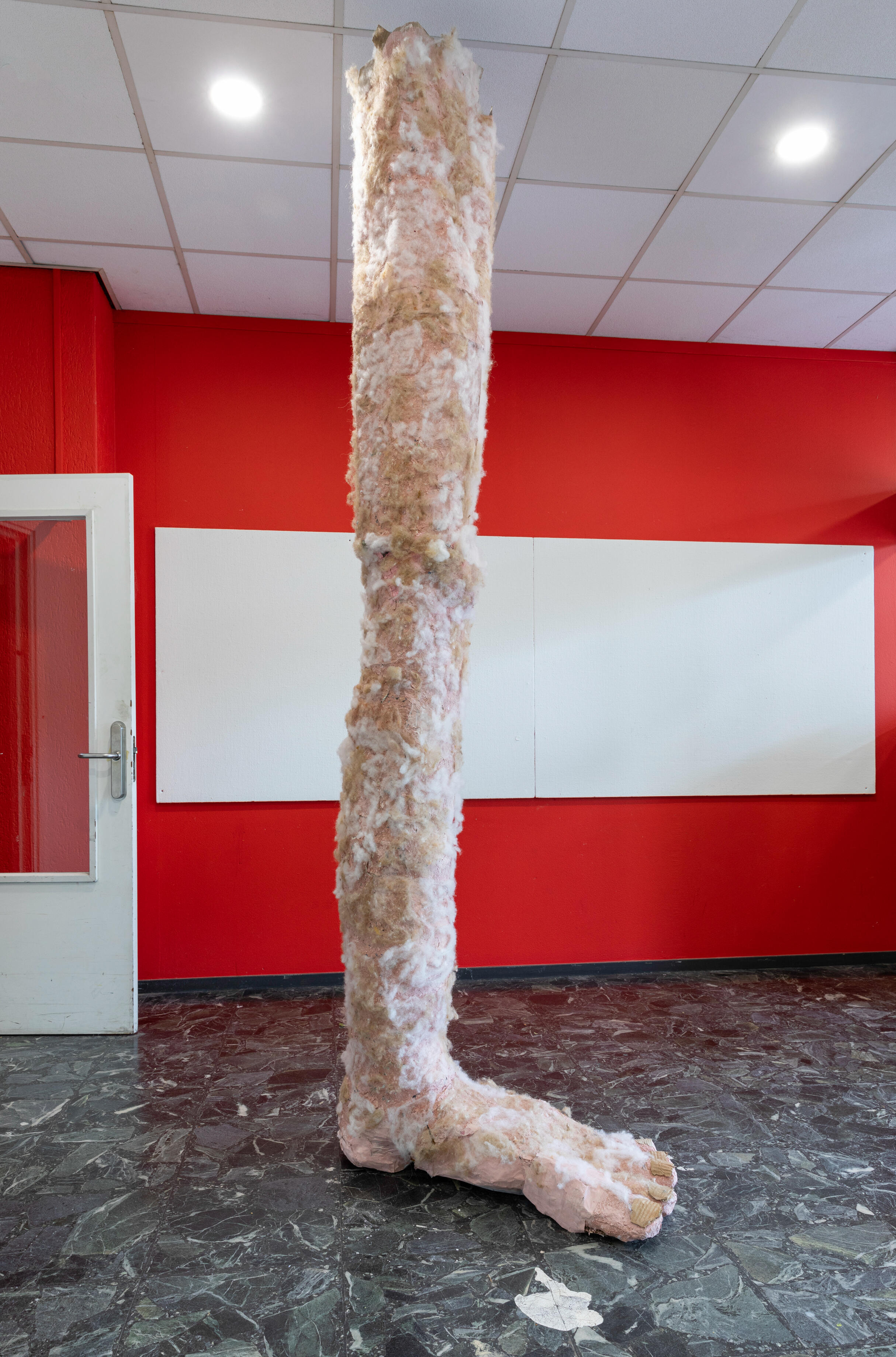
photo credits: django van ardenne
Who's the Monster Now (2023)
Papier-macher and wool
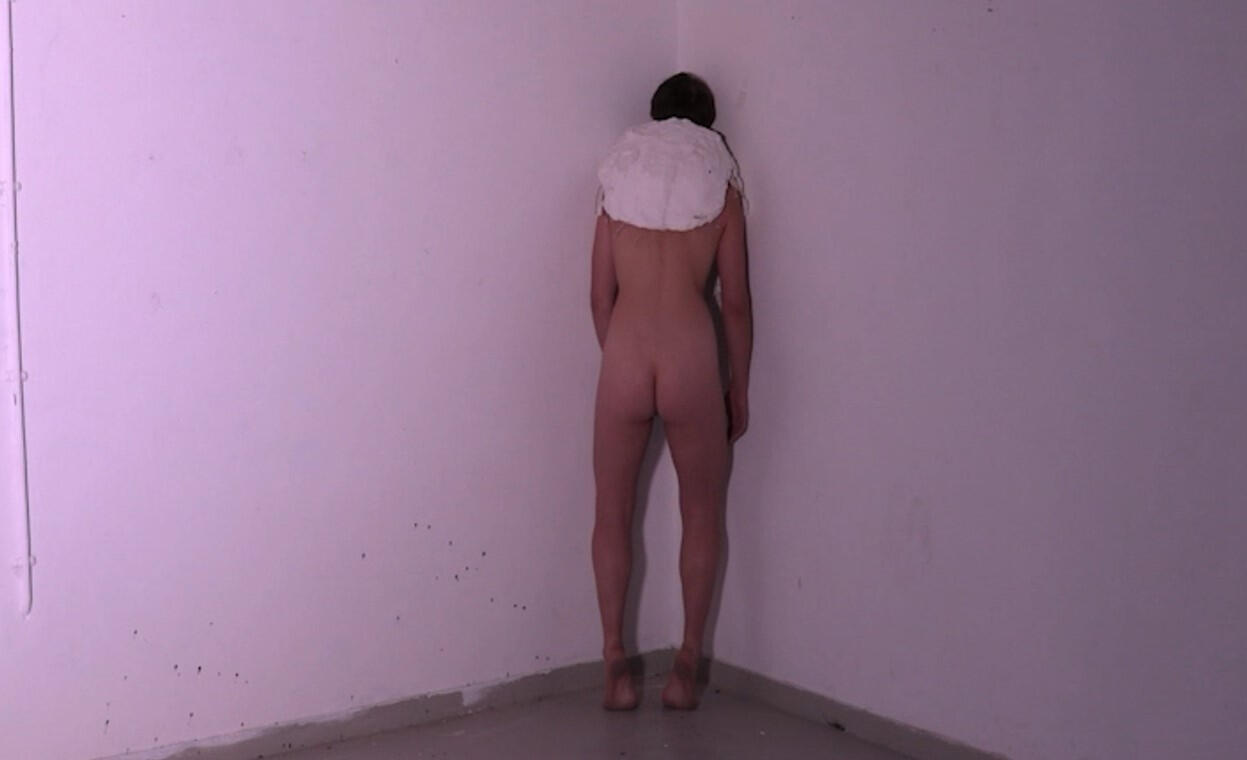
Asterion I (2022)
Video
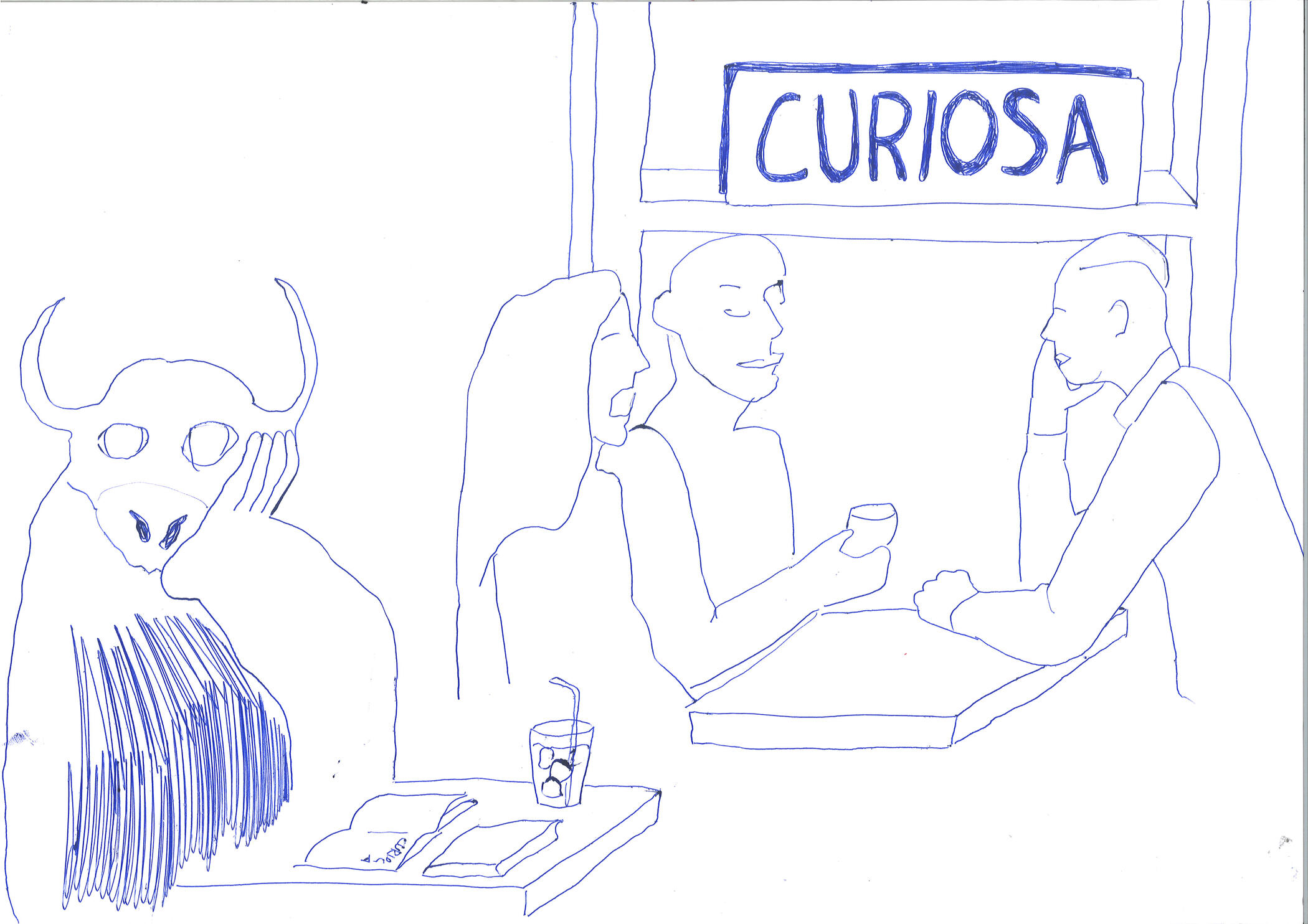
Drawings (a selection)
work / writing / about / contact / buy my books / home
Click on the title of the book to learn more.
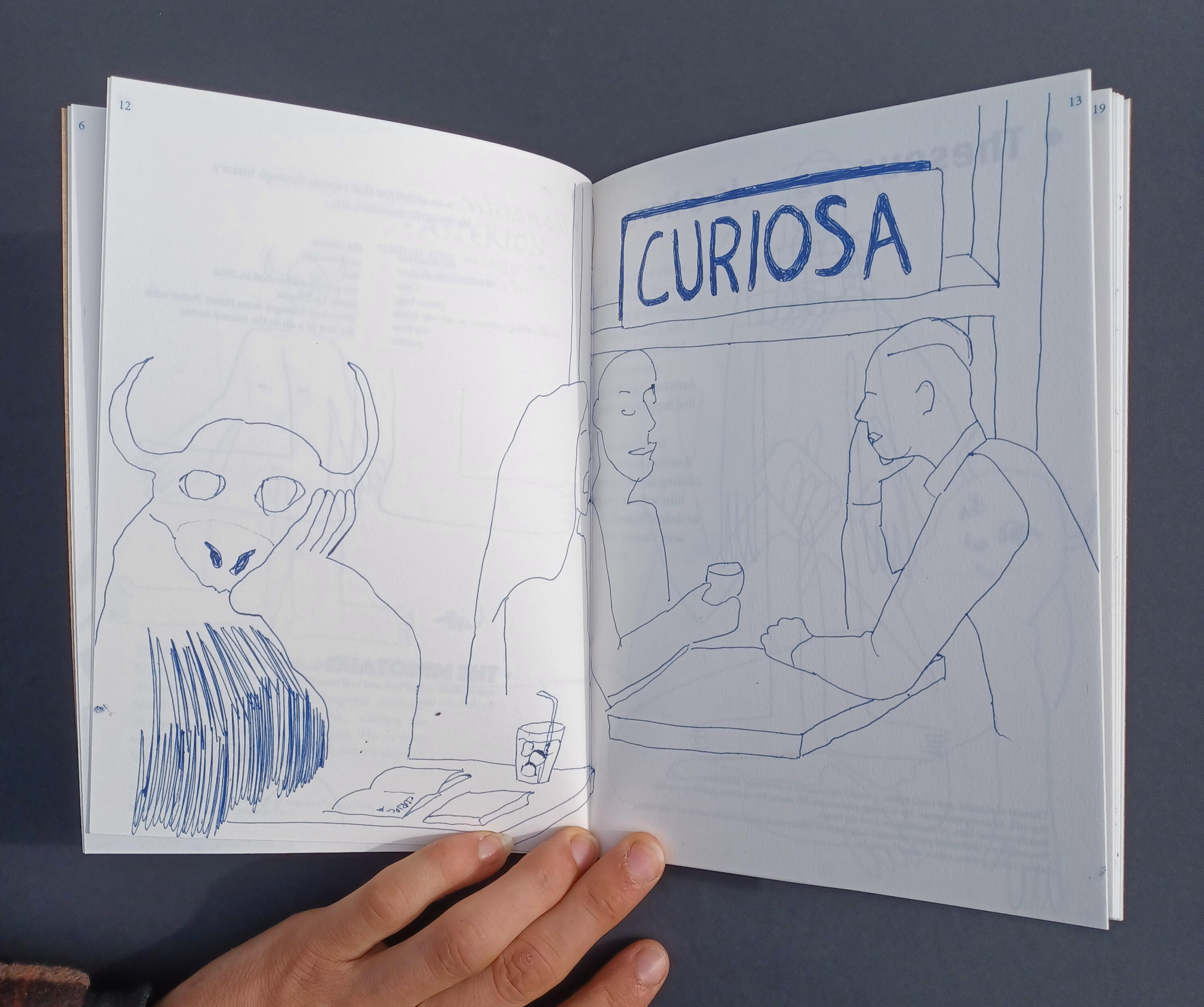
Standing Still Until the Mouse Leaves (2024)
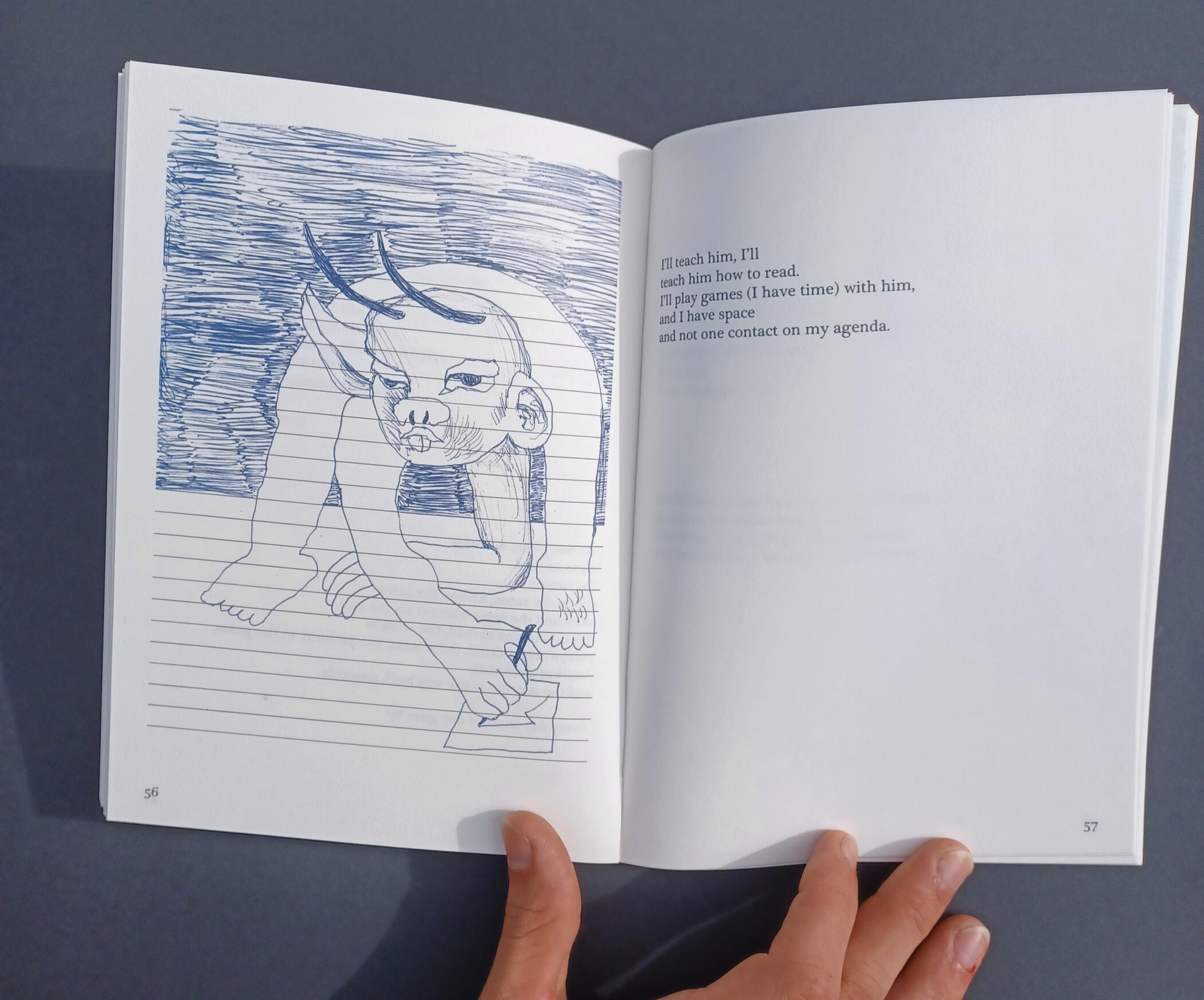
The Minotaur Poems (2024)
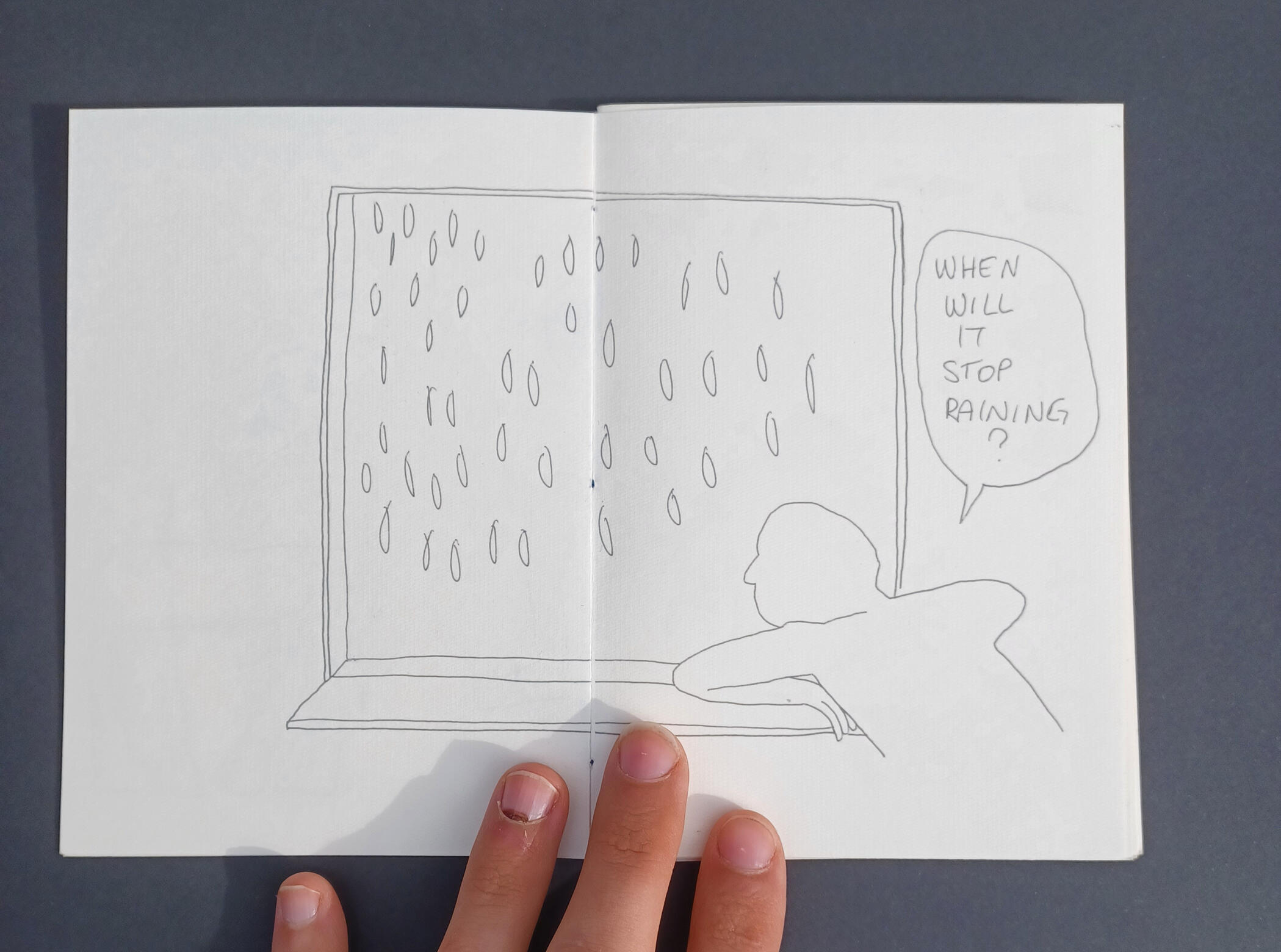
Do You Have Any Questions? (2024)
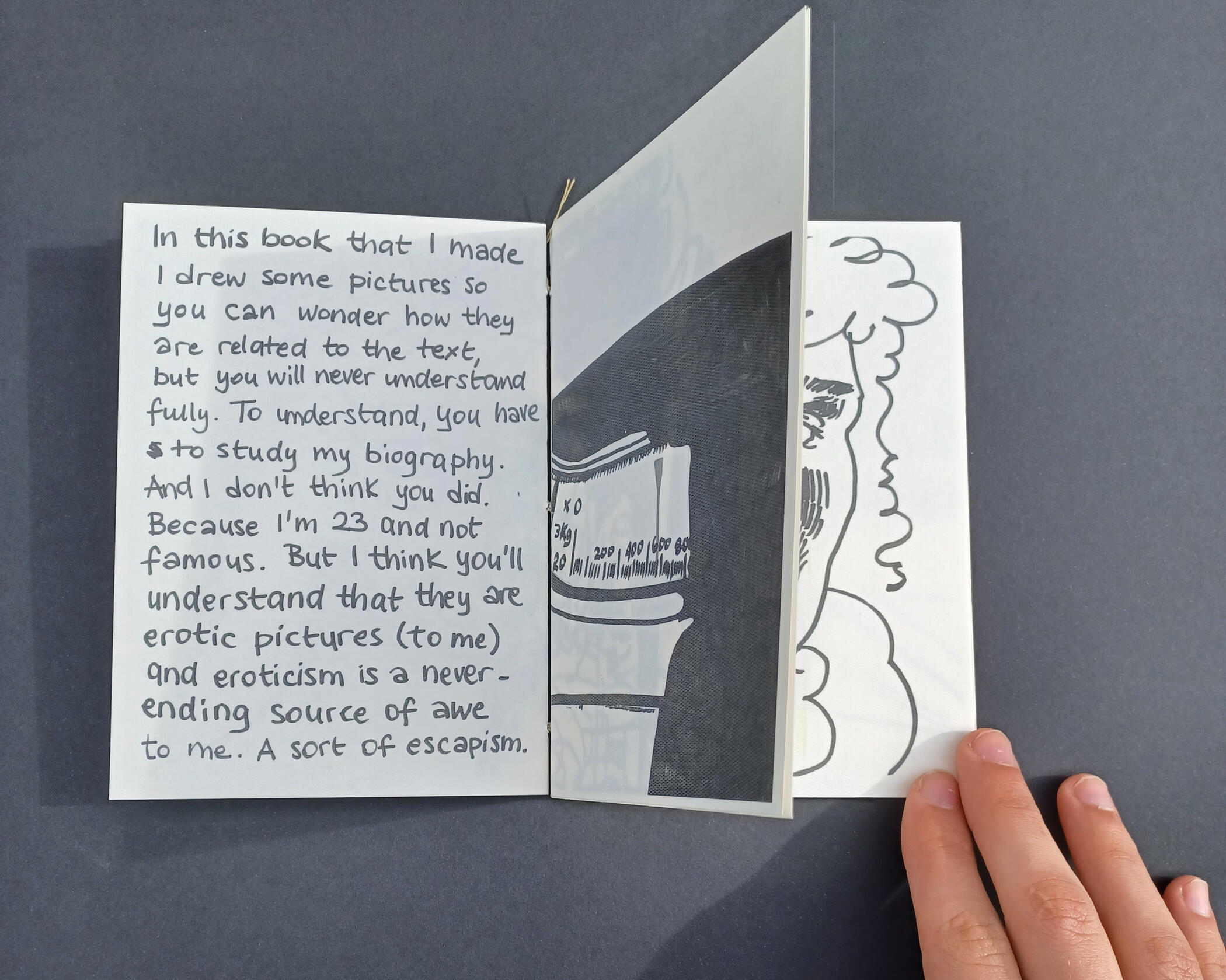
Ongoing Monologue (2024)
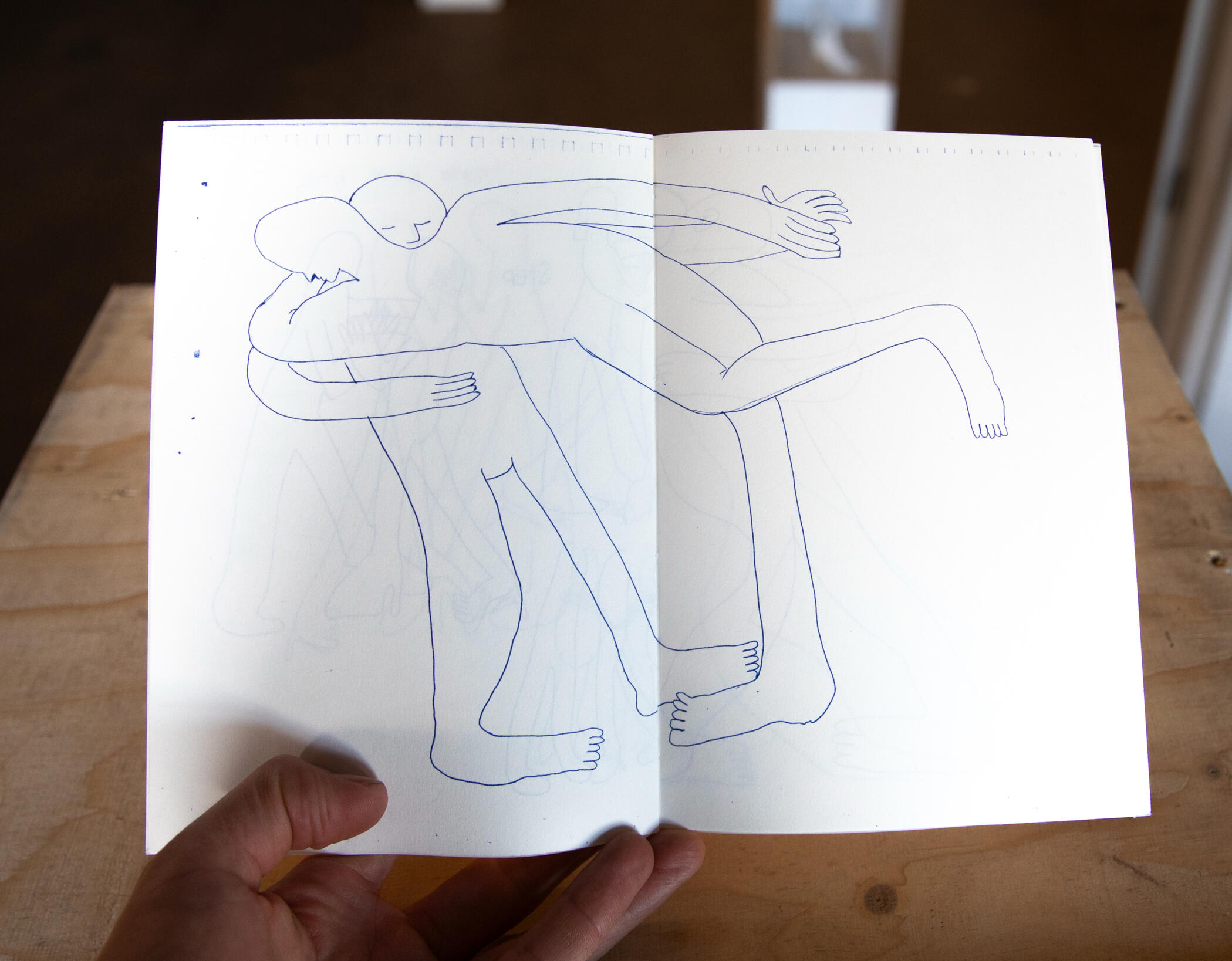
photo credits: nathan van ewijk
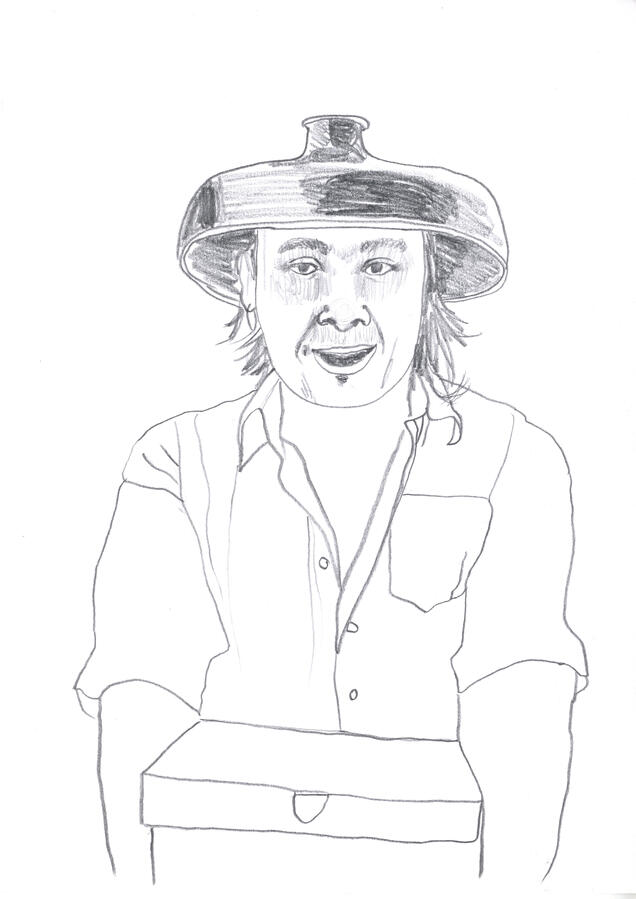
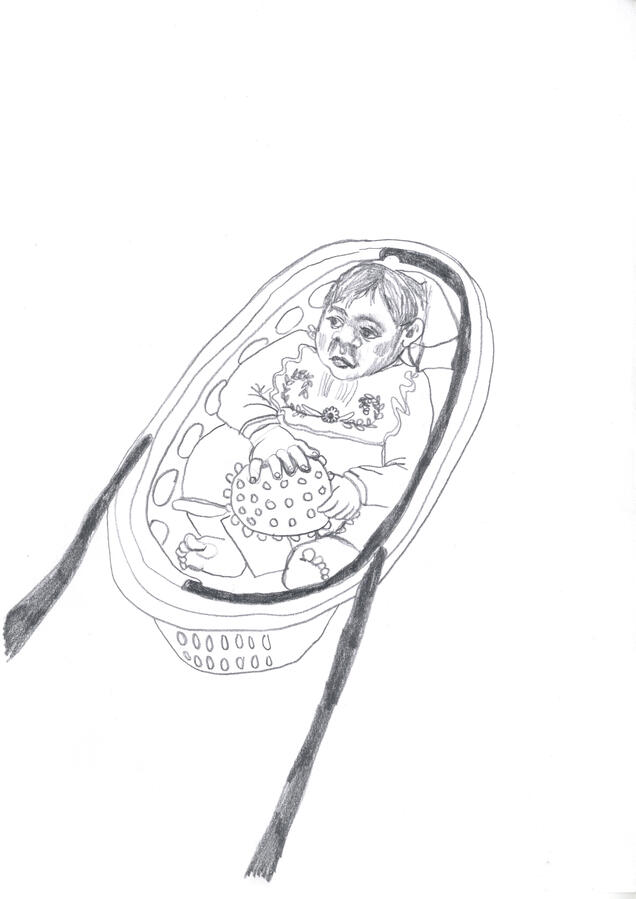
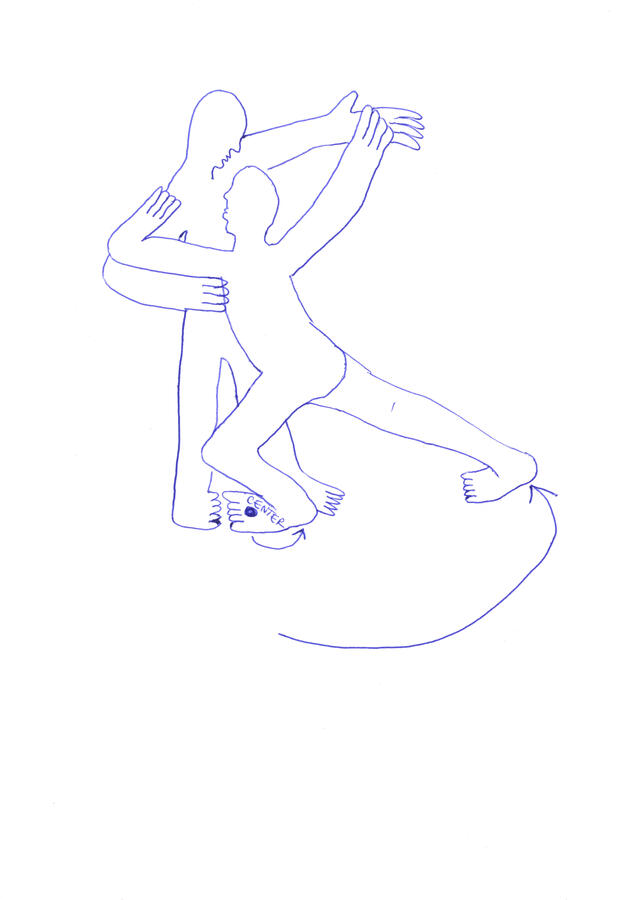
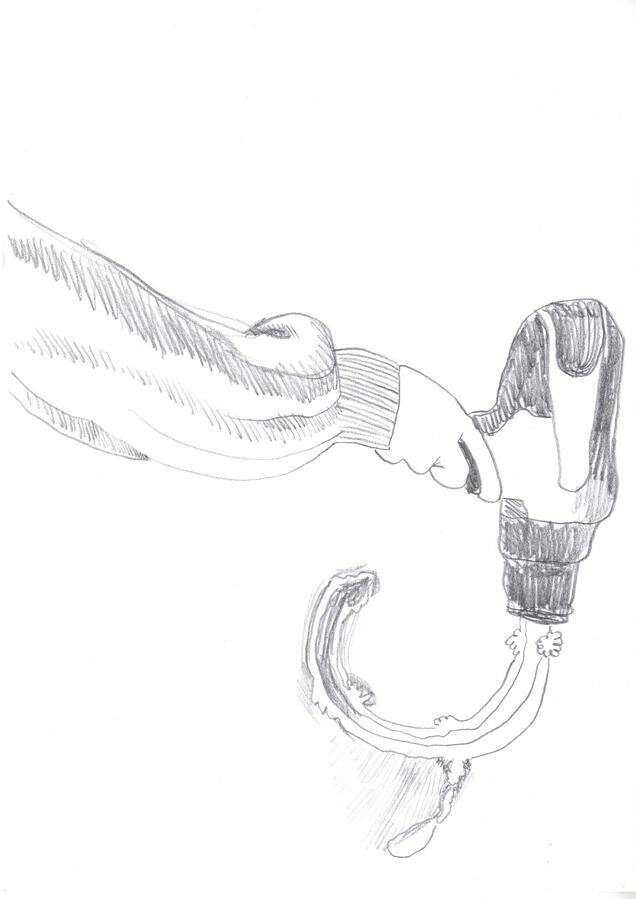
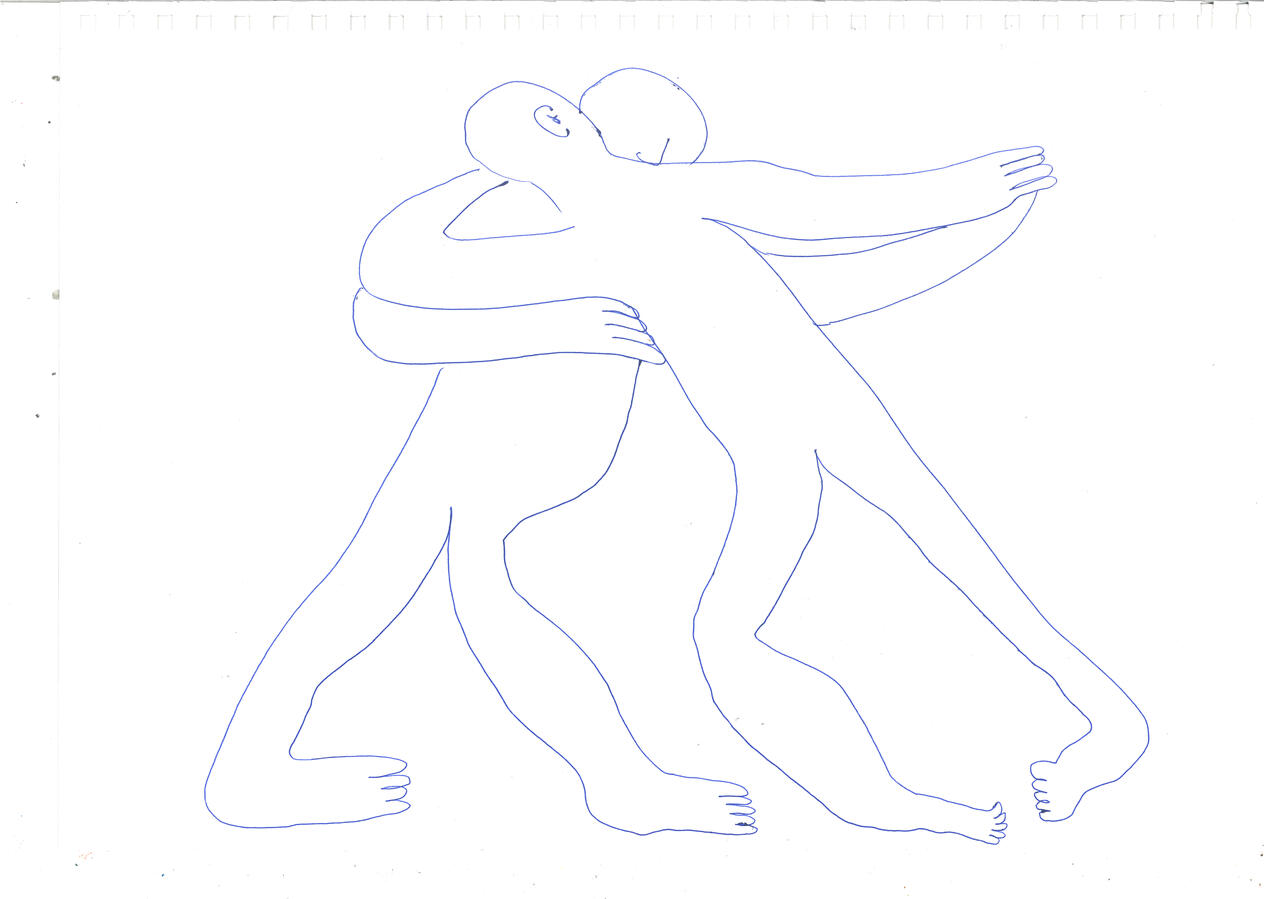
Tango (2025)
work / writing / about / contact / buy my books / home
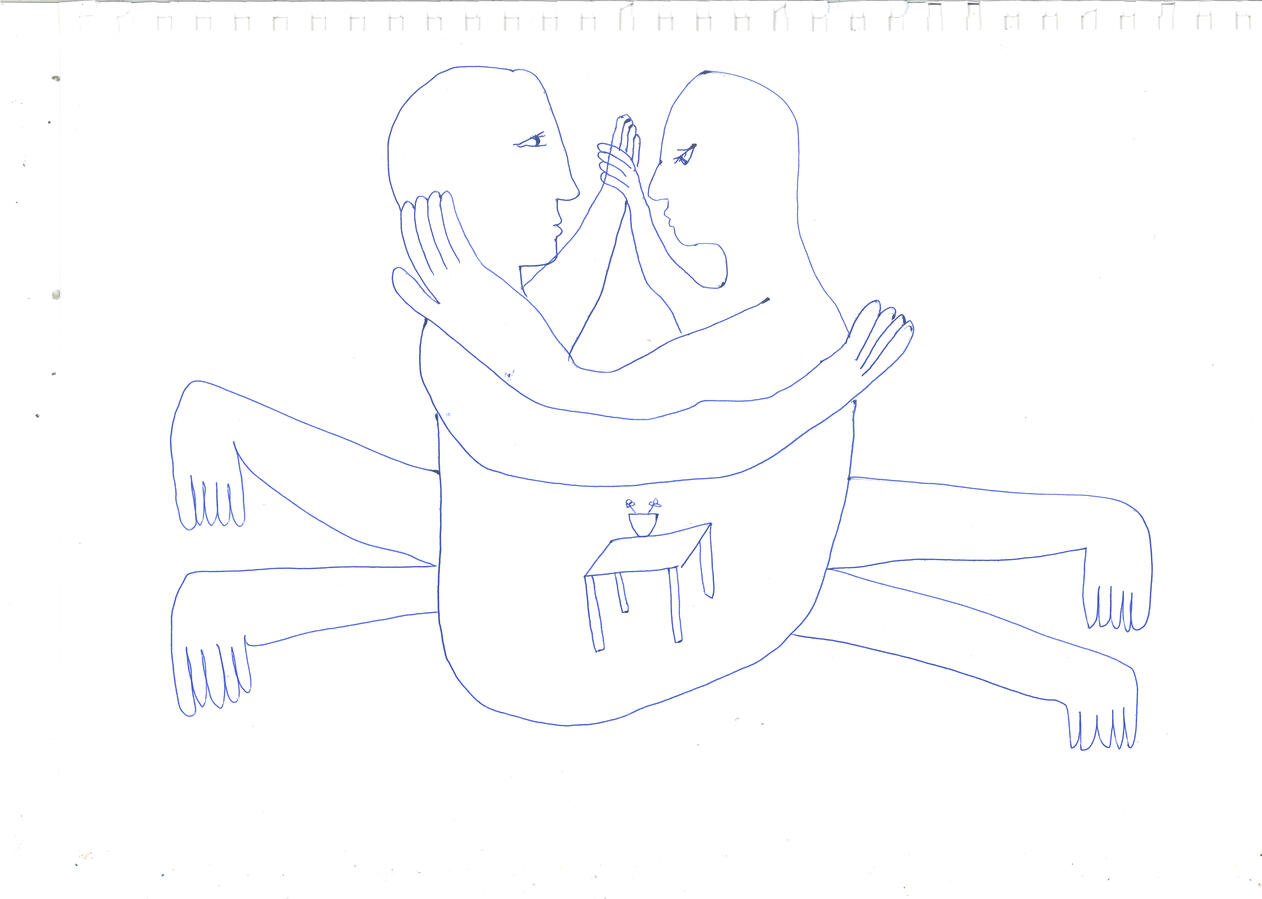
work / writing / about / contact / buy my books / home
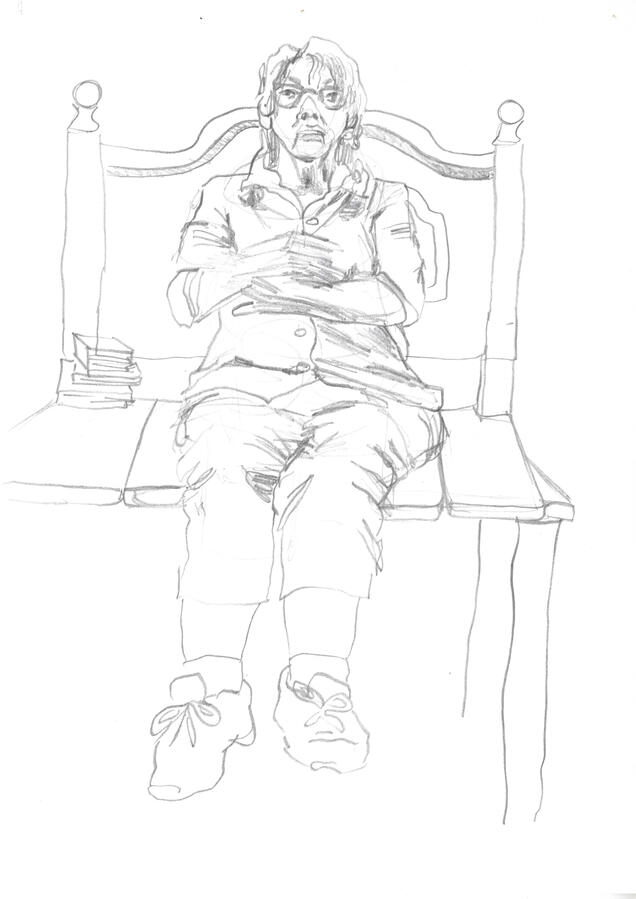
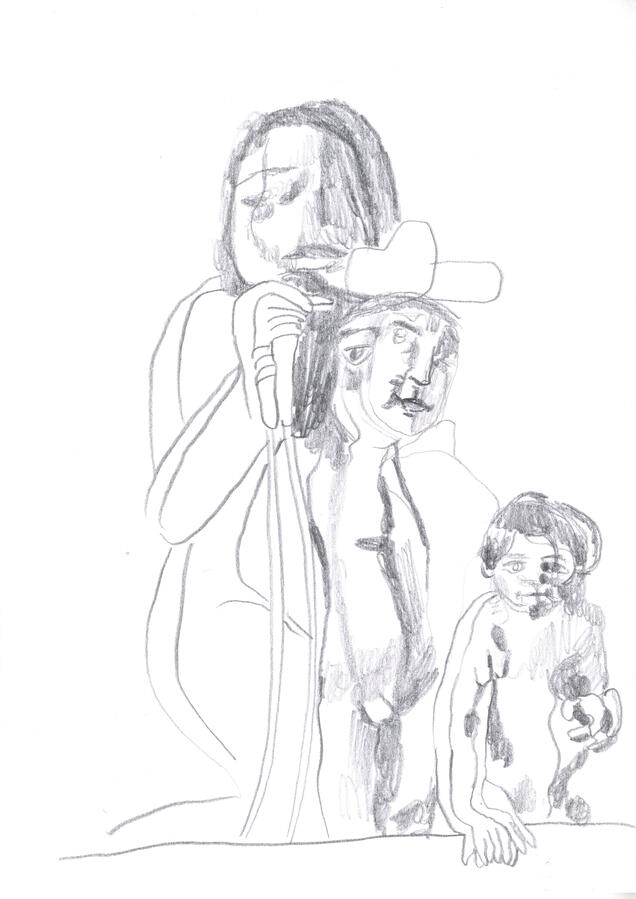
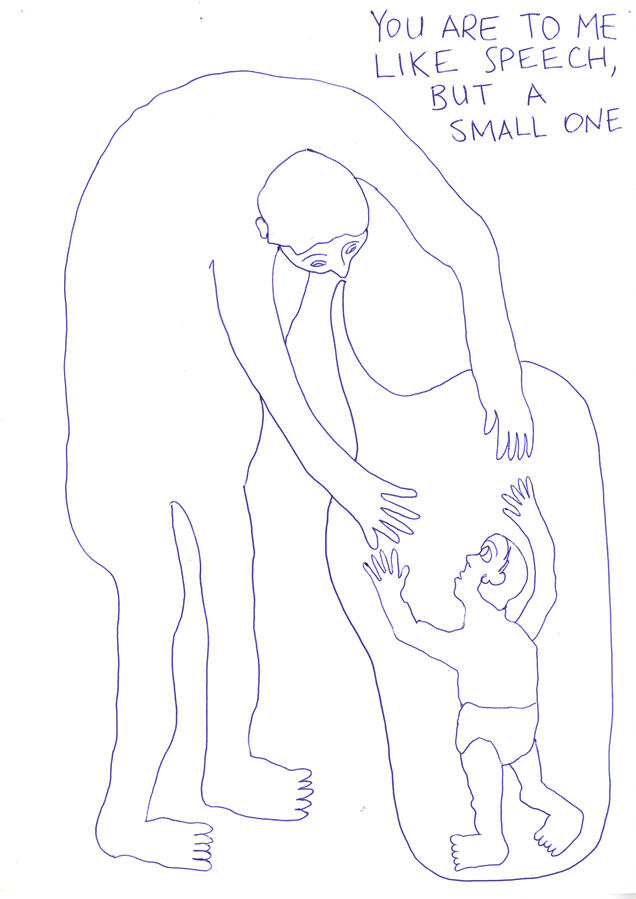
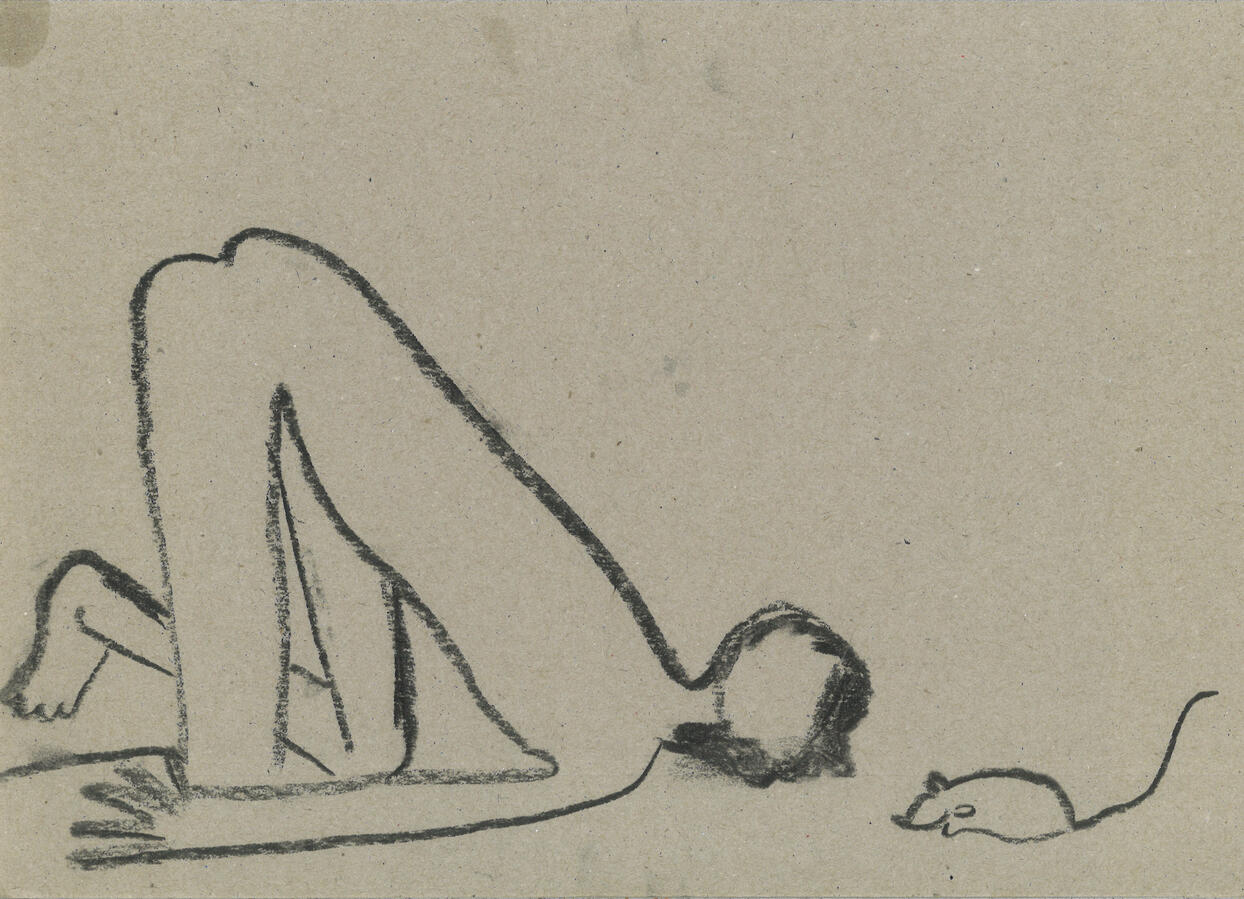
The series "For Something To Happen" is inspired by the so-called "black hole" that my friends and I collectively experienced after our graduation from the art academy. I made sculptures of each of them indulging in unproductive activities or waiting around. Tracing their gestures of absorption was my way of acknowledging the thin thread that still connected us through hardship. When faced with how to present them, rather than using traditional pedestals, I gave each of them a room that suited their character and gesture, all heavily inspired by Ruis' temporary exhibition space in Nijmegen, NL, where the works were made and presented. Read moreIf you want to learn about my friends' work, click their names to visit their websites.
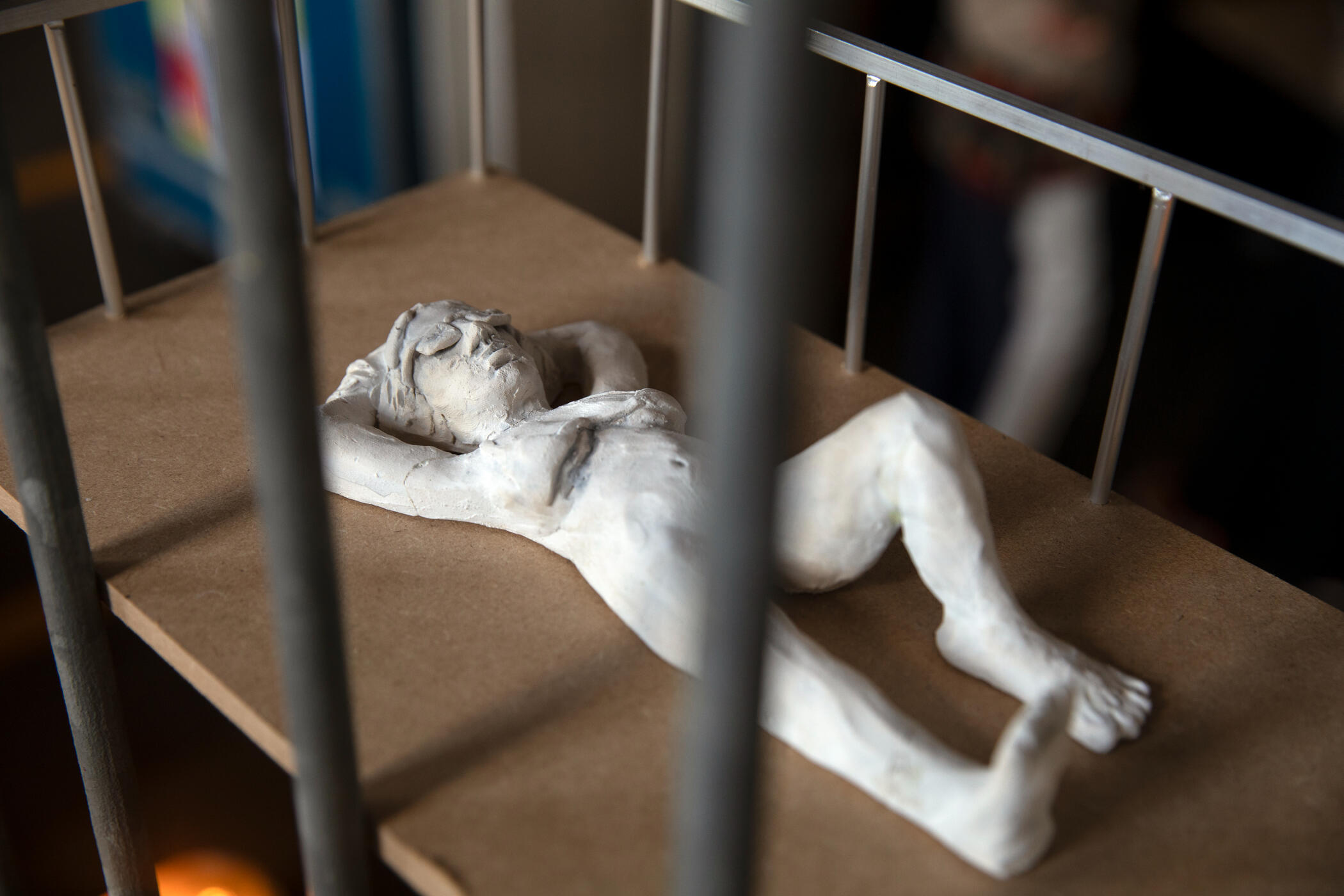
photo credits: nathan van ewijk
Ellen
Sunbathing
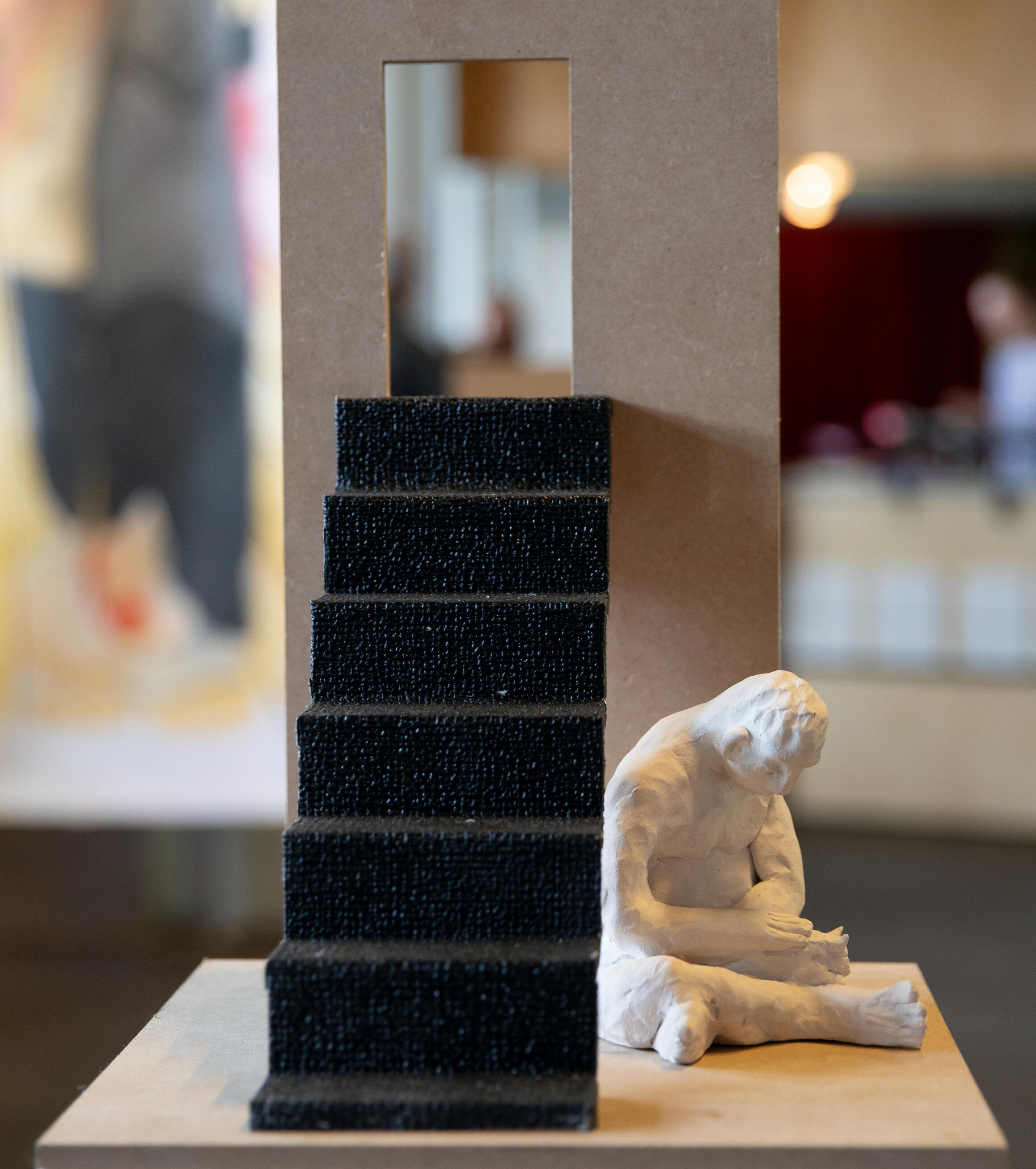
photo credits: nathan van ewijk
Jole
Caressing their cat, Tartan
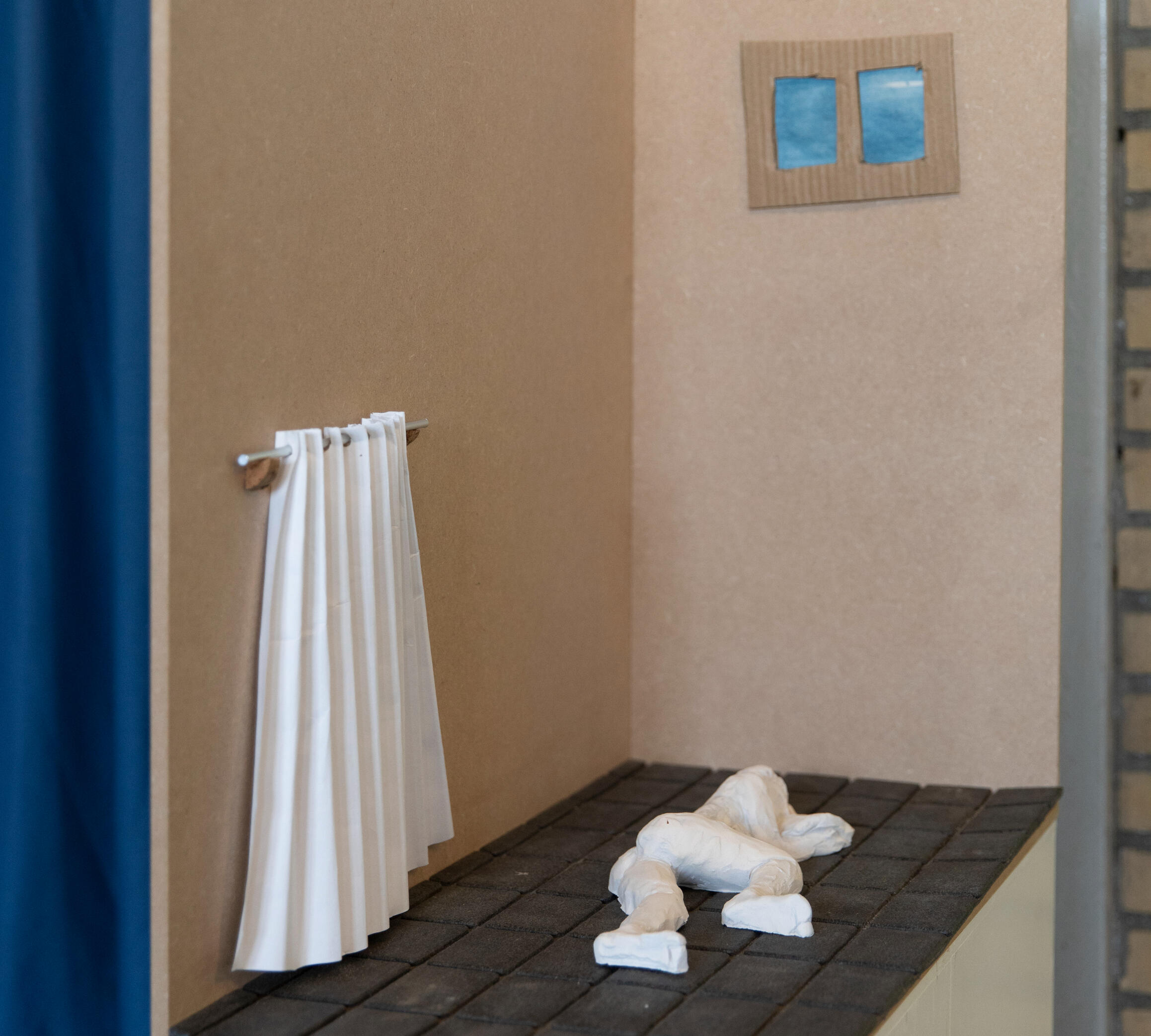
photo credits: nathan van ewijk
Roona
Sleeping
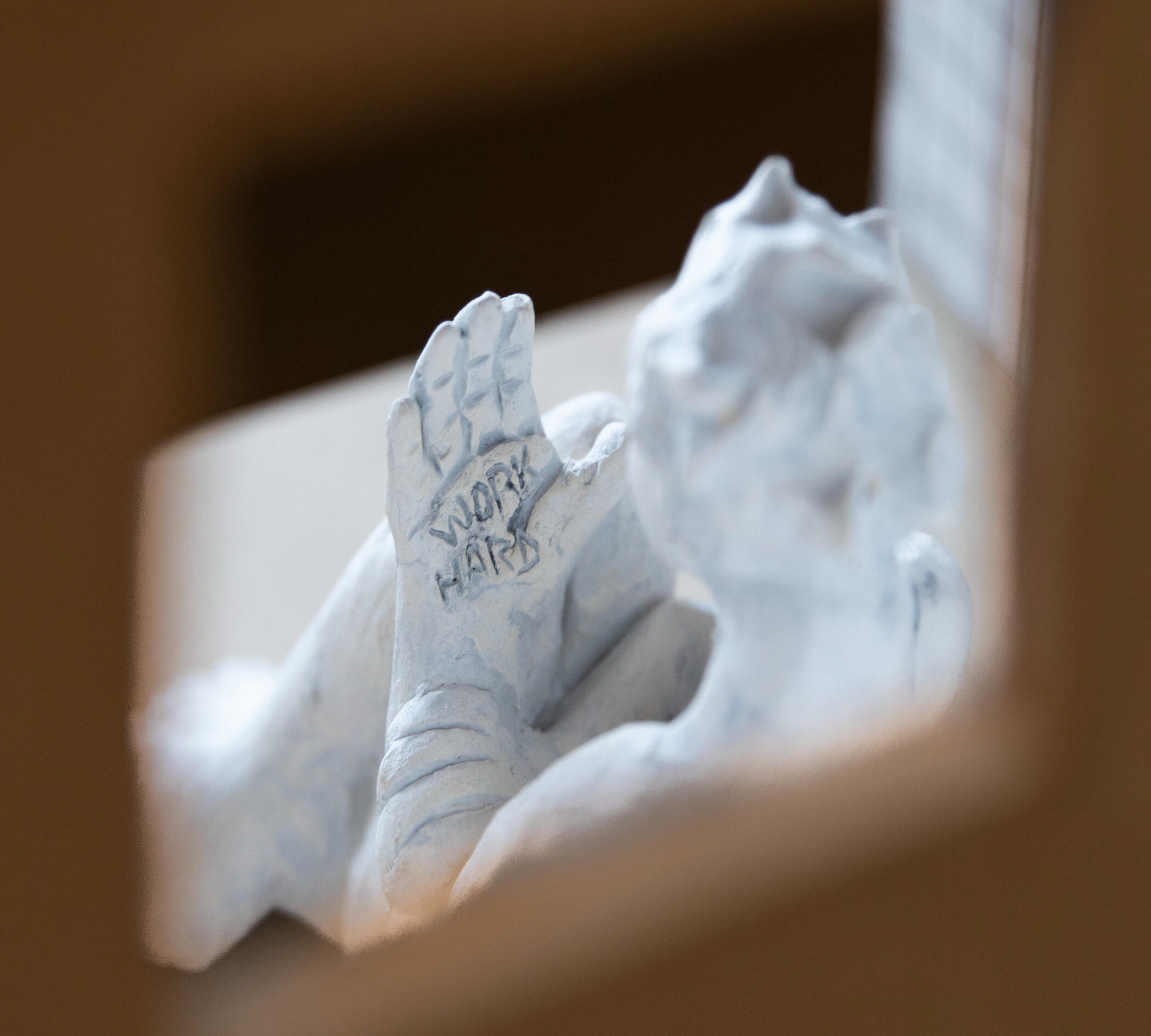
photo credits: nathan van ewijk
Ro
Contemplating their tattoo that recites "Work hard"
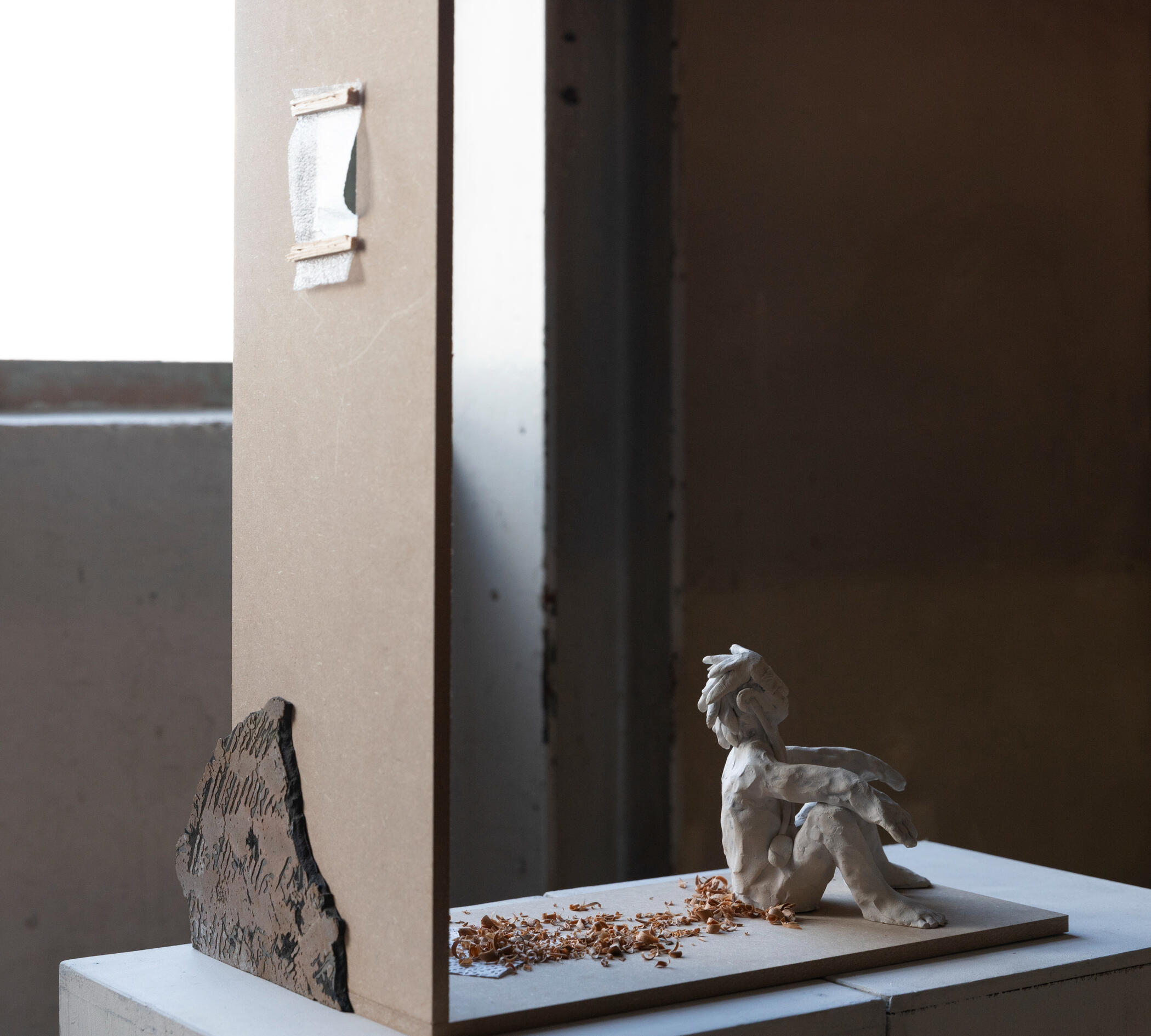
photo credits: nathan van ewijk
Yip
Listening to music
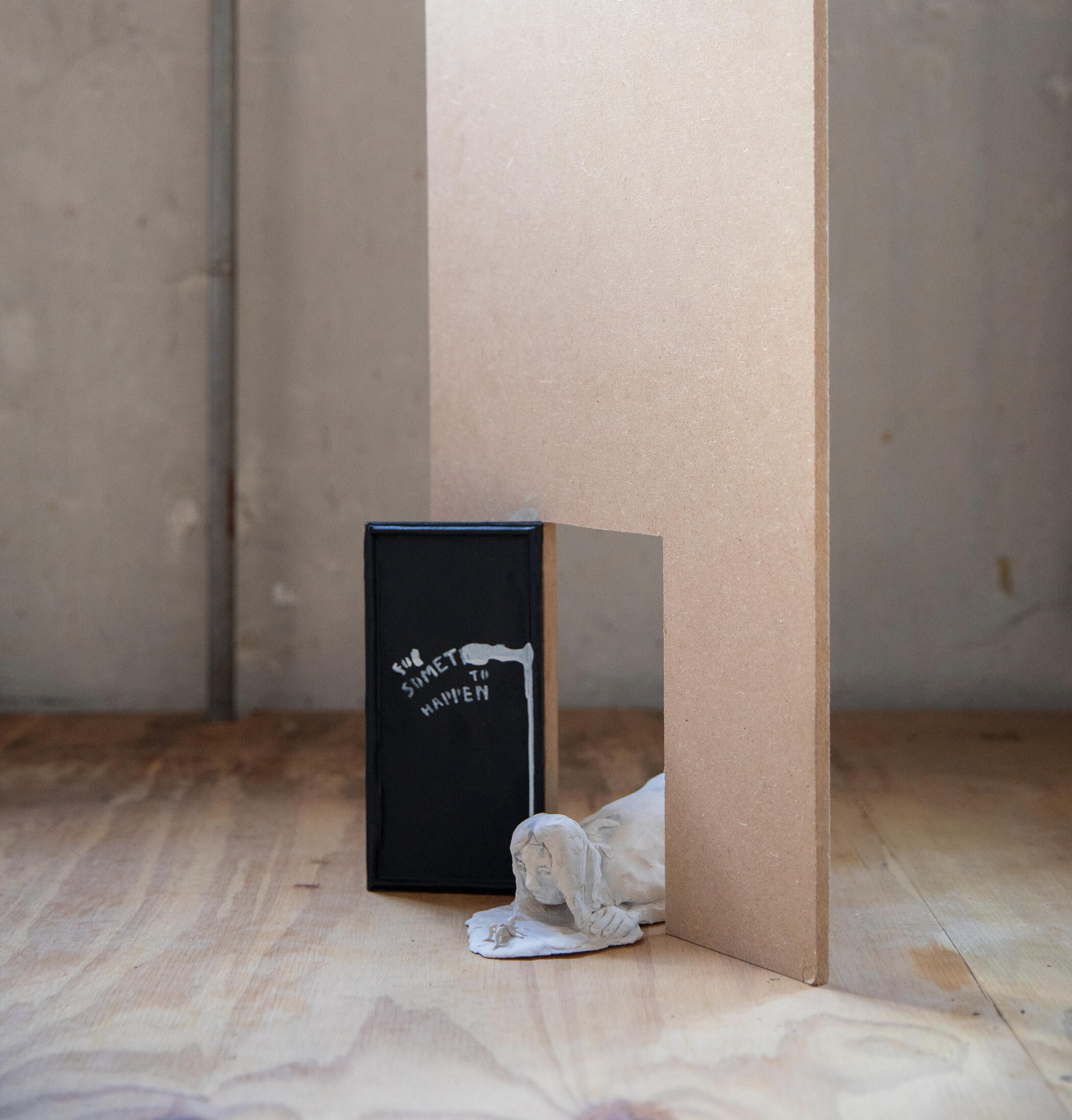
photo credits: nathan van ewijk
Gio
Observing a cricket
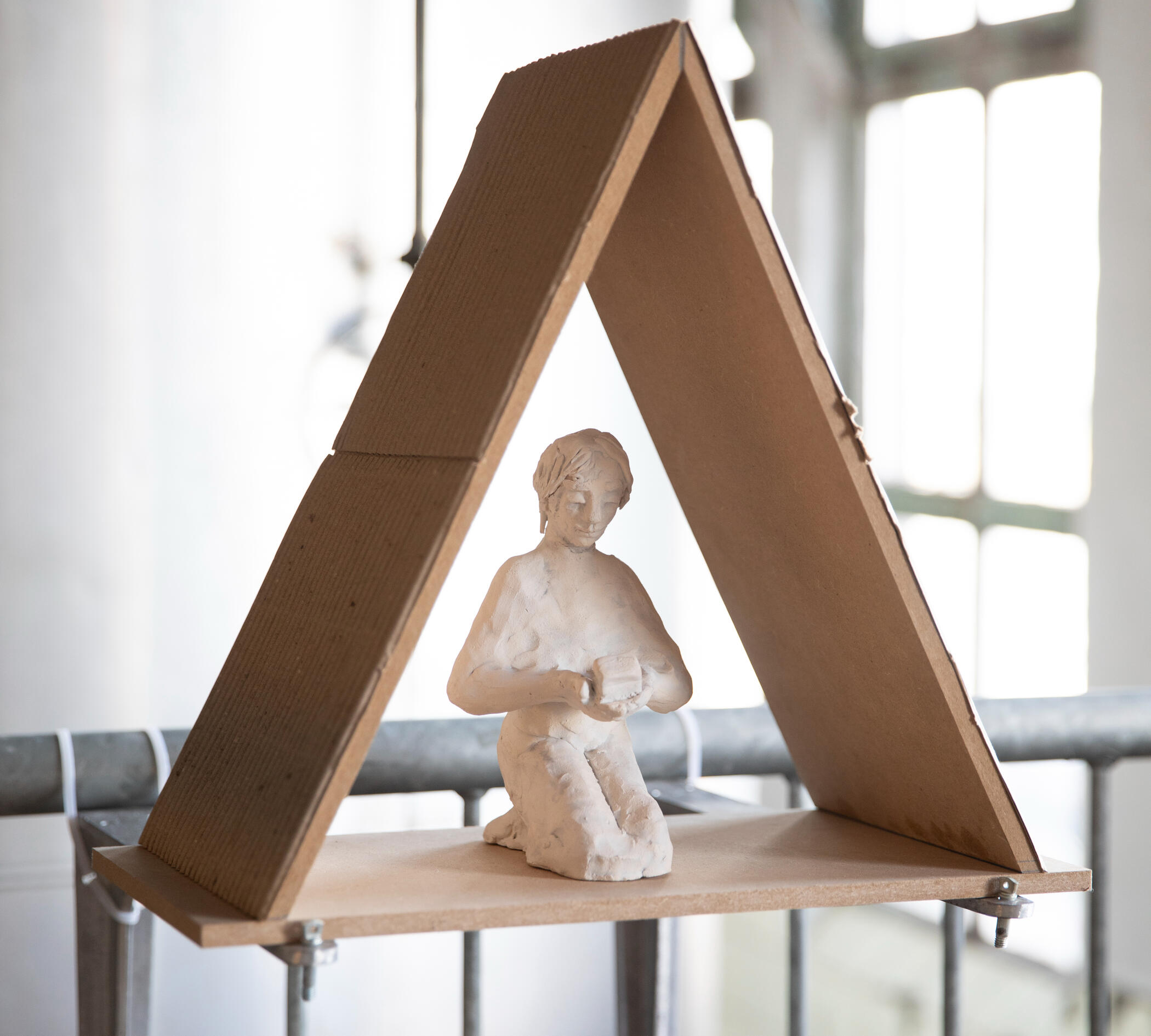
photo credits: nathan van ewijk
Niki
Holding her treasure box of little things
work / writing / about / contact / buy my books / home
Because of my fascination with language, and text, I became fascinated with the feel of paper and the cumbled-up pages of a discarded piece of writing or drawing. So I started making small sculptures out of those.
This was at the same time as I was working on my thesis on inner monologues and stillness, so the scenery of such sculptures inherited the atmosphere that I was after with my writing.
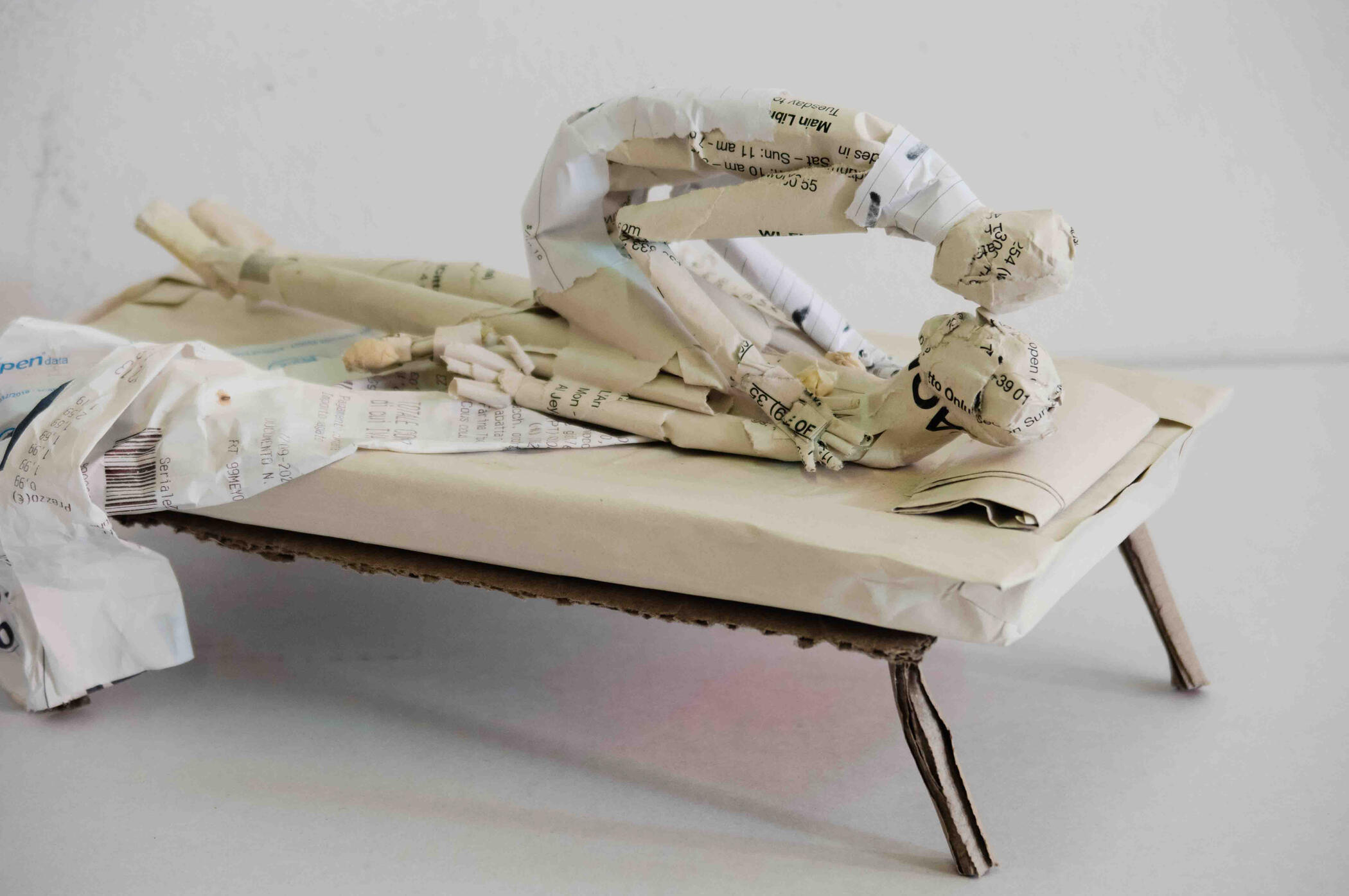
photo credits: hangyeol kim
Houd Me Vast I
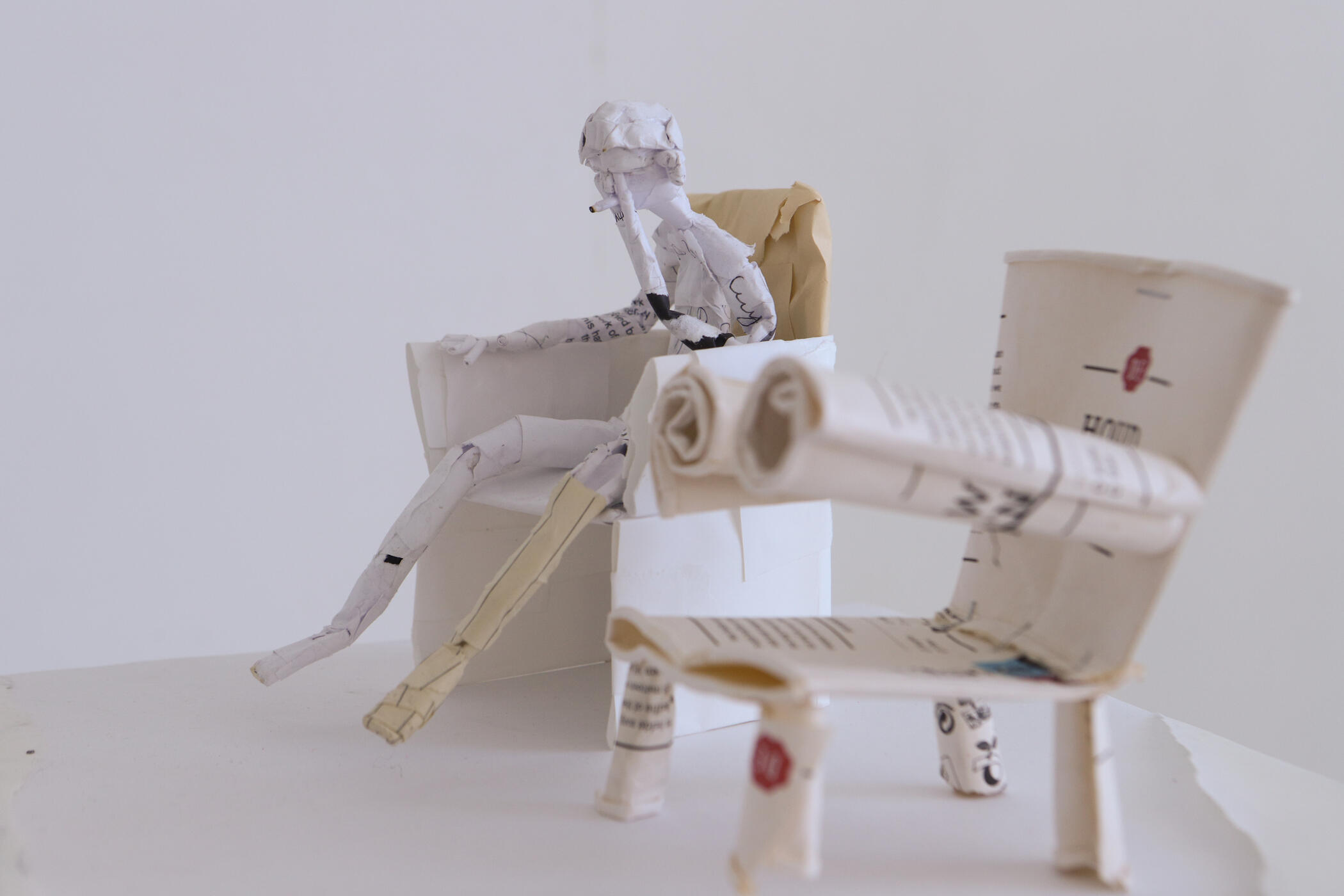
photo credits: django van ardenne
Houd Me Vast IIThis is the sculpture after which the series is titled. The chair on the right is made out of paper coffee cups, on which is written "Houd me vast", Dutch for "Hold me tight".
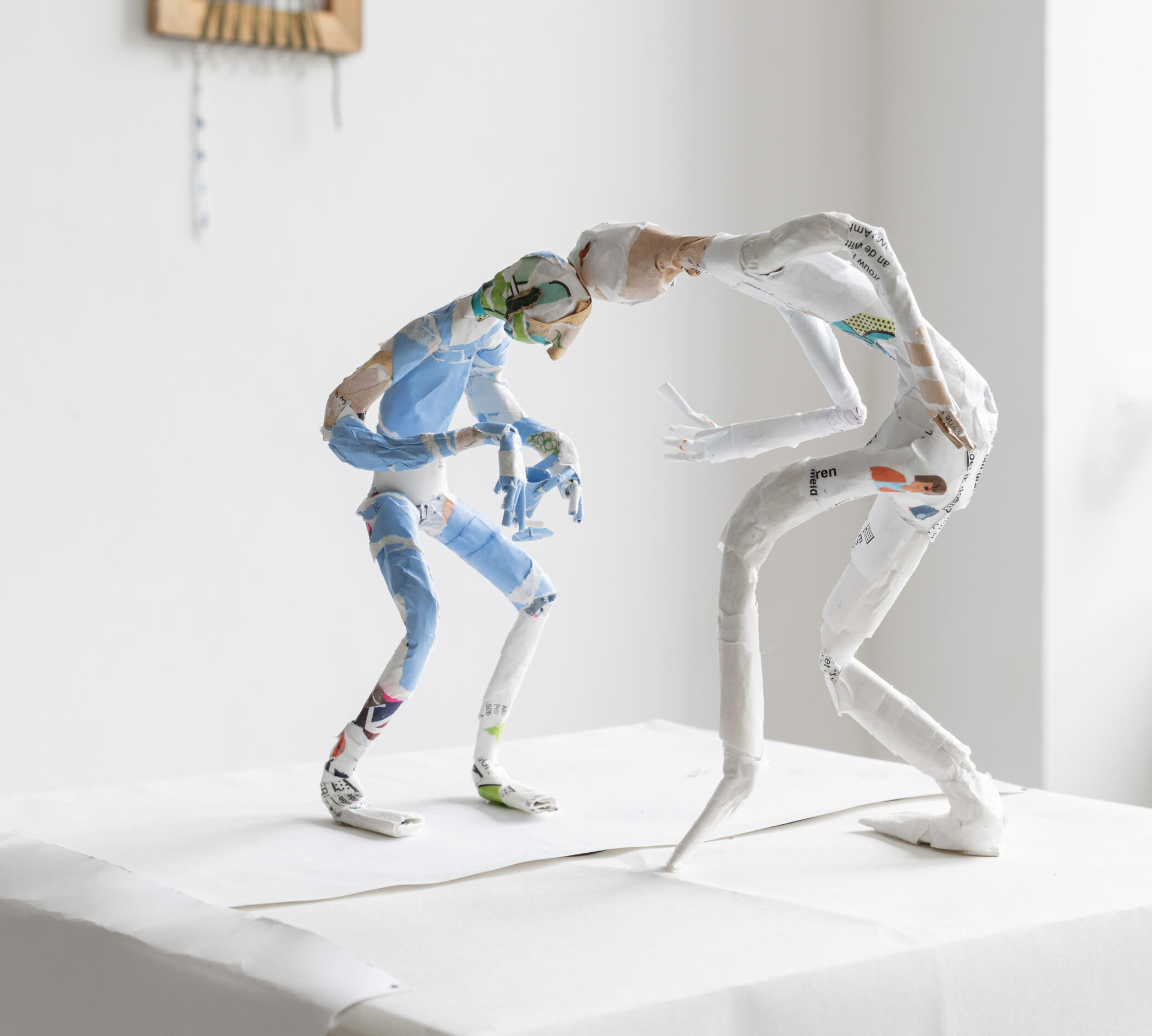
photo credits: django van ardenne
Houd Me Vast III
work / writing / about / contact / buy my books / home
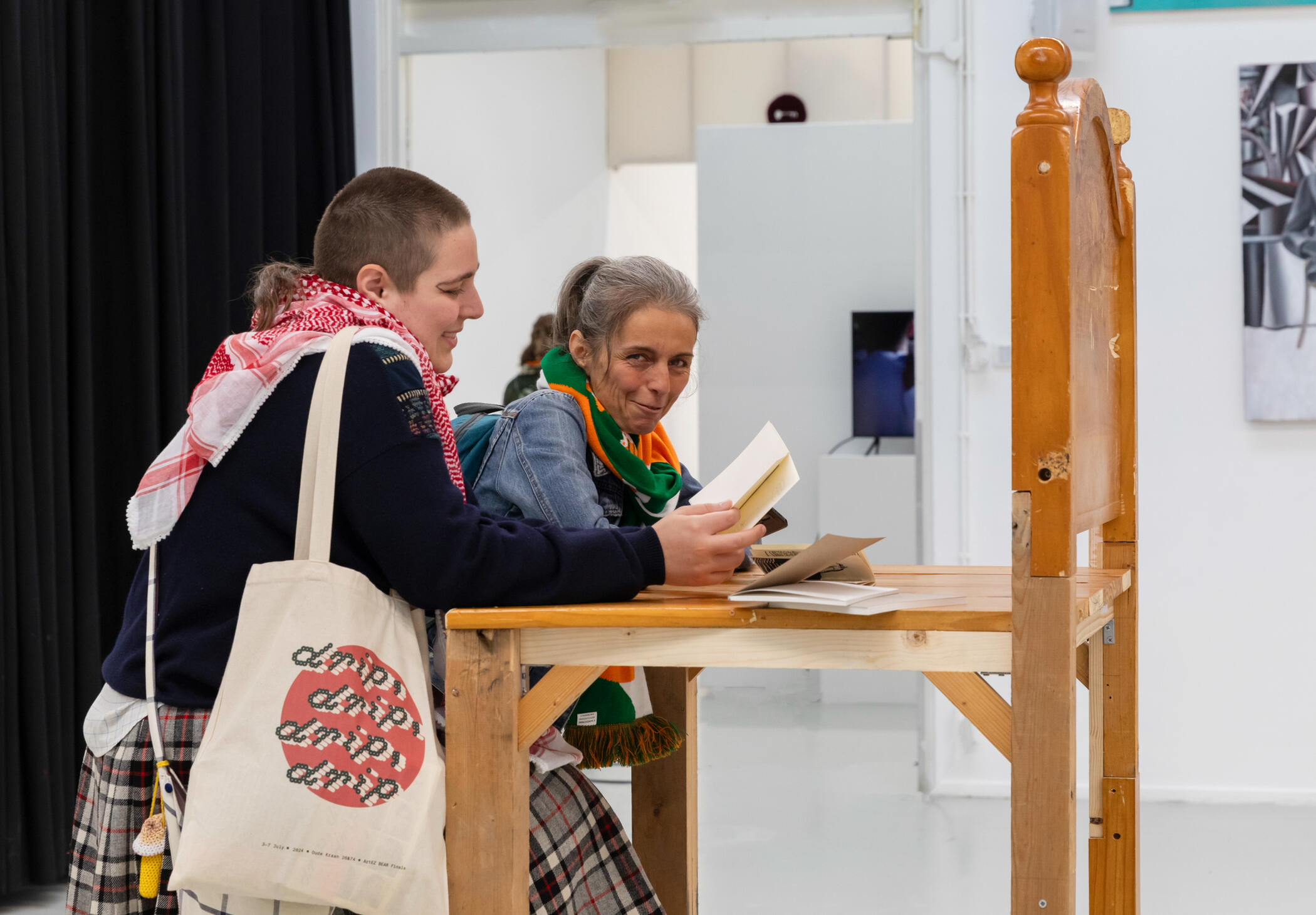
photo credits: django van ardenne
Big Chair (2024)
Found woodWhen faced with how to present my books in an exhibition, I came up with something that could stimulate people's curiosity enough that they would dedicate the time necessary to actually open the books and read what's in them.
work / writing / about / contact / buy my books / home
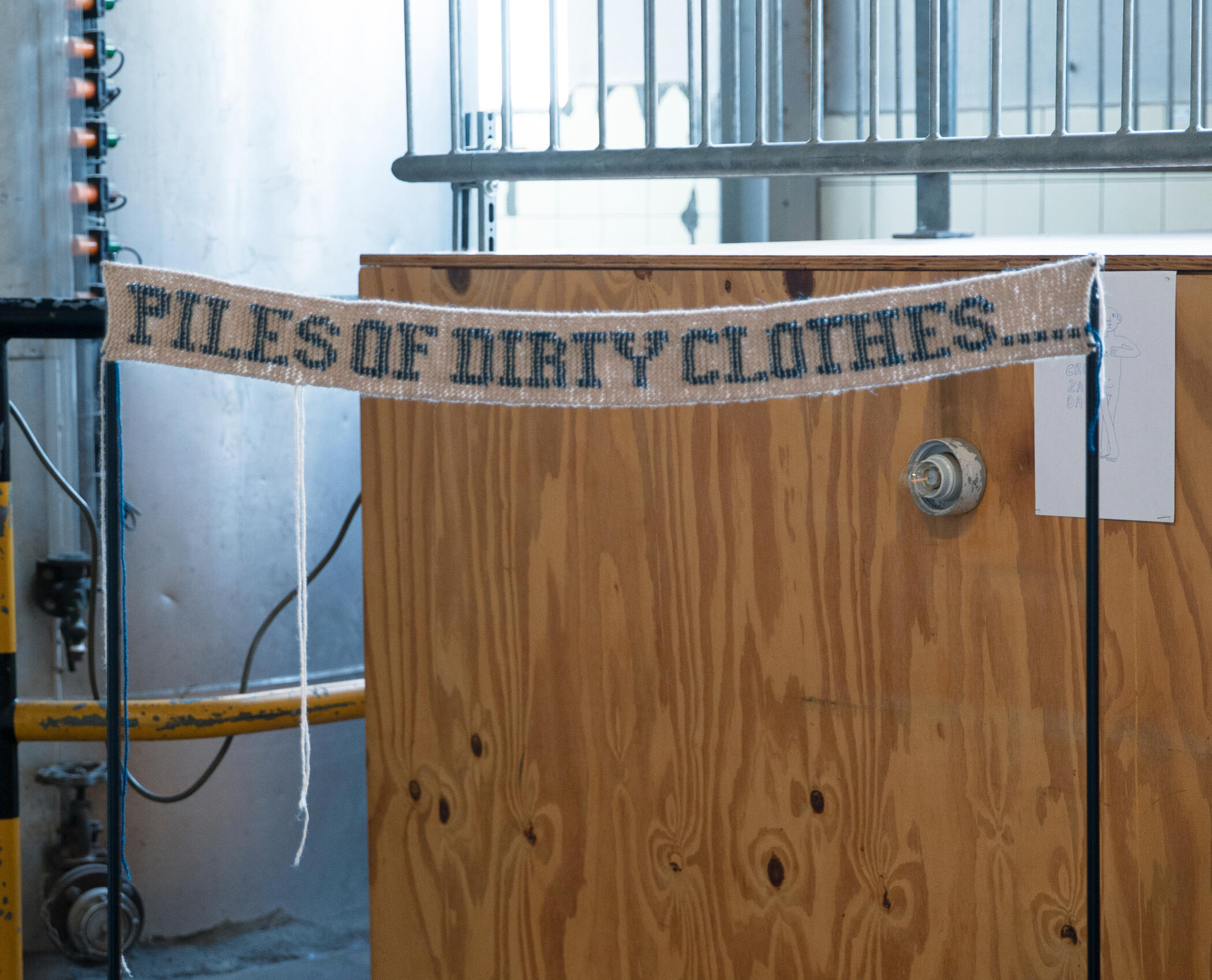
photo credits: nathan van ewijk

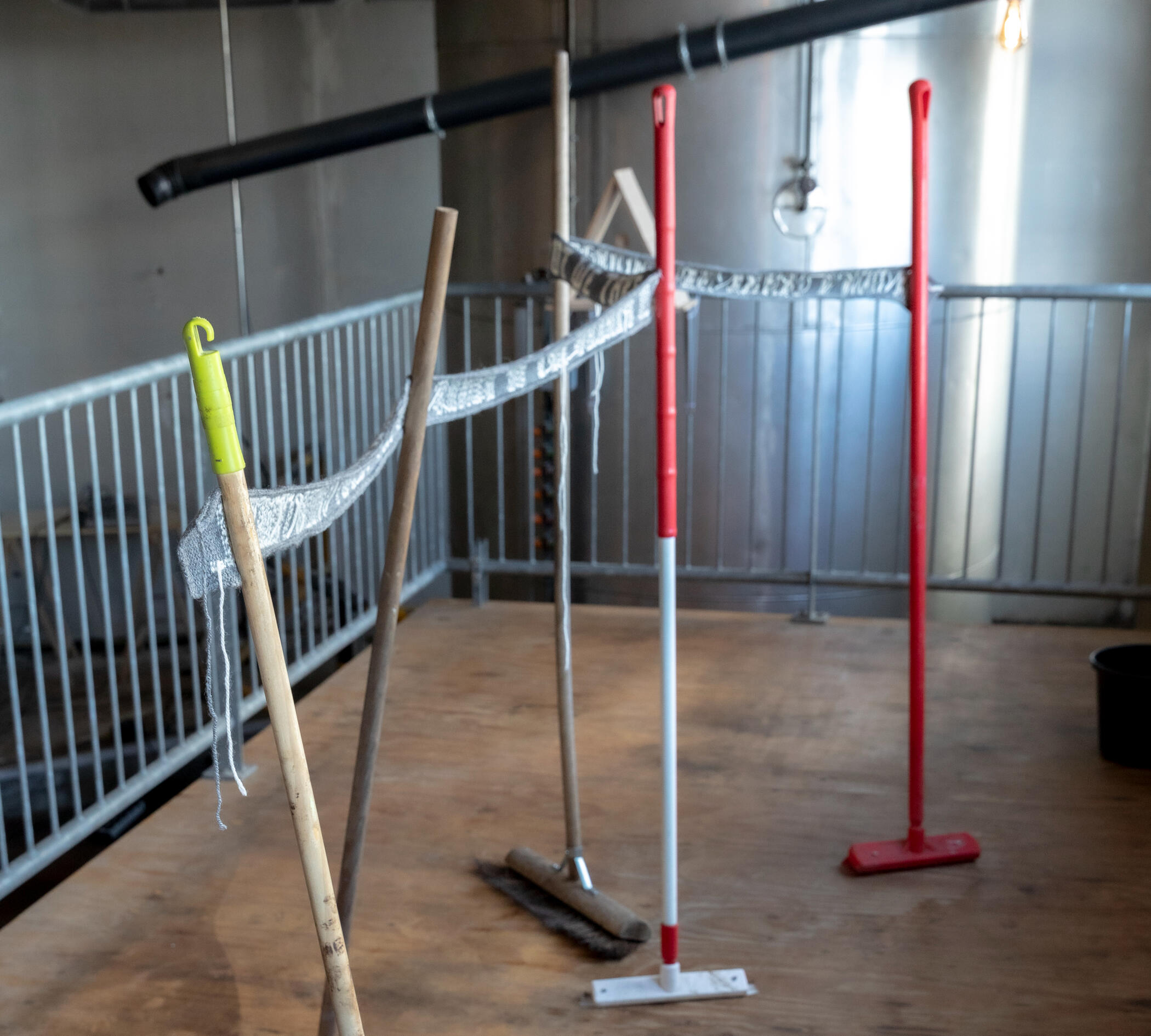
photo credits: nathan van ewijk
We Don't Make New Work (2025) & Piles of Dirty Clothes (2025)
Hand-knitted yarnAfter making a text-based banner as part of my graduation show in 2024, I started exploring the various ways of "screaming" something out in the world through banners. My intent with At Times Another Lonesome Stranger was to break into public space with an unsettling, intimate reflection. Once the idea was there, the production of the work was quick and easy. So I started thinking of a different way of working: a banner that is made for an inside space, inspired by home, by the time wasted on the couch without a clear idea of what one is doing.
We Don't Make New Work and Piles of Dirty Clothes are the first two of an (ongoing) series of works made with the following method: I start knitting one letter, and see what follows. The outcome is a slowed-down thought. While I knit a letter, I have plenty of time to decide on the next one. I can change my mind. Decisions are taken throughout days, not in seconds. Given the previous research I had made on inner monologue and stillness (that had me look, for example, to "The Love Song of J. Alfred Prufrock" by T. S. Eliot and the movie "Der Himmel uber Berlin"), I found that these works were best able to channel the idea of an almost still inner monologue - an idea that is almost an oximoron.
When I exhibit them, I like to play with what I use as support for the banners. In the exhibition For Something to Happen at RUIS, Nijmegen, the banner We Don't Make New Work was supported by brooms standing in the middle of the space.
work / writing / about / contact / buy my books / home
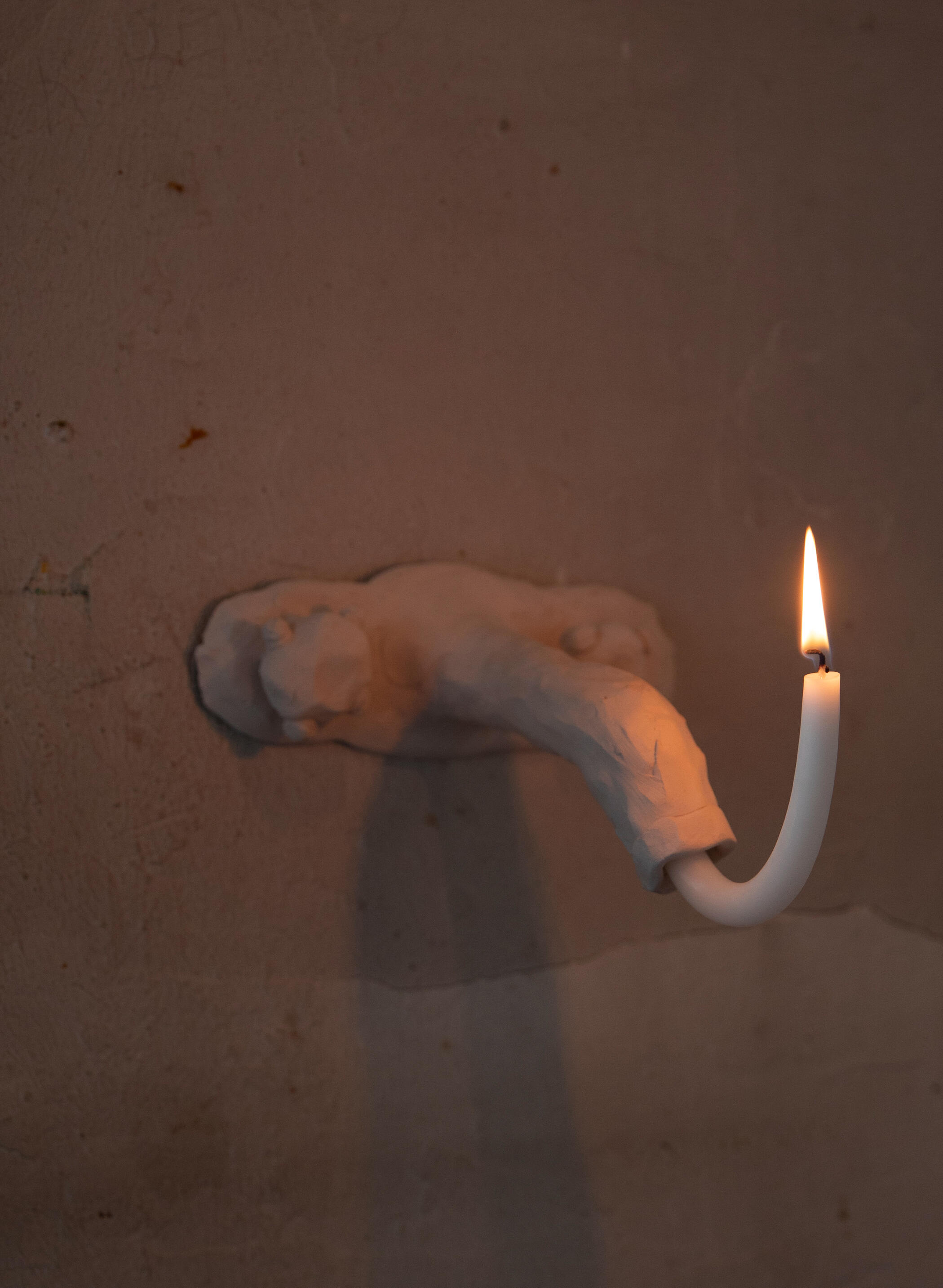
photo credits: nathan van ewijk
Tap (2025)
Unglazed ceramics, candlesA pair of two sculptures that resemble rudimentary taps, where, instead of water, the wax of a lit candle drips out of the faucet.
Two aspects of this installation are particularly important to me:
Repetition, as the "doubleness" of the tap suggests an expanding space - a possibly infinite space - something that I personally refer back to my older research on the Minotaur and, in this case, his labyrinth;
and the slow disappearance of the candle, which leaves behind a pile of dripped wax. To me, this hints to the expansion of time - an infinite time that looks always the same, except for tiny details.
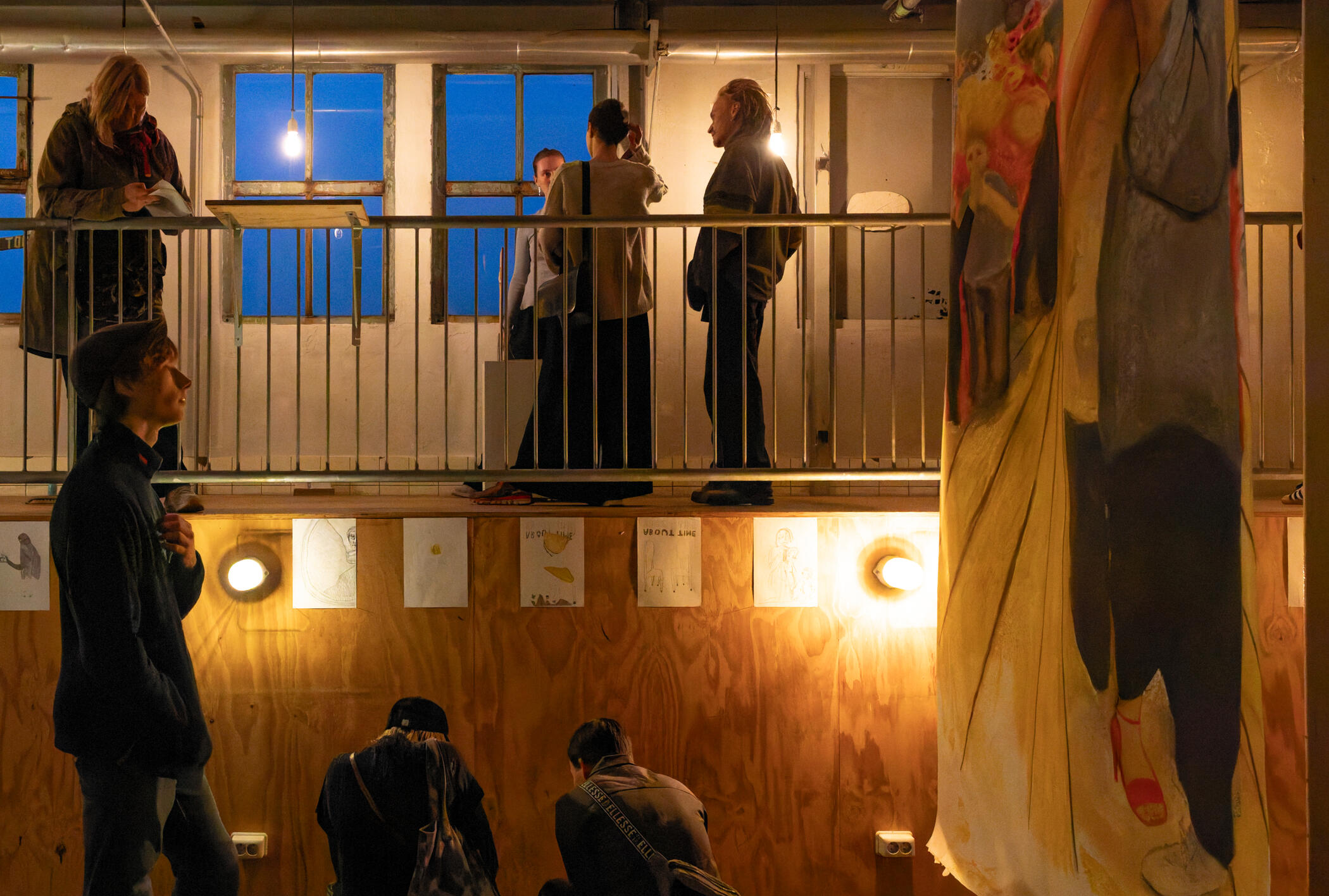
photo credits: nathan van ewijk
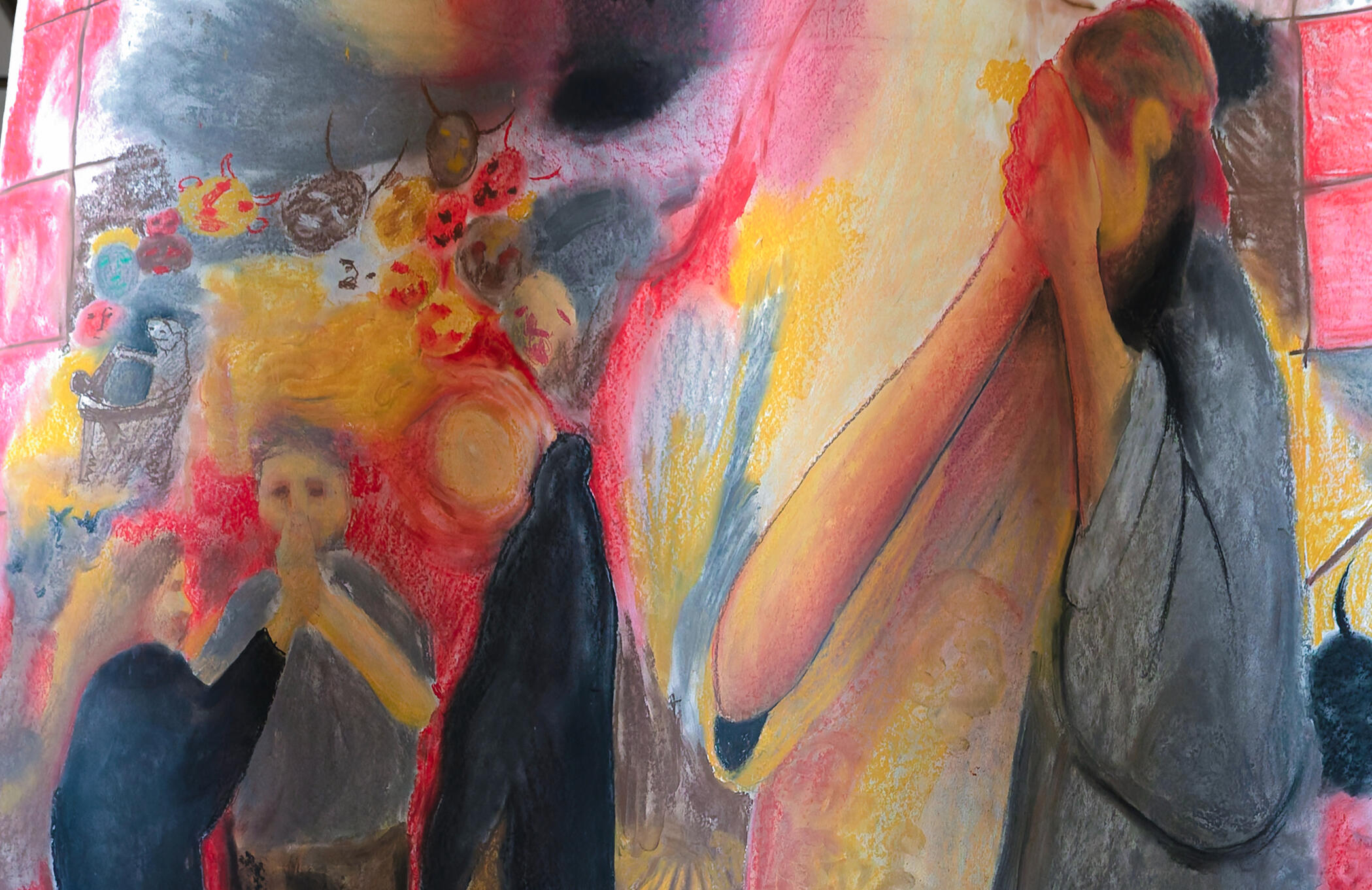
photo credits: nathan van ewijk
Curtain I: Tango (2025)
Chalks on paperI always like it when spatial works and installations tickle my familiarity with certain familiar shapes. In the case of drawings, I always struggle to find ways of presenting them in an exhibition as works that the audience can interact with. This is one of many explanations on how my "Curtains" I and II came to be. They are made of paper, but they act as a space divider the way a curtain does. They also hang like curtains, which means the paper has waves, and the light hits it in a different way than it would normally do.
work / writing / about / contact / buy my books / home
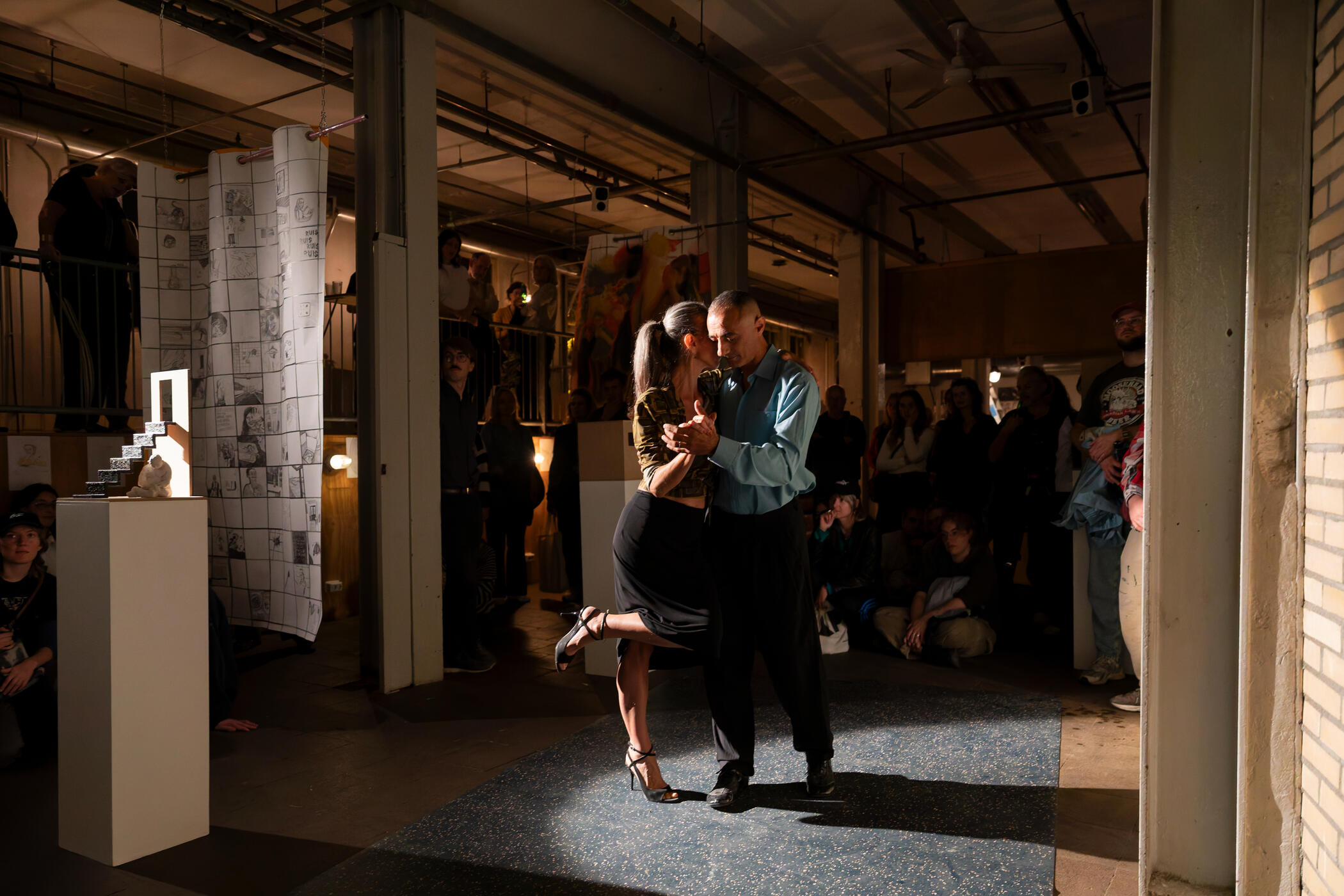
photo credits: nathan van ewijk
Dialogue on the Possibilities of Making (2025)
PerformanceThe sound of a written interaction being read out loud is the music to which two tango dancers improvise. As the dancers' moves are created on the spot, the text echoes an artist's difficut process of making decisions about his work. The script is a fictional representation of a real conversation between me and my partner, Milan, who recites his own lines the way I wrote them down. The goal is to achieve a sort of tension between various layers of the performance: the moment in which the real conversation happens, the way it is transcribed by me (the only one who has power over what both interpreters say), and the re-materialization of the interaction through movement rather than words - completely out of my or Milan's control.
The tango dancers are my mum and her dancing partner. I chose to perform with my mum because it was she who introduced me to the art of language, first, and to the language of tango, later. Read an extract of the script
work / writing / about / contact / buy my books / home
Lecture on Stillness (2024)
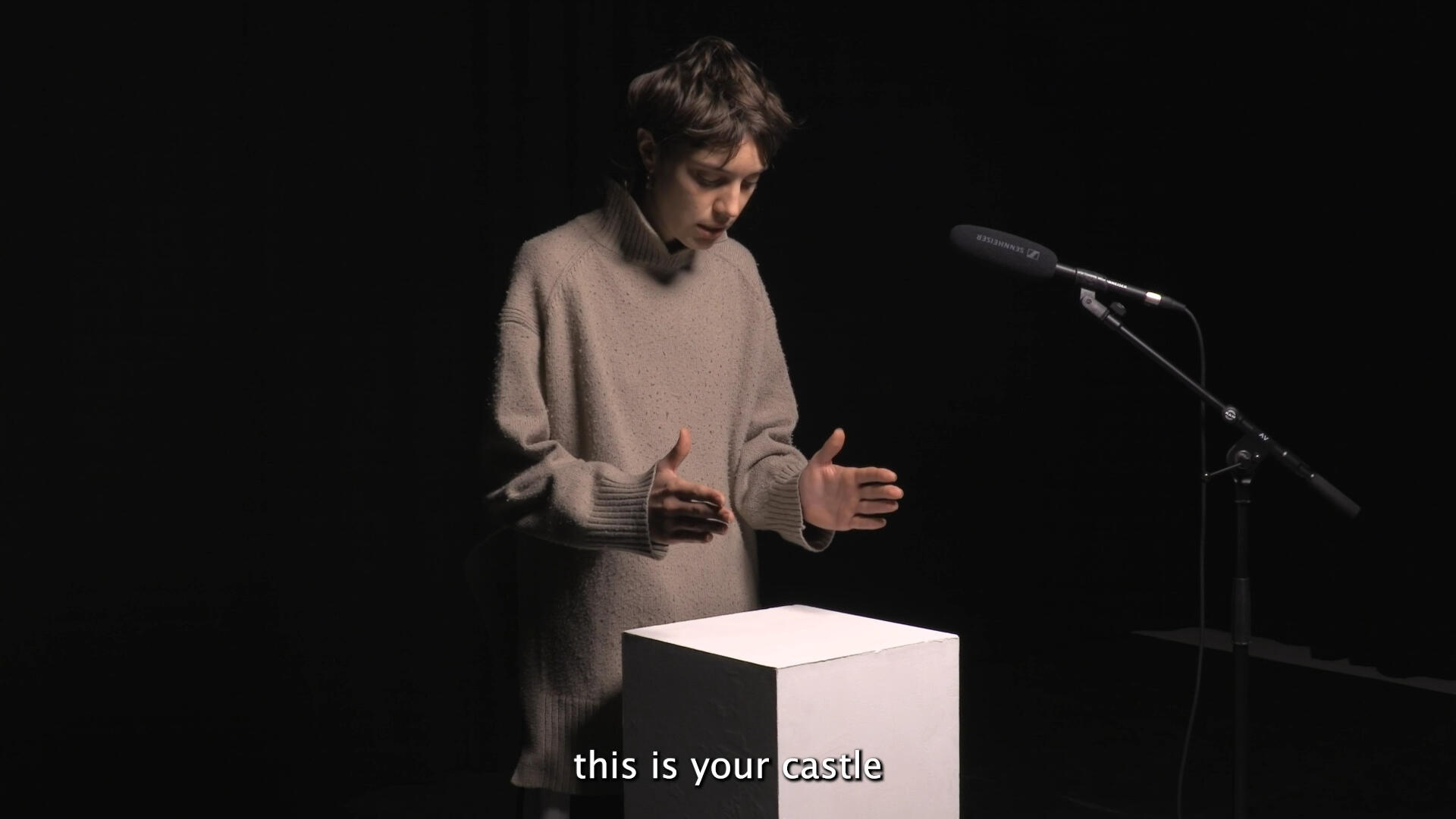
PerformanceMaking use of the implicitly hierarchical structure of lectures, with the assumption that whatever I say is what is, I tell the audience I am going to demonstrate that space transforms according to one's needs. Demonstration after demonstration, I find myself immersed in an imaginary maquette of my room, where size and space seem to have completely lost their consistency. Read an extract of the script
work / writing / about / contact / buy my books / home
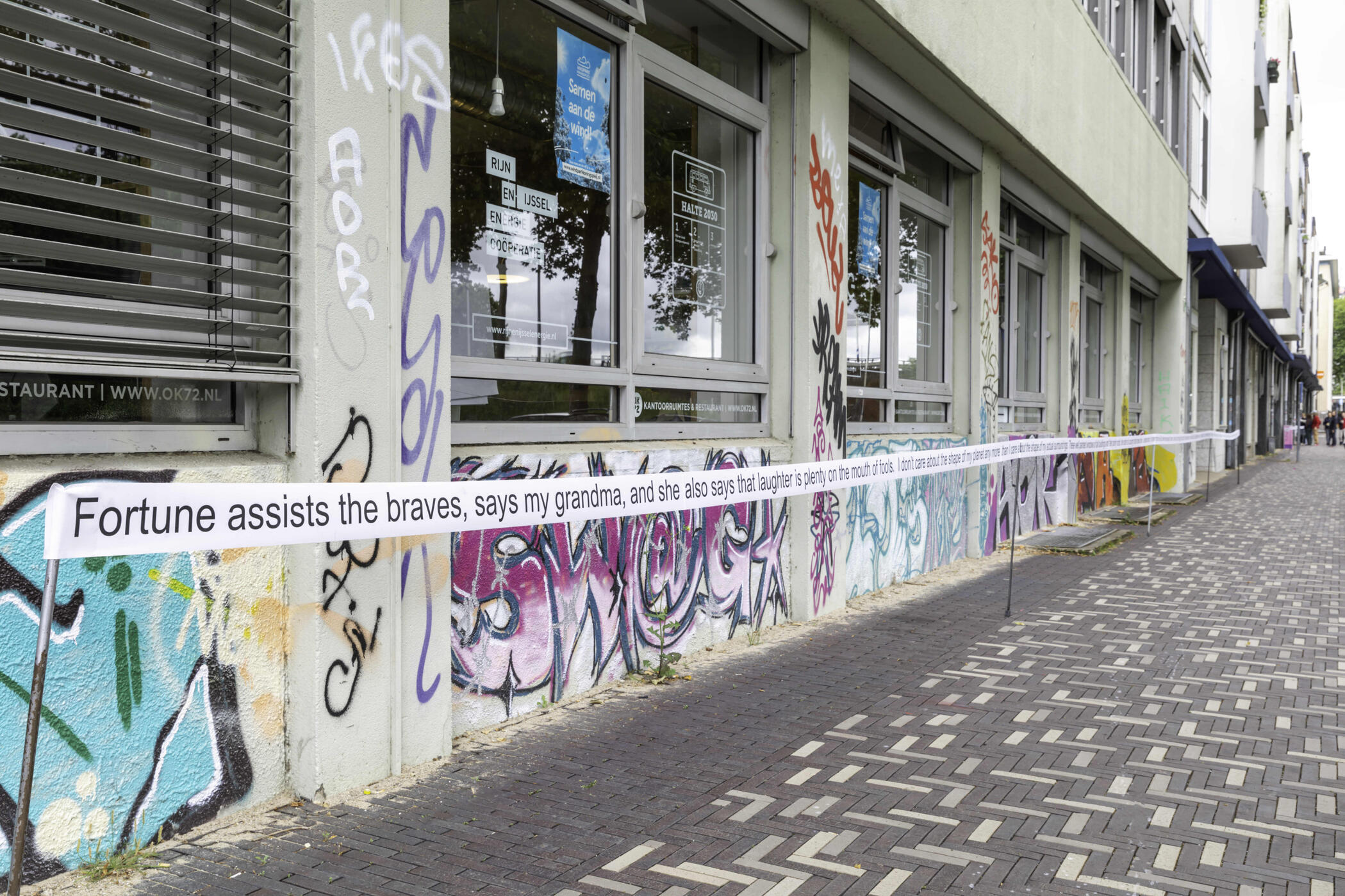
photo credits: django van ardenne
At Times Another Lonesome Stranger (2024)
50 mt. long outdoors installation, two banners on metal polesFULL TEXT
"Fortune assists the braves, says my grandma, and she also says that laughter is plenty on the mouth of fools. I don’t care about the shape of my planet any more than I care about the shape of my actual surroundings. These well painted windows of tall buildings and their pointy roofs, the roofs of a country that knows how to endure rain. It is raining right now. But a few metres away it’s sunny. I look up to the guilty cloud that lingers above me, a small cloud, but persistently humid, insistently still in the otherwise empty sky. Patchy rains like this have been going on for the past weeks. I know they are after me, because I seem to be constantly in it while everyone else stands just outside. At times another lonesome stranger walks or sits very close to me and I think they’re in it, too, until I look better and realise they don’t get wet. Rain in Italy was less patchy and more of a shared experience. It happened all at once for the whole year: six weeks straight, then nothing. There was no doubt when getting out of the house whether to bring an umbrella: either a hard yes or a hard no. The sky would stay dark and oppressively close, like a lid above the city, and no one was mad about it. Instead, we all looked forward to diving in the top shelves of our family wardrobes, and getting out forgotten hats and scarves, waterproof clothes, and heavy coats that would only come in use for this short time".
work / writing / about / contact / buy my books / home
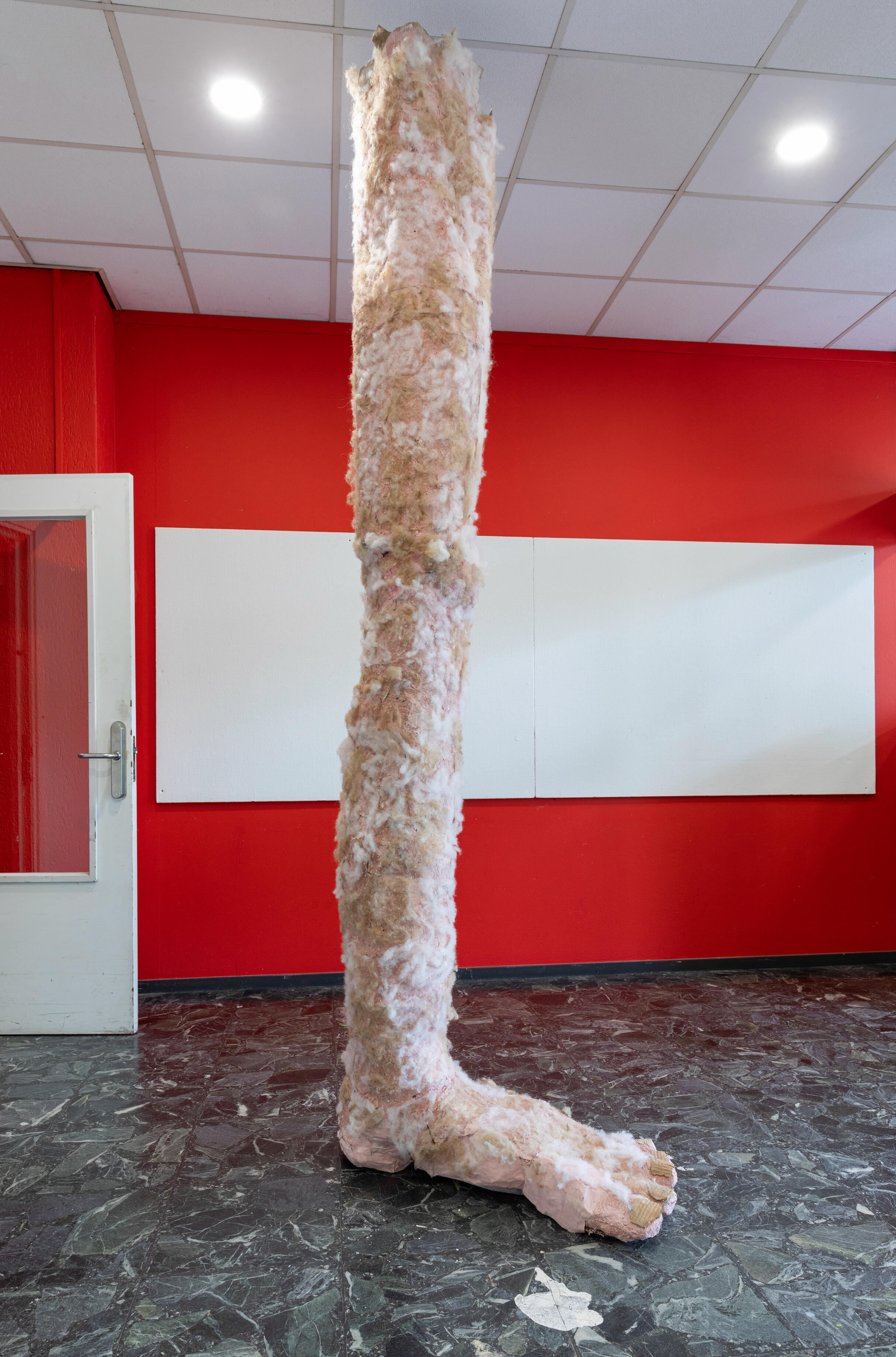
photo credits: django van ardenne
Who's the Monster Now (2023)
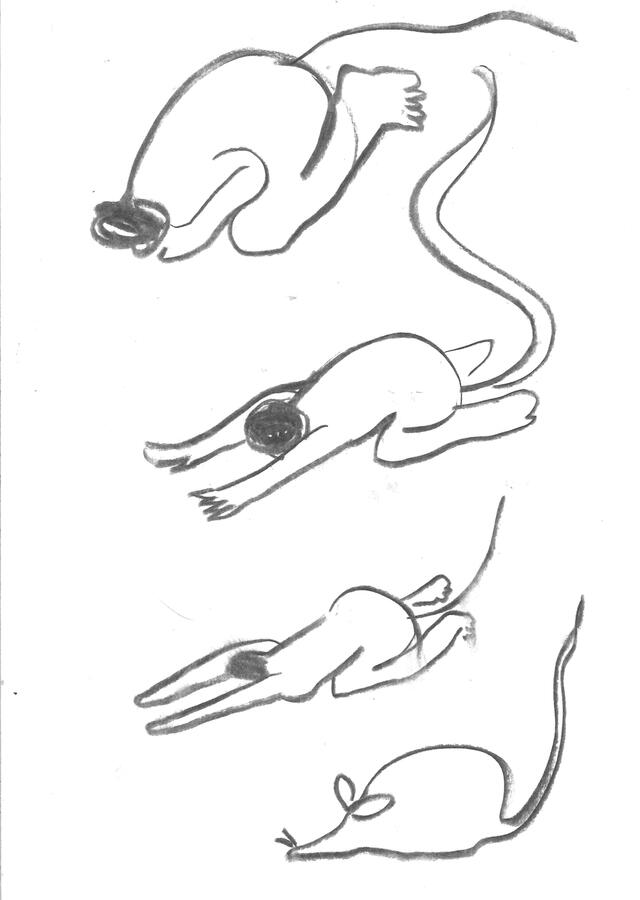
Papier-macher and woolI am scared of mice, and they too are scared of me.
After researching monstruosity in relation to mythological creatures (like the Minotaur), I turned to uncanny encounters like that between me and the mouse that lives in my walls.
Here, the viewer is invited to "feel small" by experiencing the perspective of the mouse.
work / writing / about / contact / buy my books / home
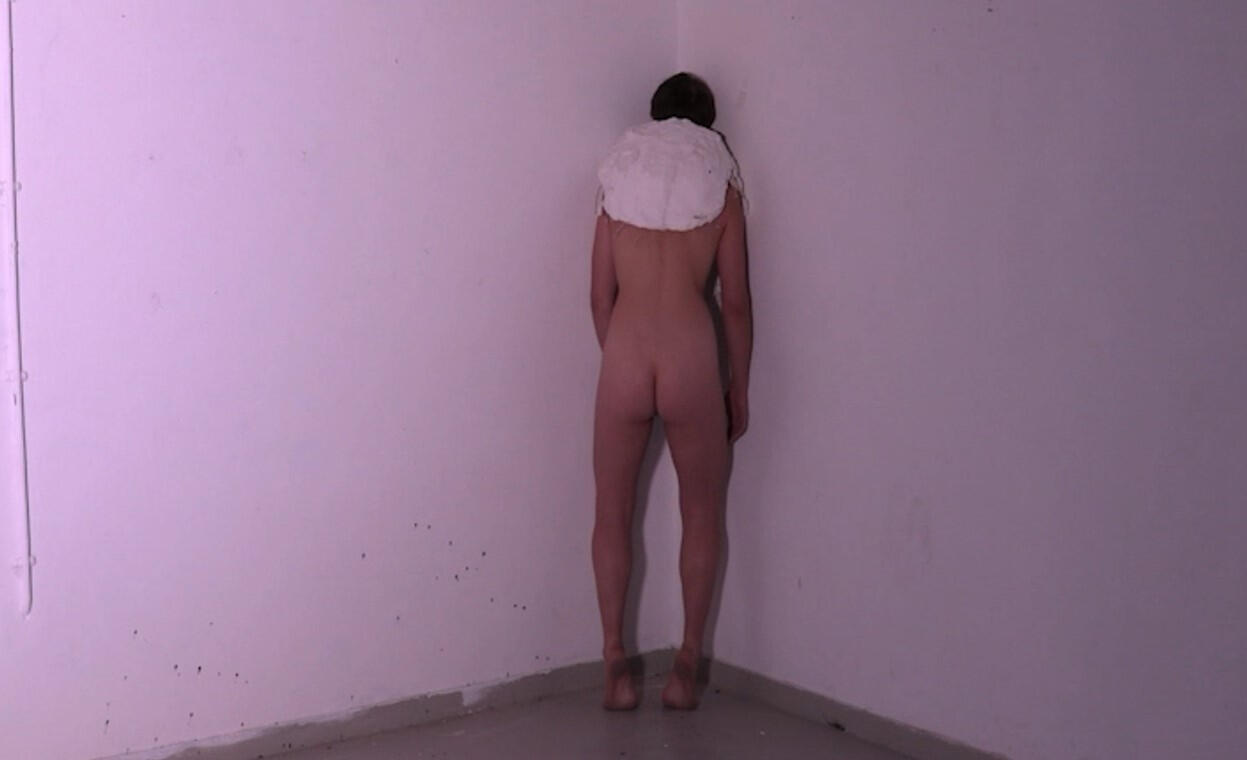
Asterion I (2022)
VideoThis work is one of three videos that I recorded as part of my research sprouted from the short story "The House of Asterion" by J. L. Borges. In each of the videos I enact parts of a long poem in which aspects of my life in the Netherlands (a foreign place to me at the time) are intuitively compared to elements of the short story: the architecture of my everyday environment is compared to a labyrinth, the crowd of people speaking a different language is compared to the crowd that Asterion despises because they don't accept him as one of them, the person I fell in love with who didn't love me back is compared to the ambivalent figure of Theseus, coming to both kill and liberate Asterion.
"Asterion I", in particular, is a 9 minutes long video in which I balance on the tip of my toes in a corner of a basement, wearing a plaster hunchback that weighs me down. The corresponding part of the poem is here
work / writing / about / contact / buy my books / home
2025
For Something To Happen: Introduction
Dialogue on the Possibilities of Making: Extract
2024
Lecture on Stillness: Extract
The Minotaur Poems: Chapter 4
2021
An Artist's Gaze into Male Eroticism: Essay
work / writing / about / contact / buy my books / home
For Something To Happen
Introduction to the publication
The days of our graduation were so intense, I can hardly remember everything that happened. Hours after the exhibition opened, I was still running around printing business cards, putting up “At times another lonesome stranger” (a 50 m long poetry banner that I took down every evening and put back in place every morning to prevent vandalism), and setting up a collateral exhibition at art bookshop Wolf Books. I was coming from a month or two of long days in the school’s workshops assembling books, sawing wood, and soldering metal poles, and when it was all done, graduation behind me, I finally stopped twirling… and got seriously disoriented. In September, I came back to Arnhem having organized the third edition of Some Days Some Arts with the Barattolo project, and I told my boss at the vegetable market that I wanted to quit: I was tired.It’s hard to express the excitement I felt working towards graduation. Every little piece of my artistic practice fell into place. During a talk that I had with my tutor, Hester Oerlemans, in March 2024, I told her that I had not been making anything for at least a month and I was worried I might be procrastinating. To anyone else, I would advise against ever telling something like this to Hester; she has strong opinions on lazy artists. But she also knows each of her students deeply, and sometimes knows their practice better than them: to me she said something along the lines of: “I’m not worried about you. This is the way you work. You need time to let all the little things happen, and then at the end, in a few days the work is there.” This conversation stayed with me until in July, as she predicted, the work was simply there.
I say “simply” not because my graduation work appeared out of thin air - I worked very hard to make it happen. “Simply”, it was such a joy to make it; ideas were flowing out of me like water out of a well, and it felt like they would never stop. I loved how easily I could express my inner world and feel understood.But as they say, after graduation, life gets hard. Why is this piece of gossip so true? I stopped working at one of my two side jobs in order to rest, and give more space to what had to eventually become my artistic career, but quickly enough I was terrified of my own studio and spending my days pacing the city center back and forth, entering every shop without buying anything. Looking around, all of my friends were in similar positions. I saw us get lonely, some moving away to other countries or back home. Meanwhile, a strange sense of competition started taking over me: every opportunity that goes to someone else is an opportunity I’m missing out on. Am I doing enough? Am I on track? Is it working out? At night, in bed, Milan tried to convince me that it was not the end of the world and I would soon start making again.This was September to last February. In those months, I also learned that what for my whole life I had called “existential crises” were actually internal panic attacks. This is interesting because my “existential crises” have always been my most prolific moments: the bundle of experiences and emotions they prompted had me write and draw to unravel them until I was feeling better. But this time, as for many these days, scrolling on my phone and window shopping were an easier, more direct relief for my panic, although they left me feeling a worse kind of empty.
Funny enough, the pressure I was putting myself under was mostly related to winning a prize, and showing (who? I don’t know) that I was making good use of it. So I was not exactly experiencing the so-called “black hole”, as it mostly refers to a lack of opportunities and means. But I was somehow creating it for myself out of too high expectations. Around me, a bit of everything was happening in my peers’ lives: circumstances here and there made it so that even though each of us was going through unique experiences, my friends and I were all feeling the same sense of being stuck, lost, and unsatisfied; of not knowing exactly what the next step should be. We all retreated to our own spaces and, without school as an excuse, saw each other way less if at all.To me, this collective setback had two aspects to it: on the one hand, feeling misunderstood and alone, as my struggles were not shared or even known to others; and on the other, a strong sense of belonging. I heard my friends’ stories and could connect with them over how confusing such a time was. We were all in this together, even though we were not doing it together. It’s a different way of being friends than I have experienced at the Academy: what once was seeing each other daily and having dinner together once a week, functioning together as a family, became a coffee every two weeks, and then a month, until a few of my best friends had moved away and I would barely meet up with the few remaining.This book, a byproduct of the exhibition “For Something to Happen”, opening on September 12th, 2025, is a selection of drawings, sketches, and plans - not artworks, but impressions of a time where the possibilities felt infinite and immense. A period in which we didn’t make new work, but we took old pieces out of boxes and tried to put them together.

Irene Donatini
2025
Full Omstand publication pdf
Buy a physical copy of this book
work / writing / about / contact / buy my books / home
Dialogue on the Possibilities of Making
Extract of the script
(Irene) Will you go to the wood workshop tomorrow?(Milan) Yes, I really want to start doing something.(Irene) But… you will use the same pieces that are in the drawing, right?(Milan) What do you mean?(Irene) You will use this together with this and this and this and this and this, right?(Milan) …I don’t know yet.(Irene) But you can’t just use the pieces that are in the drawing like the drawing doesn’t exist, right?(Milan) I don’t want to assemble them like in the drawing.(Irene) No, it’s not that, it’s that the drawing would lose its meaning if it loses its link with reality. Do you know what would be cool?(Milan) What?(Irene) If you would exhibit the drawing with the imaginary assemblage, and then all the objects unassembled next to it.(Milan) Mh, I don’t know.(Irene) You don’t like it?(Milan) It seems a bit boring. It has nothing to do with my way of working.(Irene) But you made the drawing.(Milan) Yes, but it is not supposed to be real. It's an abstract possibility.(Irene) But there is a difference, for example, between this drawing and that, right? Like, that is abstract, but these are real objects.(Milan) Yes, that’s true. But it’s not a sketch of how I want them to exist together. It’s an exercise.(Irene) It doesn’t look like an exercise. It has potentiality. But if you don’t take it into consideration when you take the next step, it will lose it completely.(Milan) Why do you say that?(Irene) Because I saw you make it, and I see all the objects the way they are in this stage of your process, but nobody else does. If the audience can’t see that the objects are real, they won’t see the potentiality. You need to assist people in discovering your work.(Milan) Okay, wait.(Irene) What are you doing?(Milan) I will put them all here. Ok, sit down and explain.(Irene) Yes. What I don’t get is: you’ve been looking for something new, not a new way of working but a new input. You have it now. This is the way your drawings enter the assemblage, and you want to ignore it.(Milan) It just feels so restricting.(Irene) But why? All I am asking you is to only use these pieces, and not the rest. You can assemble them with the same intention, you can let them take the shape they desire, without the drawing in mind. Forget about the drawing.(Milan) But this feels like a method. A method is going to obstruct the openness of the process, it’s going to devalue it. You’re right, I am looking for a new input, but this does not feel exciting. It feels like cheating.(Irene) What do you mean, cheating?(Milan) Like I already try to impose a system on the objects.(Irene) But you already have a system, a method. You collect objects, and you have a whole list of rules when you pick them, and then a list of rules to store them, and even on how you put them together. You wouldn’t pick an object that doesn’t look like it lost its purpose, would you?(Milan) No.
Irene Donatini
2025
work / writing / about / contact / buy my books / home
Lecture on Stillness
Extract of the script
Now, back to us. How can we fix this crack? Of course, by putting a bit of space back. I’ll put this one:(Picks up another bit of space and puts it in).If I keep adding space,(keeps adding space),the shape changes. As you can see, the top side of this cube is expanding. Ah, it’s a Dutch pointy roof! And look, a chimney!This space looks awfully similar to a Dutch house. But it still has no doors, no windows, and no steep-steep stairs that lead all the way to the attic. Damn, it doesn’t even have an attic! But we can solve this easily. Space transforms according to our needs. Here is the window:(draws window on the front),here the door:(draws door),and if we open the door we can put in the stairs:(opens the door and puts in imaginary stairs).There you go. A Dutch house. Pretty, no? Here is my room:(points to the top floor)It's the attic. You can enter through a trap-door on the floor. I pay 450 euros of rent per month. It looks small, but don’t be fooled, it is only because of the perspective that you’re looking from. And there I am,(points at herself in the room),laying on my bed next to the window, staring at the ceiling.(Pause).As you can see, space is relative: my room appears small from where you sit, but seen from inside it’s quite spacious. Now, let’s zoom in, shall we? And take a good look at these windows. Let’s take just this window here.(Gesture of zooming in with fingers like on a touch screen until it’s one bigger window on the pedestal).As you know, windows are mostly made of glass, and you can see through them.(Looks at the audience through the “window”).I can see you from here, and you can see me, right? And if I open the window panes,(Gesture of opening the window panes like a princess in a disney movie),I can feel the breeze because we are at the top of a 4-story building. A window is a tool to expand space. It fits perfectly on this pedestal, but it expands the space of my room to infinity. It gives me access to the space inside of other people’s windows, where they work hard on their pianos and computers until late in the evening, on the other side of the street. And to the space of the sky, to the airplanes and satellites, and above, to the moon and the sun, and beyond that, to the other stars. A curtain is enough to hide it all and deactivate my window.(Closes the panes and pulls the curtain over the window).
Irene Donatini
2024
work / writing / about / contact / buy my books / home
The Minotaur Poems
Chapter 4
The basin is running out of water and I
am also running out of water.
The days are ever shorter
the room smaller
yet my awful body does not shrink.Today the faucet drips again:
a stream of consciousness.I found a little corner that is new,
that is, it seems new to me. Maybe
it’s the new shape of the shadows,
maybe the fog,
maybe the plaster has come off,
maybe it’s the same corner as before
and I forgot to mark it.There is wait
in between one action and another,
time enough to wonder
what it is I’m doing, and shatter
for a moment this whole castle and its fence.
Then, the corner might be new or old
but the rooms seem all strange all of a sudden, bigger, smaller,
there is a wait that’s like a corner
that was supposed to be a straight line.
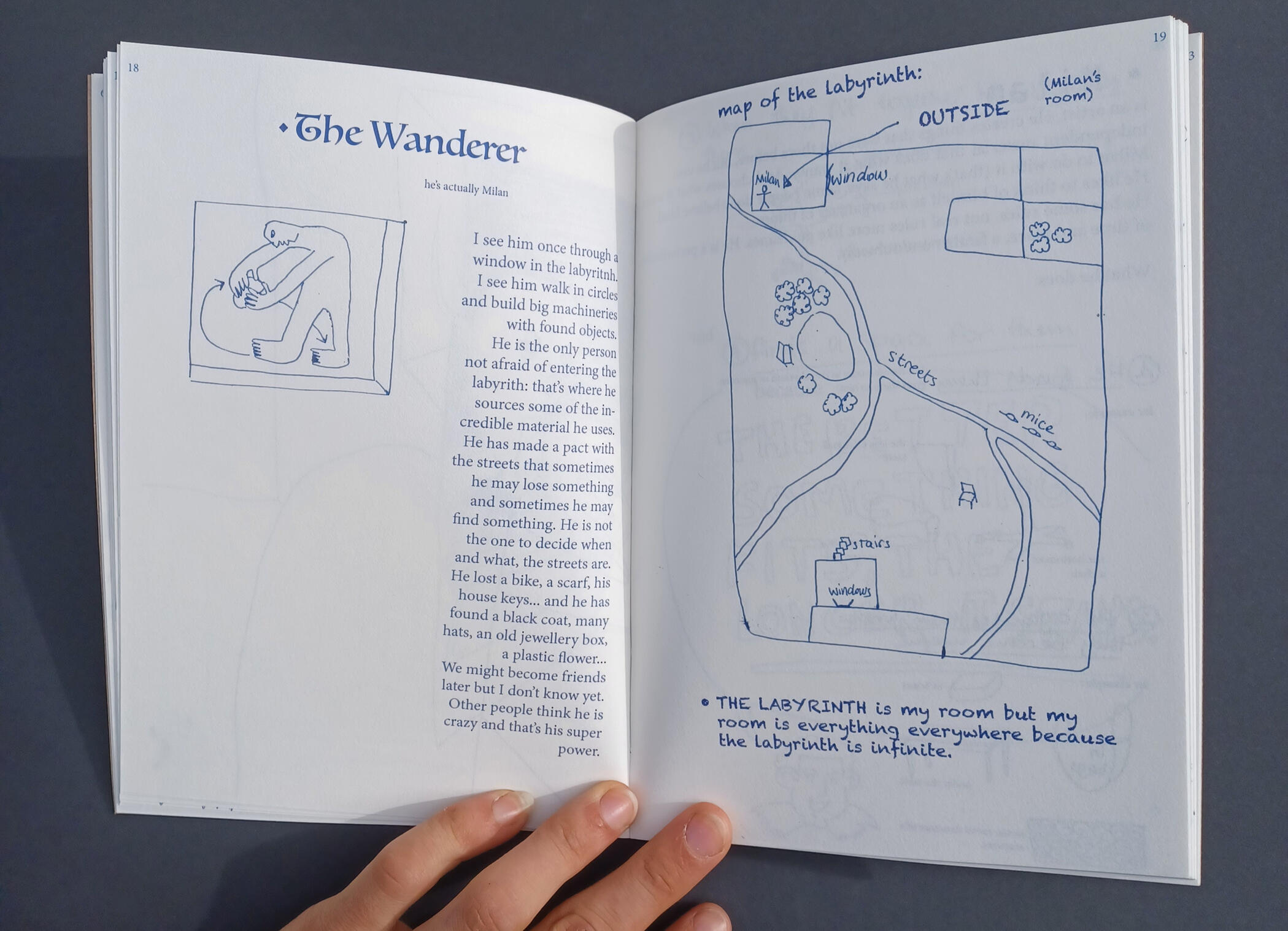
And I, too, am a corner sometimes.There is a man that wanders outside.
I see him from my window he goes in circles holding coffee cups
he must have gone crazy, I say,
I see him from my window assemble
big machinery with a frown upon his forehead,
does he ever wait in between actions,
does existence weight as heavy on his back,
sometimes he seems to see me I dropdown
my heart seems to want to come out of me
sometimes I think he knows me…Every day’s the same here.
Irene Donatini
2024
work / writing / about / contact / buy my books / home
An Artist's Gaze into Male Eroticism
Essay
In my recent readings and research on sexuality, I found I was extremely fascinated with the language of male writers on eroticism, which appears to be strongly based on the simplicity of male pleasure, while at the same time claim the European cisgender man’s perspective as the absolute and only center of the sexual discourse (Bataille’s The Tears of Eros, 2002 and Nabokov’s Lolita, 2011 are the examples that I will hereby consider). Still, the medium of written texts allows an ambiguity that wouldn’t be possible with a “hot” medium such as images or visual content in general: it shouldn’t come as a surprise that in publishing Lolita, Vladimir Nabokov insisted that a girl should never appear on the cover. (Bertram, Leving, 2013: 37) For such a controversial and twofold novel, and figurative art being more eloquent than writing, the attempt to express the intention of the book would easily result in a mere objectification of the female body. Is there even a “right” way to represent with images the (male) eroticism that is so easily expressed in writing? My interest is in the artistic value of the two (hot and cool) mediums, the way they translate into each other, and the value of my perspective as a woman on how this viewpoint reflects the power structures that it builds upon.“[...] If we come to tears, if we shudder in sorrow - or if we are seized by fits of laughter - can we fail to perceive, linked to this nascent eroticism, the preoccupation with, the haunting fear of death (of a tragic death, in a sense, even though laughable in spite of everything)?" (Bataille, 2002: 24)Eroticism is what distinguishes humans’ consciousness of sexuality from the mere reproductive instincts of animals. Bataille’s investigation in The Tears of Eros reveals how eroticism was born from the gradual development of our ancestor’s fear of death. This interdependence is to him so deep and indissoluble that even the border between the two becomes unclear: in the idea of “little death”, for example, which describes the sense of loss that follows the climax of the sexual act. Bataille’s eroticism deals with the mystery of being alive, with the absolute questions that make us human: where does this consciousness come from, what is this beauty that I perceive (in death, in sex)?I started reading Lolita for pleasure, only a few days after reading Bataille’s text on eroticism, and what struck me at first was how similar his and Nabokov’s language is. There’s a voyeurism that transpires from the way Bataille talks about male pleasure that is the same disgusting-but-attractive feeling that keeps the reader glued to Humbert Humbert’s point of view in Lolita. The absolute and deliberate ignorance of female autonomy, too. I was surprised to discover how empowering it is, in a way, to get such insight as a woman into the deep meanders of a man’s sexuality: while it is clear that the whole realm of the other sex(es) is unknown to him, a woman gets to see every fantasy and thought he has of her. A sort of reversed male gaze, if you will, where under the first layer of mere female objectification (that is not a real look at the woman’s truth, as it is a projection, a made-up character) is the essence of the man’s perverse libido.I’m not saying, however, that Bataille and Nabokov deal with this type of eroticism in the same way: it is clear that they have very different aims. While Lolita is a novel with a fictional plot, however deep and philosophical it may get at times, The Tears of Eros is an academic publication that is based on actual research and evidence. But they definitely do watch the world from the same perspective and have no interest whatsoever to acknowledge the presence of other realities outside of theirs. For comparison with the previous quote by Bataille, hereafter is an example of Nabokov’s use of language in Lolita:“The gentle and dreamy regions through which I crept were the patrimonies of poets - not crime’s prowling ground. Had I reached my goal, my ecstasy would have been all softness, a case of internal combustion of which she would hardly have felt the heat, even if she were wide awake.” (Nabokov, 2011: 149)In this extract, the protagonist fantasizes about the agonized intercourse he hasn’t yet been able to obtain from his nymphet. The elements are all there. The association with death, the prominence of the man’s climax, the contrast between the mild outside aspect of the act and the explosive feeling inside (not even perceived by the partner; everything happens inside the man’s mind). Even his megalomaniac tendencies: his pedophilic desires make him a poet, nothing less. Only one more difference I want to address between Bataille’s language and this: while the limitation of Bataille’s point of view is visible in the way he completely disregards the presence of women in the sexual discourse, as if men were the only ones to have sex, Nabokov does almost the opposite: he only sees women as literal sexual objects, with no thoughts nor autonomy, whose only purpose is Humbert Humbert’s erotic entertainment. And the systematicity of this is impressive: not one woman, secondary characters included, is introduced or described by him in a way that doesn’t sexualize her. There must be, again, a consciousness in this decision, in the sense of disgust that it inspires, which makes the prose of this book even more fascinating and beautiful.Despite Nabokov’s multiple statements that he didn’t want a girl on Lolita’s cover, it is self-evident that most publishers in the last century didn’t follow his directions. The first edition was released in two volumes and had a sober green background, with the title in capital letters and two simple frames as the only decoration (Bertram, Leving, 2013: 91). Since then, Lolita evolved into what is now a sentient creature in herself, totally disattached from the novel that gave her birth. “Most of the covers of Lolita in Nabokov’s collection grotesquely distorted the book’s subject to make it more titillating and more palatable. Their Lolita had the attitude and body parts of a postpubescent vamp rather than the attributes of (the whole, obsessively catalogued point of the story) a child.” (Bertram, Leving, 2013: 85) In Lolita: The Story of a Cover Girl (2013), Bertram and Leving don’t only consider the book covers, but rather take into account all the mediatic language that surrounds the myth of Lolita, created and venerated by a society that already struggles with unsolved power dynamics but will not acknowledge the harm of romanticizing the idea of an abused kid as a soft and cute sexual fantasy. The first, obvious problem here is capitalism: the publisher wants the book to be sold, period. To achieve this, the publisher knows very well that the presence of a pretty and sensual girl on the cover will work better than “pure colors, melting clouds, accurately drawn details, [...]” (Bertram, Leving, 2013: 37), even though it might not advertise the novel in the best way for its content. Why, though, would a girl be more marketable than anything? Female objectification is so rooted in our culture that it is gleefully consumed, no questions asked, by the public as a whole: not only the ones holding power (straight men) but also the victims that suffer from it (women). While in Nabokov’s novel Lolita is “unveiled slowly” (“She existed in the margins, her voice rarely heard, her image a series of metered descriptive phrases that resist coming together into a cohesive form”) (Savage, 2015: 2), the Lolita on its cover will save the viewer the struggle of using their own interpretive skills, prying up to their already existing schemes of thought. Not only; by now, Lolita is an image in herself, and a reference for other images to pry to. She is endlessly quoted in pop culture, not as a symbol of the terrors of child abuse, but as the glamourous example of sexuality for young and wanna-be-young women. By now, the myth that pop-culture Lolita came to be is so far from representing Nabokov’s Lolita that it’s not even worth comparing. It is rather a representation of the “simulacrum” of our society: an empty image that is no longer related to any meaning.What would then be the right visual translation of Nabokov’s eroticism in Lolita? Interestingly, Bataille’s investigation on eroticism in The Tears of Eros heavily relies on images as well. He associates the development of humans’ consciousness of sexuality with the first drawings in caves, and their clear reference to male pleasure and death. A very good example: in the depths of the cave of Lascaux was found a dubious depiction of a man, in the act of falling, with his sex erect and the face of a bird, facing a dying bison whose entrails were spilling out. From the spear that the man was holding, it was deduced he would be responsible for the death of the animal. The sexual aspect of the scene might even imply a sacrifice and the consequent arousal of the man (probably a shaman). (Bataille, 2011: 36) What I find fascinating is how the subject here shifts again to the male sex. Going thirty thousand years back, getting rid of all the layers and structures that slowly built our modern society, we look at an artwork that has the same intent as Lolita’s multiple covers, to represent male eroticism, and what we see is not the exploitation of the image of a woman; rather the honest depiction of a man, gazing at his own death and bestiality. This, I think, is how the meanders of Humbert Humbert’s mind look like.
Irene Donatini
2021
work / writing / about / contact / buy my books / home
Click on the underlined key-words to know more.Currently based between Siena, IT and Arnhem, NL.In her artistic practice, Irene refers to mundane sources of stress like side jobs, mice invasions, procrastination, groceries, and laundry. She builds metaphorical worlds and characters as a way of processing these small (but heartbreaking) hardships of existence: feelings of shame, worthlessness, panic, or anger inspire her to write and draw until the idea for a book or an installation comes up. Through materials like paper, plaster, ceramics, and wood, and various media including video, performance, printing, and sculpture, her work plays with the audience’s perception and participation, enlarging or shrinking their well-known landscapes, giving them access to else inaccessible “other sides”: the inside of their walls, the outside of their windows, or underneath their stairs.
Both in her collaborative and personal work, Irene sees art as essential to bridge gaps between people in a society that instrumentalizes isolation and miscommunication. She stands against gatekeeping art in a bubble, and rather prefers acknowledging it in other contexts as well as contemporary art spaces. After she started dancing tango in 2023, her fascination for social interactions found new input in the codes and etiquettes of milongas, as well as the roles of masculine and feminine, which add to her previous work on eroticism and voyeurism.EDUCATION2025 - present: University of Siena - Laurea Triennale in Lettere Moderne
2020 - 2024: ArtEZ, BEAR - Bachelor of Fine Arts
2014 - 2019: Liceo Artistico A. Venturi, indirizzo scultoreo-pittoricoEXHIBITIONSUpcoming
Maidentrip - Collectie De.Groen, Arnhem (September 2026)2025
Hoe = Het Nu - ACEC, Apeldoorn
Eigenlijk - Artlovers.space, Brummen (part of IJssel Biennale)
For Something to Happen - RUIS, Nijmegen2024
Driedee: Hatching from scratch - Kunsthal Mechelen
Big Small Big - MIKC Het Locket, Delden
Drip, drip, drip, drip - ArtEZ BEAR Graduation Show
Open House: 5 Room Apartment - Omstand, Arnhem2022
From A to A - KunstKan (now called What Art Can Do), Amsterdam2021
A Good Day With Hester: Hester Oerlemans and students - Collectie DeGroen, ArnhemRESIDENCIES2025- RUIS, Nijmegen
2024-25 - Krachtstroom026, Arnhem
2023 - Cittadellarte, BiellaPRIZES2024 - Blauwe Golven AwardPUBLICATIONS2025 - For Something to Happen, published by Omstand, ArnhemCOLLECTIVE/COMMUNITY PRACTICE2021 - present: THE BARATTOLO PROJECTMembers: Irene Donatini, Giordano Donatini, Jole Donatini, Milan van der Stouw, Ellen Fleig Gracia, Ro Smit.
The Barattolo Project aims to bridge gaps between creative disciplines and invite contamination of arts, crafts, and community-building activities. The Barattolo Project organizes accessible workshops and events between Italy and the Netherlands.
A list of events and workshops organized by the Barattolo Project can be found at: www.barattoloproject.com2025 - present: Podere CalcinaiaAs a continuation of the art and community project started with the Barattolo Project, four of the members moved to Podere Calcinaia, an organic farmhouse in Irene Donatini's (and their siblings Jole and Giordano's) family for generations. The final aim is to develop a "cultural hub" that intertwines sustainable agriculture, conscious tourism, artistic residencies, and cultural events.COLLATERAL ACTIVITIES2025 - Member of CLIJCLUBB, a group of artists that gathers in Peter Krynen's atelier to make ceramic work
2025 - B-ART-ER MARKET. A self-organized budget-friendly art market in collaboration with the Barattolo Project and Krachtstroom026
2024 - Participant of independent fair Plica Zine & Print Market, Ghent
2024 - Showcase and sale of my handmade books @ Wolf Books, Arnhem
2022 - Internship with Josefin Arnell
work / writing / about / contact / buy my books / home
Email: [email protected]
Instagram: @bluehea.art
work / writing / about / contact / buy my books / home
BUY MY BOOKSSince I still have some copies, I'd be happy to ship a book to you.
Send me an email. Make sure to let me know which book you're interested in and where you live. Every copy shipped will be signed (but not all publications are numbered series).BOOKS CURRENTLY AVAILABLETango Book
(Self-published, 2025)For Something To Happen
Numbered edition of 75 copies
(Published by Omstand, 2025)
photo credits: django van ardenne